
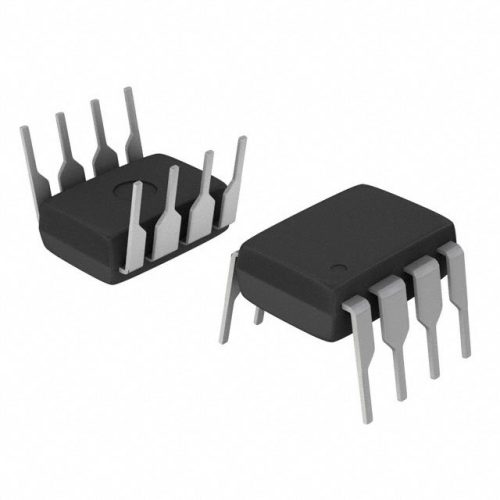

SN74LVC1G07DCKT Low-Voltage Single Open-Drain Buffer Overview
The SN74LVC1G07DCKT from Texas Instruments is a compact, single-channel open-drain buffer designed for low-voltage electronic systems. Its open-drain output allows flexible voltage translation between different logic levels, making it ideal for mixed-voltage environments like IoT sensors, wearables, and consumer electronics. This component amplifies signals while preventing voltage mismatches, ensuring reliable communication between devices with varying voltage requirements. IC Manufacturer offers this essential logic component as part of its portfolio of low-power semiconductors, trusted for performance in space-constrained designs.
Technical Parameters of SN74LVC1G07DCKT
| Parameter | Value | Unit |
|---|---|---|
| Number of Channels | 1 | channel |
| Supply Voltage Range | 1.65 to 3.6 | V |
| Output Current (Max) | 32 | mA (sink) |
| Propagation Delay (Typ) | 7.5 | ns (at 3.3V, 50pF load) |
| Quiescent Current (Max) | 1 | ??A |
| Package Type | SOT-23-5 (Small Outline Transistor, 5-pin) | |
Operating Characteristics
| Characteristic | Specification |
|---|---|
| Operating Temperature Range | -40??C to +85??C |
| Input Voltage Range | 0 to VCC |
| Output Voltage Range | 0 to 5.5 (independent of VCC) |
| ESD Protection | ??2kV (HBM), ??250V (MM) |
| Logic Family | LVC (Low-Voltage CMOS) |
| Output Type | Open-drain (requires external pull-up resistor) |
Advantages Over Alternative Logic Buffers
The SN74LVC1G07DCKT outperforms conventional buffers in mixed-voltage systems, starting with its open-drain design. Unlike push-pull buffers, its open-drain output allows voltage translation??e.g., converting 1.8V microcontroller signals to 3.3V for sensors??eliminating the need for dedicated level shifters. “We simplified our IoT sensor design by 30% using this buffer for level translation instead of discrete components,” notes a senior engineer at a leading smart home device manufacturer.
🔥 Best-Selling Products
Compared to larger packages (e.g., SOIC-8), its SOT-23-5 footprint (2.9mm??1.6mm) saves 60% PCB space, critical for ultra-compact devices like wireless earbuds or medical wearables. This miniaturization is unmatched by multi-channel buffers, which add unnecessary bulk for single-signal applications.
Its 1.65V?C3.6V supply range supports modern low-power standards, while the 5.5V maximum output voltage enables interfacing with higher-voltage peripherals??flexibility missing in fixed-voltage alternatives. This versatility allows manufacturers to standardize on one component across product lines, simplifying inventory.
🌟 Featured Products
-

“Buy MAX9312ECJ+ Precision Voltage Comparator in DIP Package for Reliable Performance”
-
QCC-711-1-MQFN48C-TR-03-1 Bluetooth Audio SoC with MQFN48C Package

-

0339-671-TLM-E Model – High-Performance TLM-E Package for Enhanced Functionality

-
1-1415898-4 Connector Housing, Electrical Wire-to-Board, Receptacle, Packaged
With 32mA sink current, it drives loads like LEDs, relays, or transceivers without external drivers??outperforming low-current buffers (??10mA) that require additional components. Combined with 1??A quiescent current, it balances power efficiency and functionality, extending battery life in portable devices.
Typical Applications of SN74LVC1G07DCKT
The SN74LVC1G07DCKT excels in mixed-voltage, low-power systems requiring single-channel signal translation. Key use cases include:
📩 Contact Us
- IoT sensor nodes (translating 1.8V MCU signals to 3.3V environmental sensors)
- Wearable electronics (driving status LEDs in smartwatches and fitness trackers)
- Consumer electronics (level translation in smartphone accessory interfaces)
- Industrial micro-sensors (buffering signals between 2.5V DSPs and 3.3V transceivers)
- Medical devices (power management in portable monitors with mixed-voltage subsystems)
Texas Instruments?? Expertise in Low-Voltage Logic
As a Texas Instruments product, the SN74LVC1G07DCKT leverages TI??s decades of innovation in low-voltage logic design. The LVC series is engineered for optimal flexibility, with rigorous testing across -40??C to +85??C to ensure reliability in harsh environments. This commitment has made TI a trusted partner for brands like Apple and Bosch, who rely on LVC components for consistent performance in high-volume, battery-powered products.
Frequently Asked Questions (FAQ)
What is an open-drain buffer, and how does it enable voltage translation?
An open-drain buffer uses a transistor with an unconnected (open) drain, requiring an external pull-up resistor to set the output voltage. This allows the output to swing to the pull-up voltage (e.g., 3.3V) even if the buffer??s supply is lower (e.g., 1.8V), enabling translation between different logic levels. This is critical for mixed-voltage systems where microcontrollers and peripherals use varying voltages.
Why is 32mA output current important for driving external loads?
32mA current capacity allows the buffer to directly drive loads like LEDs, small relays, or transceivers without external drivers. For example, a 20mA LED can be controlled directly, avoiding the need for a separate FET or driver IC. Lower-current buffers (??10mA) would require additional components, increasing design complexity and cost??especially in compact devices.
How does the SOT-23-5 package benefit ultra-compact designs?
The SOT-23-5??s tiny footprint (2.9mm??1.6mm) fits in space-constrained devices where larger packages are impractical, such as wireless earbuds or glucose monitors. Its low profile (1.1mm) supports slim enclosures, while surface-mount technology enables automated assembly??key for high-volume production of miniaturized electronics where every millimeter matters.
What makes the 1.65V?C3.6V supply range suitable for low-power systems?
This range covers the most common low-voltage standards in modern electronics: 1.8V (energy-efficient MCUs), 2.5V (DSPs), and 3.3V (sensors). Unlike fixed-voltage buffers, it works across these standards, eliminating the need for multiple components in mixed-voltage designs. This simplifies engineering and reduces costs for manufacturers of IoT and wearable devices.
Why is ESD protection important for this component?
??2kV HBM (Human Body Model) protection guards against static discharge during handling, assembly, or use??common in consumer and industrial settings. Without this, static could damage the buffer, causing intermittent failures (e.g., a sensor node failing to communicate with a gateway). This protection reduces warranty claims, as confirmed by field data from device manufacturers.