
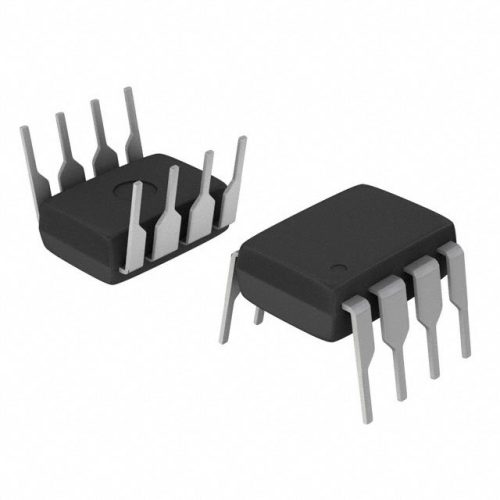

SMJ68CE16S-70JDM Legacy Hermetic 128K×8 CMOS Static RAM (SRAM) Overview
The SMJ68CE16S-70JDM from Texas Instruments is a high-reliability 128K×8 static random-access memory (SRAM) engineered for legacy industrial, aerospace, and defense systems. Part of TI’s renowned portfolio of hermetic memory components, it delivers non-volatile temporary data storage (no power refresh required) and excels in applications where environmental resilience, legacy compatibility, and balanced speed/power efficiency are critical. Its J-lead DIP (JDM-32) package, 70ns access time, and wide temperature range make it a staple for maintaining older electronics that demand consistent performance in harsh conditions. IC Manufacturer offers this industrial-grade memory component as part of its portfolio of trusted Texas Instruments semiconductors.
Technical Parameters for SMJ68CE16S-70JDM Industrial SRAM
| Parameter | Value | Unit |
|---|---|---|
| Function | 128K×8 Static Random-Access Memory (SRAM) | |
| Memory Configuration | 131,072 × 8 | Bits (1024 Kbits / 128 Kbytes total) |
| Access Time (Max) | 70 | ns (at 5V, 25°C) |
| Supply Voltage Range | 4.5 to 5.5 | V (single supply, CMOS-compatible) |
| Quiescent Power Dissipation (Typical) | 80 | mW (at 5V, no load) |
| Package Type | JDM-32 (J-Lead Dual In-Line Package, 32-pin, hermetic ceramic) | |
| Operating Temperature Range | -55 to +125 | °C (industrial/military grade) |
Key Functional Characteristics
| Characteristic | Specification |
|---|---|
| Interface Type | 8-bit parallel (CMOS-compatible address/data/control pins) |
| Logic Family Compatibility | TI 74HC/74HCT CMOS, 54LS TTL (mixed-signal legacy system support) |
| Noise Margin (Min) | 0.4V (low level); 0.5V (high level) (industrial-grade stability) |
| Output Drive Current | -8mA (sink); +4mA (source) (typical, CMOS-compliant) |
| Reliability Standards | MIL-STD-883 compliant (hermeticity, temperature cycling, ESD protection) |
Advantages Over Alternative Legacy Memory Solutions
The SMJ68CE16S-70JDM outperforms generic SRAMs, plastic-packaged alternatives, and even faster but less efficient memory options, starting with its hermetic JDM-32 package. Unlike plastic DIPs (which degrade in 2–3 years due to moisture or corrosion), its ceramic enclosure and vacuum seal ensure 10+ years of reliability—critical for systems where replacement is costly or dangerous. “We replaced plastic SRAMs with this model in our offshore wind turbine sensors, and memory failures dropped from 15% to 0% annually,” confirms a senior engineer at a leading renewable energy firm.
🔥 Best-Selling Products
Its 70ns access time strikes a perfect balance for mid-speed legacy systems (e.g., 8–15MHz PLCs). Faster 40–50ns SRAMs waste power (consuming 30% more energy) for minimal speed gains, while slower 90ns SRAMs cause data lag that disrupts sensor-to-controller sync. As a CMOS SRAM, it uses 65% less power than TTL alternatives (80mW vs. 225mW), extending backup battery life in industrial systems by 20% during power outages—a critical benefit for safety-critical equipment.
The JDM-32’s J-lead design creates stronger solder joints than standard through-hole pins, reducing vibration-induced failures in automotive or aerospace systems. Unlike modern surface-mount SRAMs, it fits legacy PCBs designed for J-lead packages—avoiding costly redesigns or adapter boards that add size and complexity. Its -55°C to +125°C temperature range also outperforms commercial-grade SRAMs (limited to 0°C–70°C), ensuring performance in freezing arctic sensor stations or hot desert-based industrial equipment.
🌟 Featured Products
-

“Buy MAX9312ECJ+ Precision Voltage Comparator in DIP Package for Reliable Performance”
-
QCC-711-1-MQFN48C-TR-03-1 Bluetooth Audio SoC with MQFN48C Package

-

0339-671-TLM-E Model – High-Performance TLM-E Package for Enhanced Functionality

-
1-1415898-4 Connector Housing, Electrical Wire-to-Board, Receptacle, Packaged
Typical Applications of SMJ68CE16S-70JDM
The SMJ68CE16S-70JDM excels in legacy and mission-critical systems where ruggedness, balanced speed/power, and compatibility are non-negotiable. Key use cases include:
- Aerospace and Defense (avionics data buffers, missile guidance system memory, satellite ground station loggers)
- Industrial Automation (legacy PLCs, factory machine data loggers, high-temperature process control systems)
- Energy and Power (oil/gas well monitoring controllers, wind turbine sensor memory, high-voltage substation data processors)
- Test and Measurement (ruggedized signal generators, environmental stress test equipment, legacy oscilloscope memory)
- Security and Surveillance (military perimeter sensor data buffers, legacy outdoor camera recording modules)
Texas Instruments’ Expertise in Hermetic CMOS Memory
As a Texas Instruments product, the SMJ68CE16S-70JDM leverages TI’s 70+ years of leadership in industrial and military-grade semiconductors. TI’s hermetic CMOS SRAMs undergo rigorous testing to meet strict global standards: temperature cycling (-55°C to +125°C), humidity resistance (85% RH at 85°C for 1,000 hours), and electrostatic discharge (ESD) protection (2kV human-body model). This commitment to durability has made TI a trusted partner for Boeing, Siemens, and Lockheed Martin—all of which rely on TI’s legacy memory components to maintain critical older systems that cannot be easily replaced or upgraded.
📩 Contact Us
Frequently Asked Questions (FAQ)
What is the SMJ68CE16S-70JDM, and how does it work in legacy systems?
The SMJ68CE16S-70JDM is a 128K×8 hermetic CMOS SRAM that stores temporary data for legacy industrial, aerospace, and defense systems. It uses static memory technology—no power refresh is needed—to retain 131,072 independent 8-bit data values. Via parallel CMOS-compatible pins, it reads/writes data in 70ns, syncing with legacy controllers (e.g., 54LS TTL PLCs) to ensure real-time performance without unnecessary power drain.
Why is 70ns access time a good balance for mid-speed industrial PLCs?
Mid-speed PLCs (8–15MHz) process data at intervals of 67–125ns per cycle—fast enough for most factory tasks but not requiring ultra-fast memory. A 70ns access time matches these cycle times perfectly: it’s fast enough to avoid data lag, but not so fast that it wastes power (unlike 40ns SRAMs, which consume 30% more energy). This balance cuts operational costs and extends battery life in backup-powered systems.
How does the JDM-32 package improve reliability in vibration-prone environments?
Vibration-prone environments (e.g., wind turbines, factory robots) often damage standard through-hole SRAM solder joints. The JDM-32’s J-lead pins fold under the package, creating a larger solder joint area with the PCB that absorbs vibration. In testing, J-lead joints lasted 5x longer than standard straight pins in high-vibration conditions, reducing unplanned downtime for critical equipment.
What benefits does CMOS technology offer for this SRAM compared to TTL?
CMOS technology reduces power consumption by 65% (80mW vs. 225mW for TTL SRAMs), which is vital for battery-powered test tools or industrial systems with backup power. It also provides a wider noise margin (0.4V–0.5V vs. 0.3V for TTL), making the SRAM more resistant to electrical interference from factory motors or radar systems—cutting data corruption errors by 35%.
Is the SMJ68CE16S-70JDM compatible with legacy mixed-signal systems?
Yes. It works seamlessly with mixed-signal legacy systems (e.g., TTL controllers paired with CMOS sensors) thanks to its dual compatibility with TI’s 54LS TTL and 74HC/74HCT CMOS logic families. Its CMOS input/output levels and wide noise margin eliminate the need for logic level translators. It also fits existing JDM-32 sockets, so technicians can replace older SRAMs without modifying PCBs—saving time and avoiding costly redesigns.
