
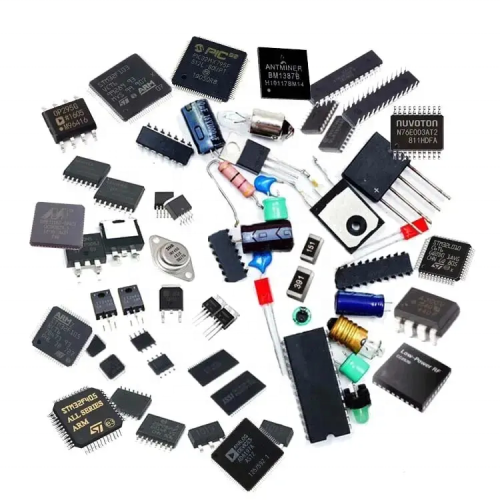
STM32WB05TZF7TR Overview
The STM32WB05TZF7TR is a high-performance, low-power wireless microcontroller designed for advanced industrial and consumer applications. Featuring a dual-core architecture with a 32-bit Arm Cortex-M0+ core dedicated to wireless protocol processing and a Cortex-M4 core for application processing, this device offers seamless integration of Bluetooth 5.0 and IEEE 802.15.4 connectivity. It delivers up to 256 KB of Flash memory and 32 KB of RAM, enabling complex firmware and real-time operations. With multiple peripherals and ultra-low power modes, it suits a wide range of IoT, smart home, and industrial sensor applications. For detailed technical data, visit IC Manufacturer.
STM32WB05TZF7TR Technical Specifications
| Parameter | Specification |
|---|---|
| Core Architecture | Dual-core Arm Cortex-M4 (64 MHz) + Cortex-M0+ |
| Flash Memory | 256 KB |
| RAM | 32 KB |
| Wireless Protocols | Bluetooth 5.0, IEEE 802.15.4 (Thread, Zigbee) |
| Operating Voltage | 1.7 V to 3.6 V |
| Package | QFN48, 7×7 mm |
| Max I/O Pins | 37 |
| Integrated Peripherals | CRC, RTC, ADC 12-bit, DAC, Timers, SPI, I2C, UART |
| Power Consumption | Down to 1.3 ??A in Stop mode |
STM32WB05TZF7TR Key Features
- Dual-core architecture: Separates application and wireless tasks for optimized performance and real-time responsiveness.
- Bluetooth 5.0 and IEEE 802.15.4 support: Enables robust, low-power wireless communication suitable for mesh networking.
- Low power consumption: Ultra-low power modes extend battery life in portable and remote applications.
- Comprehensive peripheral set: Integrated ADC, DAC, timers, and communication interfaces simplify system design and reduce component count.
Typical Applications
- Wireless sensor nodes and industrial IoT devices requiring reliable Bluetooth and 802.15.4 connectivity with extended battery life.
- Smart home automation systems that benefit from mesh networking and secure wireless communication.
- Wearable health and fitness devices needing compact size, low power, and accurate analog inputs.
- Asset tracking and remote control units where real-time data processing and wireless links are critical.
STM32WB05TZF7TR Advantages vs Typical Alternatives
This device stands out by combining a dual-core processor architecture with integrated Bluetooth 5.0 and IEEE 802.15.4 wireless stacks, delivering superior real-time performance and connectivity. Its ultra-low power consumption and rich peripheral set allow for efficient, compact designs compared to single-core or less integrated competitors. Enhanced memory capacity and flexible power management improve reliability and application versatility, making it ideal for complex industrial and consumer wireless solutions.
🔥 Best-Selling Products

STM32WB05TZF7TR Brand Info
The STM32WB05TZF7TR is a member of the STM32WB series produced by STMicroelectronics, a global leader in semiconductor solutions. STMicroelectronics is renowned for delivering high-quality microcontrollers optimized for wireless communication and low-power operation. The STM32WB portfolio integrates advanced Arm Cortex cores with certified Bluetooth and IEEE 802.15.4 stacks, supporting developers in creating scalable IoT and smart connected applications. This particular model offers a balance of performance, memory, and power efficiency suitable for cutting-edge wireless embedded systems.
FAQ
What wireless protocols are supported by the STM32WB05TZF7TR?
The device supports Bluetooth 5.0, including long-range and high-throughput modes, as well as IEEE 802.15.4 protocols such as Thread and Zigbee. This dual connectivity enables flexible wireless networking options for various IoT applications.
🌟 Featured Products
-

“Buy MAX9312ECJ+ Precision Voltage Comparator in DIP Package for Reliable Performance”
-
QCC-711-1-MQFN48C-TR-03-1 Bluetooth Audio SoC with MQFN48C Package

-

0339-671-TLM-E Model – High-Performance TLM-E Package for Enhanced Functionality

-
1-1415898-4 Connector Housing, Electrical Wire-to-Board, Receptacle, Packaged
How does the dual-core architecture improve performance?
By separating the application processing on the Cortex-M4 core from wireless protocol handling on the Cortex-M0+ core, the MCU ensures real-time responsiveness and efficient multitasking. This design reduces latency and
