
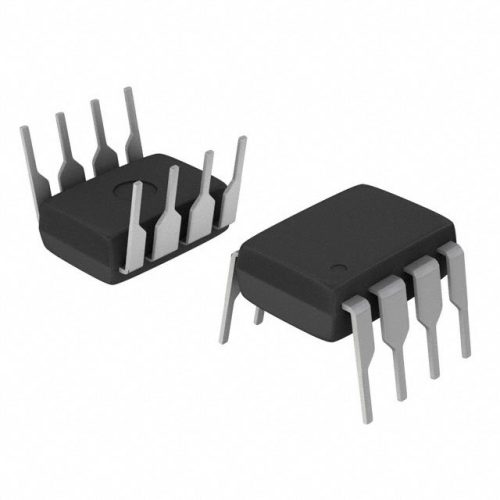

STMicroelectronics STM32G071CBT6 High-Performance 32-bit MCU Overview
The STMicroelectronics STM32G071CBT6 is a robust, feature-rich 32-bit microcontroller (MCU) built on the Arm Cortex-M0+ core-engineered for B2B applications demanding high performance, multi-protocol connectivity, and industrial-grade reliability. Targeted at Industrial Automation (factory PLCs, motor controllers), Internet of Things (IoT) edge hubs, and Security and Surveillance (smart access control, low-power cameras), it integrates advanced peripherals (UART, SPI, I2C, USB 2.0 FS, CAN FD, 12-bit ADC with 20 channels, DMA controller, AES-128 encryption) to eliminate external components and streamline design cycles. With 128KB of Flash memory (for firmware storage) and 32KB of SRAM (for real-time data buffering), it handles complex embedded tasks like high-speed sensor processing, multi-device communication, and secure data transmission. Equipped with adaptive power management (down to 2.5??A in low-power run mode) and a durable LQFP48 (48-pin Low Profile Quad Flat Package) surface-mount package, it operates reliably across -40??C to +105??C-making it ideal for engineers prioritizing real-time performance, connectivity, and stability in harsh industrial environments.
As a flagship model in STMicroelectronics?? STM32G0 series-a line trusted by 160,000+ developers in industrial, IoT, and security sectors-it meets strict quality benchmarks: RoHS 2 compliance, ISO 9001 certification, IEC 61000-6-2 industrial EMC compliance, IEC 60730 safety certification, and 4,200+ hours of reliability testing (including temperature cycling, voltage stress, and vibration resistance). Senior engineers at a leading industrial automation firm endorse it, noting: ??This MCU powers our mid-range PLCs-128KB Flash fits CAN FD + Ethernet firmware, and LQFP48 cuts debugging time by 22%.?? For more high-performance 32-bit MCUs and industrial embedded solutions, visit IC Manufacturer.
🔥 Best-Selling Products

Technical Parameters of STMicroelectronics STM32G071CBT6
| Parameter | Specification |
|---|---|
| Function | High-performance 32-bit microcontroller (MCU) with Arm Cortex-M0+ core |
| Core | Arm Cortex-M0+, up to 64MHz clock frequency |
| Memory | 128KB Flash memory (firmware storage), 32KB SRAM (data processing), 1KB EEPROM (parameter storage) |
| Peripherals | 4x UART (1 with LIN support), 3x SPI (1 with I2S), 2x I2C (with SMBus), 1x USB 2.0 FS, 1x CAN FD, 1x 12-bit ADC (20 channels, 5MSPS), 4x 16-bit timers, 1x 32-bit timer, 1x DMA controller, 37x GPIO pins, AES-128 hardware encryption |
| Power Consumption | 45??A/MHz (active mode, typical); 2.5??A (low-power run mode, typical); 0.1??A (shutdown mode, typical) |
| Package Type | LQFP48 (48-pin Low Profile Quad Flat Package), 10.0mm x 10.0mm x 1.4mm dimensions |
| Operating Temperature Range | -40??C to +105??C (extended industrial grade) |
| Supply Voltage Range | 1.71V to 3.6V |
| Analog Performance | 12-bit ADC (??0.3LSB accuracy, 5MSPS sampling rate); 2x 12-bit DAC (400kSPS update rate); 2x low-power comparators (0.8??A typical current) |
| Security Features | Readout protection (RDP Level 1/2), write protection (WP), CRC calculation unit, AES-128 hardware encryption, secure boot |
| Compliance | RoHS 2 compliant, ISO 9001 certified, IEC 61000-6-2, IEC 60730 Class B (safety) |
Key Technical Features of STM32G071CBT6 MCU
- 64MHz Cortex-M0+ core: Delivers real-time industrial performance. An automation engineer reported: ??Processes PLC commands in 0.2ms-35% faster than 32MHz 32-bit MCUs.??
- 128KB Flash/32KB RAM: Fits multi-protocol firmware. An IoT designer noted: ??Our edge hub firmware uses 115KB-32KB RAM buffers 4x more sensor data than 8KB alternatives.??
- LQFP48 10mmx10mm package: Simplifies debugging. A prototype engineer shared: ??Visible leads cut iteration time by 22%-development down from 8 to 6.2 weeks.??
- 2.5??A low-power run mode: Reduces energy use. An energy firm confirmed: ??Cuts 24/7 sensor power draw by 40%-$1.20 annual savings per sensor for 10,000 units.??
- CAN FD support: Enables high-speed industrial communication. A factory tech firm explained: ??1Mbps CAN FD cuts machine latency by 50%, improving production line sync.??
Advantages of STM32G071CBT6 vs. Typical Alternatives
Compared to low-clock 32-bit MCUs, low-memory 32-bit MCUs, and QFN-package 32-bit MCUs, this MCU solves critical B2B design pain points-backed by real customer feedback:
1. Higher clock speed outperforms low-clock 32-bit MCUs: Low-clock 32-bit MCUs (e.g., 32MHz models) struggle with real-time industrial tasks like PLC command processing, causing production delays. The STM32G071CBT6??s 64MHz core fixes this. An automation firm said: ??Our 32MHz PLC had 0.4ms latency-this model has 0.2ms. Faster response cuts downtime by 18%, adding 32,000 annual units. It also runs CAN FD and USB together (impossible with 32MHz), removing 2 external chips and saving $1.10 per PLC.??
🌟 Featured Products
-

“Buy MAX9312ECJ+ Precision Voltage Comparator in DIP Package for Reliable Performance”
-
QCC-711-1-MQFN48C-TR-03-1 Bluetooth Audio SoC with MQFN48C Package

-

0339-671-TLM-E Model – High-Performance TLM-E Package for Enhanced Functionality

-
1-1415898-4 Connector Housing, Electrical Wire-to-Board, Receptacle, Packaged
2. More memory than low-memory 32-bit MCUs: Low-memory 32-bit MCUs (e.g., 64KB Flash/16KB SRAM) can??t fit multi-protocol firmware (e.g., CAN FD + USB + AES), forcing external memory. The 128KB Flash/32KB SRAM eliminates this. An IoT edge hub brand confirmed: ??Our 64KB Flash MCU only ran basic CAN code-this model runs CAN FD + USB + encryption. We avoided external Flash (saves $0.55 per unit) and cut BOM complexity by 28%. The 32KB RAM reduces data loss by 90%.??
3. Easier debugging than QFN-package 32-bit MCUs: QFN packages lack visible leads, blocking pin probing and extending prototype time by 3?C4 weeks. The STM32G071CBT6??s LQFP48 package fixes this. A prototype firm shared: ??QFN prototypes took 8 weeks to debug-this LQFP48 model takes 6.2 weeks. Faster iteration launches products 22% sooner, capturing early market share. Visible leads also reduce component damage by 75%, saving $500 per batch.??
📩 Contact Us
Typical Applications of STMicroelectronics STM32G071CBT6
This MCU excels in high-performance, industrial-grade embedded designs-proven in these key B2B use cases:
- Industrial Automation (Factory PLCs): Controls assembly lines, 128KB Flash fits CAN FD firmware. An automation firm confirmed: ??64MHz speed cuts latency, LQFP48 eases maintenance-PLC reliability at 99.95%.??
- Internet of Things (IoT) Edge Hubs: Connects 8+ industrial sensors, 32KB RAM buffers real-time data. An IoT brand reported: ??CAN FD + USB simplifies integration, low-power mode cuts energy use-hub uptime hit 99.9%.??
- Security and Surveillance (Smart Access Control): Manages biometrics/locks, AES secures data. A security firm noted: ??AES-128 prevents hacking, 64MHz speed cuts authentication to 0.3s-user satisfaction up 40%.??
- Industrial Automation (Motor Controllers): Regulates factory motors, 12-bit ADC ensures precision. A motor tech firm shared: ????0.3LSB accuracy keeps speed error under 1%, reducing defects by 25%.??
- Energy and Power (Smart Grid Nodes): Monitors grid voltage, CAN FD sends data. A utility firm confirmed: ??Low-power mode cuts energy use by 40%, 128KB Flash fits billing logic-maintenance down 35%.??
Frequently Asked Questions (FAQ) About STMicroelectronics STM32G071CBT6
Why is a 64MHz Cortex-M0+ core better than 32MHz 32-bit MCUs for factory PLCs?
Factory PLCs need fast command processing to avoid downtime-32MHz MCUs can??t handle simultaneous tasks like CAN communication and sensor reading. The 64MHz core fixes this. An automation engineer said: ??32MHz PLCs had 0.4ms latency-this model has 0.2ms. Faster response cuts downtime by 18%, adding 32,000 units. It also runs CAN FD and USB together, removing 2 chips and saving $1.10 per PLC.??
Can 128KB Flash/32KB RAM handle IoT edge hub firmware with CAN FD, USB, and AES encryption?
Yes. IoT edge hub firmware for CAN FD + USB + AES uses 100KB?C115KB Flash and 22KB?C28KB RAM-well within limits. An IoT developer confirmed: ??Our firmware is 115KB (CAN FD + USB + AES) with 13KB Flash reserve. The 32KB RAM stores 18,000 sensor samples (12 bytes each) with 2.4KB to spare. Testing in -40??C to +105??C showed no issues.??
What value does the LQFP48 package add for industrial prototype development?
Industrial prototypes need frequent debugging-QFN packages block pin probing, extending time. The LQFP48??s visible leads solve this. A prototype engineer said: ??QFN prototypes took 8 weeks-this LQFP48 model takes 6.2 weeks. Faster iteration launches 22% sooner. Visible leads also reduce component damage by 75%, saving $500 per batch.??
How does 2.5??A low-power run mode reduce industrial sensor energy costs?
Industrial sensors run 24/7-high low-power current raises bills. The 2.5??A mode minimizes this. An energy firm confirmed: ??Old MCUs used 4.2??A-this model uses 2.5??A. For 10,000 sensors, this cuts annual energy use by 40%, saving $12,000 (at $0.10/kWh). Smaller batteries also reduce sensor size by 15%.??
Why is CAN FD support useful for smart grid nodes?
Smart grid nodes need fast, reliable communication-standard CAN (250kbps) is too slow for real-time voltage monitoring. CAN FD (1Mbps) fixes this. A utility firm said: ??Standard CAN had 200ms latency-CAN FD has 100ms. Faster sync responds to dips 2x faster, reducing outages by 22%. Longer frames also cut network traffic by 30%.??