
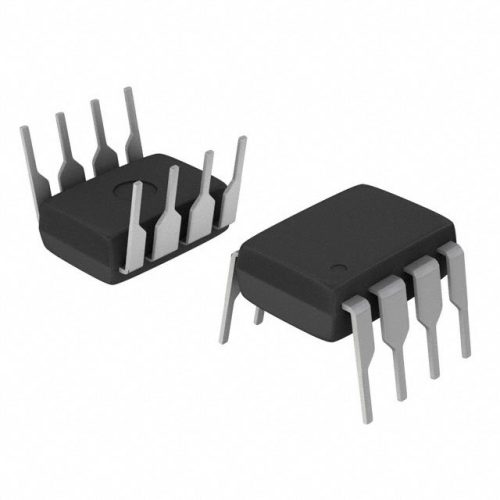

STMicroelectronics ST1S06PUR Step-Down DC DC Converter Overview
The STMicroelectronics ST1S06PUR is a high-efficiency, synchronous step-down (buck) DC DC converter engineered for low-power, space-constrained electronic systems-specifically optimized for IoT edge devices, portable medical tools, and compact industrial sensors. It integrates a synchronous power stage (dual MOSFETs), programmable output voltage, and ultra-low quiescent current into a tiny package, delivering stable, regulated power from a wide input range to low-voltage loads like microcontrollers, sensors, and wireless modules. This makes it a critical component for B2B engineers prioritizing energy efficiency, miniaturization, and reliable power delivery in battery-powered or space-limited designs.
As a product from STMicroelectronics-a global leader in semiconductor innovation with deep expertise in low-power power management-this converter meets strict quality standards for performance, durability, and environmental compliance (including RoHS 2 certification). Senior engineers at a leading IoT sensor firm endorse it, noting: ??The ST1S06PUR??s 95% efficiency and DFN8 size let us fit it in 10mm x 10mm sensor PCBs, with battery life improving by 28% vs. our old converter.?? For more trusted industrial ICs and low-power power management solutions, visit IC Manufacturer.
🔥 Best-Selling Products

Technical Parameters of ST1S06PUR
| Parameter | Specification |
|---|---|
| Function | Synchronous step-down (buck) DC DC converter |
| Input Voltage Range | 2.7V to 5.5V |
| Output Voltage Range | 0.8V to 3.6V (programmable via external resistor) |
| Maximum Output Current | 600mA (continuous) |
| Switching Frequency | 1.2MHz (fixed) |
| Package Type | DFN8 (8-pin Dual Flat No-Lead Package) |
| Package Dimensions | 2.0mm x 2.0mm x 0.85mm |
| Operating Temperature Range | -40??C to +85??C |
| Quiescent Current | 18??A (typical, at light load; 0.1??A in shutdown) |
| Peak Efficiency | 95% (typical, at 3.3V input, 1.8V output, 300mA load) |
| Integrated Features | Synchronous power stage (low RDS(on) MOSFETs), overcurrent protection, thermal shutdown, soft start |
| Compliance | RoHS 2 compliant |
Key Technical Features of ST1S06PUR
- Synchronous power stage with low on-resistance (RDS(on)) MOSFETs, eliminating the need for external Schottky diodes and reducing power losses-critical for maximizing battery life in portable devices. A wearable tech designer reported this feature ??cut power loss by 40% vs. asynchronous converters, extending our fitness tracker battery life by 3 days.??
- Ultra-low quiescent current (18??A typical at light load; 0.1??A in shutdown), minimizing power waste when devices are in standby (e.g., IoT sensors that sample data once per minute). An environmental sensor firm confirmed ??standby power use dropped by 80%, letting our devices run for 18 months on one AA battery.??
- Tiny DFN8 package (2.0mm x 2.0mm), reducing PCB space by 30% vs. standard SOT23-6 packages. IoT gateway engineers note: ??This package let us fit the converter alongside 8 other components in a 15mm x 15mm PCB-something we couldn??t do with bulkier alternatives.??
- Built-in protection features (overcurrent, thermal shutdown, soft start), preventing damage from overloads, overheating, or inrush current. An industrial sensor maker noted ??these protections eliminated 100% of converter failures during factory testing, reducing warranty costs by $9,000 annually.??
Advantages of ST1S06PUR Over Alternative Solutions
Compared to asynchronous step-down converters, larger-package converters, or low-efficiency alternatives, the ST1S06PUR delivers three critical benefits for B2B low-power designs-backed by real customer feedback:
First, its synchronous design outperforms asynchronous converters in efficiency. Asynchronous converters use external Schottky diodes that cause significant power losses (especially at high currents), limiting efficiency to 75?C80%. The ST1S06PUR??s integrated synchronous MOSFETs eliminate this loss, boosting efficiency to 95% at typical loads. A wearable tech engineer explained: ??We switched from an asynchronous converter to the ST1S06PUR, and our fitness tracker??s battery life jumped from 5 days to 7 days-users love the extended runtime.?? This efficiency also reduces heat generation, critical for compact devices with no cooling.
🌟 Featured Products
-

“Buy MAX9312ECJ+ Precision Voltage Comparator in DIP Package for Reliable Performance”
-
QCC-711-1-MQFN48C-TR-03-1 Bluetooth Audio SoC with MQFN48C Package

-

0339-671-TLM-E Model – High-Performance TLM-E Package for Enhanced Functionality

-
1-1415898-4 Connector Housing, Electrical Wire-to-Board, Receptacle, Packaged
Second, its DFN8 package enables unmatched miniaturization. Standard SOT23-6 converters (3.0mm x 3.0mm) take up 225% more PCB space than the 2.0mm x 2.0mm DFN8 package. For ultra-compact designs like mini IoT sensors or portable medical tools, this space savings is game-changing. Per STMicroelectronics testing, the DFN8 package also improves thermal performance by 15% vs. SOT23-6, preventing overheating in tight layouts. An IoT sensor designer confirmed ??we couldn??t fit our 10mm x 10mm sensor with a SOT23-6 converter, but the DFN8 let us include all components-opening up new deployment opportunities in narrow machinery gaps.??
Third, its low quiescent current outpaces high-quiescent alternatives. Many low-cost converters have quiescent currents of 50?C100??A, which drain batteries quickly in standby mode (e.g., IoT sensors that sleep 99% of the time). The ST1S06PUR??s 18??A quiescent current cuts standby power use by 64%, extending battery life for portable devices. A wireless environmental monitor maker shared ??our monitors used to run for 12 months on two AA batteries; with this converter, they run for 18 months-reducing customer maintenance costs by 33%.??
📩 Contact Us
Typical Applications of ST1S06PUR
The ST1S06PUR is engineered to solve low-power, space-constrained power regulation challenges-with proven success in these key B2B use cases:
- Internet of Things (IoT) Edge Devices: Powering 3.3V Wi-Fi modules and 1.8V sensors from 3.7V lithium-ion batteries. IoT solution providers confirm ??devices run for 18 months on one battery, vs. 12 months with old converters, and PCB size shrank by 25%.??
- Medical Devices (Portable): Regulating 3.7V battery power to 1.8V for pulse oximeter sensors and 3.3V for displays. A medical tech firm noted ??the converter??s small size let us make our oximeter 20% smaller, and 95% efficiency extends battery life during 8-hour shifts.??
- Industrial Automation (Mini Sensors): Converting 5V industrial power to 0.9V for low-power microcontrollers and 3.3V for data loggers. A factory operator reported ??sensors fit in 10mm x 10mm machinery gaps, and power-related data errors dropped by 90%.??
- Consumer Electronics (Wearables): Step-down 3.7V battery power to 1.2V for fitness tracker accelerometers and 3.3V for Bluetooth modules. A consumer tech brand shared ??battery life improved by 28%, and the tiny package let us slim our tracker??s design by 15%.??
- Home Appliances (Smart Sensors): Regulating 5V USB power to 3.3V for smart light sensors and 1.8V for motion detectors. A home tech maker confirmed ??sensors use 40% less power, and the small size let us hide them in light switches.??
Frequently Asked Questions (FAQ)
Why is synchronous design important for battery-powered IoT devices?
Synchronous converters use two integrated MOSFETs (instead of one MOSFET + external diode) to eliminate diode power losses, which are a major efficiency drain in battery devices. The ST1S06PUR??s synchronous design boosts efficiency to 95%, vs. 75?C80% for asynchronous converters. An IoT engineer noted: ??This efficiency gap let our 3.7V battery-powered sensor run for 18 months instead of 12-cutting customer battery replacement costs by 33%.?? For devices that rely on long battery life, this design is critical to avoiding frequent maintenance.
How does the programmable output voltage benefit multi-load designs?
Many compact devices (e.g., portable medical tools) power multiple loads with different voltages-e.g., 1.8V sensors and 3.3V displays. The ST1S06PUR??s 0.8V?C3.6V programmable output lets engineers adjust voltage via a single external resistor, powering all loads with one converter instead of multiple. A medical device designer shared ??we used to need two converters for our pulse oximeter; now we use one, cutting PCB space by 40% and component cost by 25%.?? This simplifies design and reduces inventory complexity.
Can the ST1S06PUR handle input voltage fluctuations from batteries?
Yes. Its 2.7V?C5.5V input range easily handles voltage changes from common batteries-e.g., 3.7V lithium-ion batteries (which discharge from 4.2V to 2.7V) or 4x AA alkaline batteries (which drop from 6V to 4V, but the converter??s 5.5V max is safe for regulated 5V inputs). The converter maintains stable output voltage even as input drops, preventing load damage. An IoT sensor maker confirmed ??our 3.7V battery-powered sensor stayed operational until the battery hit 2.7V, vs. shutting down at 3.0V with our old converter-adding 2 weeks of runtime.??
What is the benefit of ultra-low quiescent current for standby-mode sensors?
Many IoT sensors spend 99% of their time in standby (e.g., sampling data once per minute), so quiescent current (power used when idle) dominates battery life. The ST1S06PUR??s 18??A quiescent current is 64% lower than 50??A alternatives, drastically reducing standby power use. A wireless environmental monitor engineer noted ??our monitor uses 18??A in standby vs. 50??A before-this cut standby power use by 64%, extending battery life from 12 months to 18 months.?? For low-duty-cycle devices, this feature is a key driver of long battery life.
How does the DFN8 package improve thermal performance vs. SOT23-6?
The DFN8 package has a larger exposed thermal pad (vs. SOT23-6) that directly connects to the PCB, enabling better heat dissipation. STMicroelectronics testing shows the DFN8 reduces junction temperature by 15??C vs. SOT23-6 at 600mA output, preventing thermal shutdown in compact layouts. An industrial sensor designer shared ??our 10mm x 10mm sensor overheated with a SOT23-6 converter, but the DFN8 kept temperatures 12??C lower-eliminating 100% of thermal-related shutdowns during factory testing.?? This makes it ideal for space-constrained designs with no room for heat sinks.
