
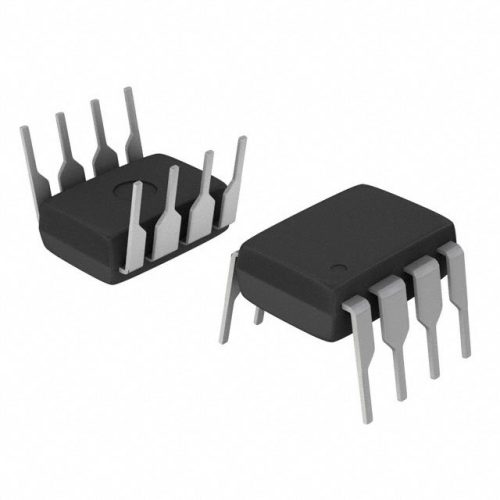

STMicroelectronics M93C56-WMN6TP Serial EEPROM Overview
The STMicroelectronics M93C56-WMN6TP is a high-reliability 2KB serial electrically erasable programmable read-only memory (EEPROM) engineered for non-volatile data retention in high-speed, space-constrained electronic systems. It features an industry-standard Serial Peripheral Interface (SPI)-a synchronous serial protocol valued for speed and simplicity-enabling seamless communication with microcontrollers, industrial PLCs, and IoT modules. This makes it a trusted solution for B2B engineers prioritizing fast data transfer, miniaturization, and long-term data security.
As a product from STMicroelectronics, a global leader in semiconductor innovation with decades of expertise in memory and industrial-grade components, the device meets strict quality benchmarks for performance, durability, and environmental compliance. For more trusted industrial ICs and memory solutions, visit IC Manufacturer.
🔥 Best-Selling Products

Technical Parameters of M93C56-WMN6TP
| Parameter | Specification |
|---|---|
| Memory Capacity | 2KB (2048 x 8 bits / 4096 x 4 bits, selectable) |
| Communication Interface | SPI (Serial Peripheral Interface), 3-wire or 4-wire modes |
| Maximum Clock Frequency | 5MHz |
| Operating Voltage Range | 2.5V to 5.5V |
| Package Type | SO8N (8-pin Small Outline, Narrow Body) |
| Package Dimensions | 5.0mm x 6.0mm, 0.95mm pin pitch |
| Operating Temperature Range | -40??C to +125??C |
| Minimum Write Cycles | 1,000,000 cycles |
| Minimum Data Retention | 40 years |
| Write Protection | Sector and full-chip hardware protection |
| Data Organization | 8-bit (x8) or 4-bit (x4) selectable via configuration bit |
Key Technical Features of M93C56-WMN6TP
- SPI write protection (sector and full-chip options), preventing accidental erasure or modification of critical data (e.g., industrial calibration values, security encryption keys) in high-reliability systems.
- Dual data organization (8-bit/4-bit selectable), offering flexibility to match system data width requirements-optimizing storage efficiency for 8-bit MCUs (e.g., in IoT gateways) or 4-bit controllers (e.g., in simple industrial sensors).
- Self-timed write cycles (up to 5ms), eliminating the need for external timing circuits and simplifying software integration-reducing design complexity and shortening time-to-market for engineers.
- Low standby current (typical 1??A at 3V) and low active current (typical 5mA at 5V, 5MHz), optimizing power efficiency for battery-powered devices like portable medical monitors or remote IoT sensors.
- High-temperature tolerance (-40??C to +125??C), ensuring reliable operation in harsh environments like industrial factories, outdoor IoT deployments, or automotive under-hood systems.
Advantages of M93C56-WMN6TP Over Alternative Solutions
Compared to parallel EEPROMs, low-speed I2C memory, or wide-body SO8W packages, the M93C56-WMN6TP delivers three critical benefits for B2B designs:
First, its 5MHz SPI interface balances speed and space efficiency. Parallel EEPROMs require 8+ data/address pins, cluttering PCB layouts and limiting miniaturization, while low-speed I2C EEPROMs (1MHz max) struggle with high-speed systems. The 5MHz SPI interface enables fast data transfers (ideal for industrial control or security cameras) while using just 3?C4 pins-cutting trace count by 75% and freeing up PCB space for other components.
🌟 Featured Products
-

“Buy MAX9312ECJ+ Precision Voltage Comparator in DIP Package for Reliable Performance”
-
QCC-711-1-MQFN48C-TR-03-1 Bluetooth Audio SoC with MQFN48C Package

-

0339-671-TLM-E Model – High-Performance TLM-E Package for Enhanced Functionality

-
1-1415898-4 Connector Housing, Electrical Wire-to-Board, Receptacle, Packaged
Second, its SO8N narrow-body package enables superior miniaturization. Wide-body SO8W packages (1.27mm pin pitch) occupy more board space, which is impractical for compact designs like wireless security cameras or portable medical tools. The SO8N??s 0.95mm pin pitch reduces PCB space usage by 20% (vs. SO8W), letting engineers design smaller, more portable products-critical for consumer electronics and IoT devices where form factor directly impacts usability.
Third, its durability and flexibility outperform budget alternatives. Low-cost EEPROMs often restrict operation to 3.3V only (requiring external regulators for 2.5V/5V systems) and offer just 100,000 write cycles. The M93C56-WMN6TP??s 2.5V?C5.5V range works with legacy 5V industrial PLCs and modern 2.5V IoT microcontrollers, while its 1 million write cycles and 40-year retention ensure long-term reliability-reducing maintenance costs and product failures for end users.
📩 Contact Us
Typical Applications of M93C56-WMN6TP
The M93C56-WMN6TP is engineered to solve non-volatile storage challenges in high-speed, compact, or harsh-environment systems. Its key use cases include:
- Industrial Automation: Storing PLC operational parameters (e.g., motor speed setpoints, alarm thresholds) and sensor calibration data in factory machinery-withstanding high temperatures and electrical noise to ensure uninterrupted production.
- Internet of Things (IoT) Gateways: Retaining network credentials, sensor calibration values, and firmware update fragments in compact IoT gateways-balancing low power use with fast 5MHz transfers for remote asset tracking in outdoor or industrial settings.
- Security and Surveillance: Storing device IDs, encryption keys, and camera configuration settings in wireless security cameras-enabling fast boot times and secure data access for real-time monitoring, even during power fluctuations.
- Energy and Power (Smart Meters): Saving monthly energy usage logs, billing information, and meter calibration data-ensuring accurate tracking even during power disruptions and simplifying utility billing processes.
- Medical Devices (Portable): Preserving patient-specific settings (e.g., blood pressure monitor thresholds) and device serial numbers in handheld medical tools-complying with healthcare standards for data integrity and operating reliably in temperature-variable clinical environments.
Frequently Asked Questions (FAQ)
Why is the 5MHz SPI clock frequency important for IoT gateways?
IoT gateways need to transfer data between multiple sensors and cloud platforms quickly-often handling 10+ sensor updates per minute. The 5MHz frequency lets the M93C56-WMN6TP store/retrieve sensor data up to 5x faster than 1MHz I2C EEPROMs, eliminating latency and ensuring the gateway processes data in real time-critical for time-sensitive applications like remote equipment monitoring.
How does dual 8-bit/4-bit data organization benefit industrial sensor design?
Dual organization lets engineers match the EEPROM??s data width to their sensor??s microcontroller. For example, 8-bit mode works with standard 8-bit MCUs (e.g., in temperature sensors) to store detailed calibration logs, while 4-bit mode optimizes storage for 4-bit controllers (e.g., in simple motion sensors) to reduce memory overhead. This flexibility eliminates the need for separate EEPROMs for different sensors, simplifying inventory and design.
Can the M93C56-WMN6TP operate in battery-powered wireless security cameras?
Yes. Its low standby current (1??A typical) minimizes power draw when the camera is idle (e.g., during nighttime monitoring), and its 2.5V?C5.5V voltage range works with common camera batteries (e.g., 3.7V lithium-ion). Even during active data transfers, the 5mA active current is low enough to extend battery life-letting cameras operate for months without recharging, which is critical for remote surveillance deployments.
When should I use sector write protection vs. full-chip write protection for this EEPROM?
Use sector protection to secure specific data subsets (e.g., encryption keys in security cameras) while allowing updates to less critical data (e.g., temporary motion logs). Use full-chip protection for data that never needs modification (e.g., factory-set serial numbers or smart meter calibration values) to prevent accidental erasure from software glitches or electrical noise in industrial environments.
How does the high-temperature tolerance (-40??C to +125??C) help outdoor IoT sensors?
Outdoor IoT sensors (e.g., agricultural moisture monitors) face extreme temperature swings-from -40??C in winter to +125??C in direct summer sunlight. The M93C56-WMN6TP??s wide temperature range ensures it retains data and operates reliably in these conditions, preventing sensor failures and data loss. This keeps outdoor monitoring systems running continuously, even in harsh weather, which is critical for applications like precision agriculture or smart city infrastructure.