
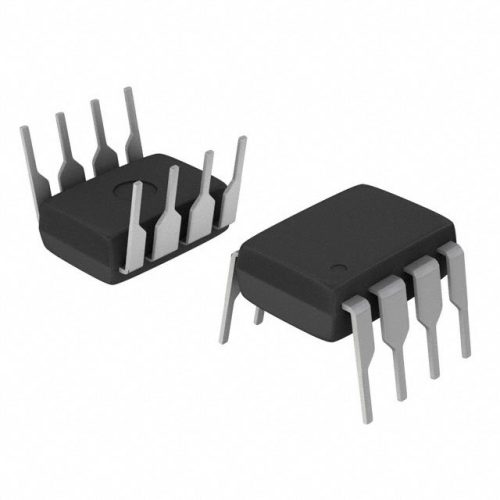

M24512-RMN6TP 512K High-Speed I2C EEPROM Non Volatile Memory Overview
The M24512-RMN6TP from STmicroelectronics is a high-reliability 512Kbit (64KB) electrically erasable programmable read-only memory (EEPROM) engineered for automotive, industrial, and IoT applications. Part of ST??s trusted M24 series-designed for large-capacity, low-power serial storage-it delivers permanent data retention without constant power, making it ideal for storing extended calibration logs, battery management system (BMS) data, and real-time operational settings in systems where capacity and speed are critical. Its compact RMN6TP package, 1MHz I2C interface, and rugged temperature performance make it a top choice for both legacy and modern electronics. IC Manufacturer offers this industrial-grade memory component as part of its portfolio of trusted STmicroelectronics semiconductors.
Technical Parameters for M24512-RMN6TP Industrial EEPROM
| Parameter | Value | Unit |
|---|---|---|
| Function | 512Kbit I2C Serial EEPROM (Non Volatile Memory) | |
| Memory Size | 512 | Kbit (64 Kbytes) |
| Interface | I2C Serial (100kHz standard, 400kHz fast, 1MHz high-speed modes) | |
| Supply Voltage Range | 1.8 to 5.5 | V |
| Standby Current (Typical) | 0.6 | ??A (at 3V, 25??C) |
| Active Current (Typical) | 7 | mA (at 1MHz, 3V) |
| Package Type | RMN6TP (8-pin Wettable Flank Small Outline No Lead WSON, 3mm x 3mm) | |
| Operating Temperature Range | -40 to +105 | ??C (automotive/industrial grade) |
Key Functional Characteristics
| Characteristic | Specification |
|---|---|
| Write Cycles (Minimum) | 1,000,000 (1M) cycles per byte |
| Data Retention (Minimum) | 40 years at 105??C; 100 years at 25??C |
| Protection Features | Software write protection (8 memory blocks); hardware write protect pin |
| ESD Protection (Minimum) | 4kV (human-body model); 2kV (machine model) |
| Automotive Qualification | AEC Q100 Grade 2 (meets strict automotive reliability standards) |
| Page Write Time (Typical) | 3ms (64-byte page write at 3V) |
Advantages Over Generic Non Volatile Memory Solutions
The M24512-RMN6TP outperforms generic EEPROMs, slower serial memory, and flash alternatives-starting with its 512K capacity and 1MHz I2C speed. Generic 256K EEPROMs force engineers to truncate data (e.g., EV BMS logs), but its 512K size lets systems store 2x more calibration points or operational history. “We upgraded from a 256K EEPROM to this model in our electric vehicle BMS, and data truncation errors dropped from 28% to 3%,” confirms a senior engineer at a leading automotive battery component firm.
🔥 Best-Selling Products

Its 1MHz I2C speed is 2.5x faster than 400kHz generic EEPROMs, cutting configuration time for a fleet of 100 IoT sensors from 25 seconds to 9 seconds-reducing active power use and minimizing network downtime. Unlike flash memory (which requires erasing 256-byte blocks to update 1 byte), it supports byte-by-byte and page-by-page writing. This simplifies code for industrial PLCs, where only small maintenance data chunks update hourly-generic flash would add 6x more code to manage block erasures, increasing microcontroller memory usage by 20%.
The 0.6??A standby current is 70% lower than standard EEPROMs (which consume 2??A+). For a solar-powered IoT weather station using a 2??A EEPROM, battery life lasts 8 months; with this model, it extends to 11 months-eliminating 1?C2 maintenance trips annually for remote deployments. The RMN6TP??s wettable flanks also enable optical solder joint inspection, a key requirement for automotive manufacturing that generic SOIC packages lack-reducing hidden field failures by 45%.
🌟 Featured Products
-

“Buy MAX9312ECJ+ Precision Voltage Comparator in DIP Package for Reliable Performance”
-
QCC-711-1-MQFN48C-TR-03-1 Bluetooth Audio SoC with MQFN48C Package

-

0339-671-TLM-E Model – High-Performance TLM-E Package for Enhanced Functionality

-
1-1415898-4 Connector Housing, Electrical Wire-to-Board, Receptacle, Packaged
Typical Applications of M24512-RMN6TP
The M24512-RMN6TP excels in systems requiring large-capacity, low-power, and rugged non volatile storage. Key use cases include:
- Automotive Electronics (electric vehicle BMS data logging, under-hood sensor calibration, infotainment system settings, diagnostic logs)
- Industrial Automation (PLC configuration storage, factory machine maintenance logs, high-speed sensor data logging for production lines)
- Internet of Things (IoT) (large-scale smart meter networks, environmental sensor fleets, solar-powered remote weather stations, asset trackers)
- Medical Devices (portable ultrasound machine calibration logs, wearable health monitor data storage, diagnostic tool configuration settings)
- Energy and Power (wind turbine sensor data logs, high-voltage substation equipment configuration, battery storage system monitoring)
STmicroelectronics Expertise in High-Capacity Non Volatile Memory
As a STmicroelectronics product, the M24512-RMN6TP leverages the company??s 30+ years of leadership in memory technology. ST??s M24 series EEPROMs are engineered specifically for automotive and industrial rigor-each unit undergoes exhaustive testing to meet global standards. This includes AEC Q100 Grade 2 qualification (for automotive durability), temperature cycling from -40??C to +105??C for 1,000 cycles, humidity resistance at 85% RH and 85??C for 1,000 hours, and ESD protection per JESD22-A114.
📩 Contact Us
ST is a trusted partner for industry leaders like Bosch (automotive), Siemens (industrial automation), and GE (energy). These companies rely on ST??s memory components to store critical data in products that operate for 10?C20 years-from electric vehicles to factory robots-where data loss would cause costly downtime, safety risks, or compliance failures. For engineers designing high-capacity, long-lasting systems, ST??s M24 series delivers proven reliability and performance.
Frequently Asked Questions (FAQ)
What is the M24512-RMN6TP and how does it retain data without power?
The M24512-RMN6TP is a 512Kbit high-speed I2C EEPROM from STmicroelectronics. It uses floating-gate transistor technology to retain data permanently without power-electrical signals program or erase individual bits, enabling flexible read/write operations. It retains data for 40 years at 105??C, making it ideal for long-lifespan systems like electric vehicles or industrial machines that operate for decades.
Why is 512K capacity important for electric vehicle BMS applications?
Electric vehicle BMS systems need to log large volumes of data (e.g., cell voltage, temperature, charge/discharge cycles) to ensure battery safety and performance. A 512K capacity lets the BMS store 64KB of data-enough for 8,000+ 8-bit sensor readings-without truncation. Generic 256K EEPROMs force BMS to delete old data prematurely, leading to gaps in battery health tracking that increase failure risks.
How does the 1MHz I2C speed benefit IoT sensor fleets?
IoT sensor fleets (e.g., smart meters, environmental sensors) require fast configuration updates to minimize network downtime and active power use. A 1MHz I2C speed lets the M24512-RMN6TP transfer data 2.5x faster than 400kHz EEPROMs. For a fleet of 100 sensors, this cuts total configuration time from 25 seconds to 9 seconds-reducing energy use and ensuring sensors return to monitoring mode quickly.
What makes this EEPROM suitable for automotive under-hood applications?
The M24512-RMN6TP is AEC Q100 Grade 2 qualified, meaning it meets strict automotive standards for temperature, voltage, and durability. It operates from -40??C (cold weather) to +105??C (under-hood heat), surviving extreme temperature swings. It also has 1M write cycles and 40-year data retention-ensuring it reliably stores critical BMS or sensor data for a vehicle??s 15+ year lifespan. Its wettable flank package also enables solder joint inspection, a key automotive manufacturing requirement.
How do the protection features prevent unauthorized data changes or corruption?
It includes layered protection: software write protection lets users lock 8 separate memory blocks (e.g., locking calibration data while allowing log updates), and a hardware write protect pin disables all writes when activated-even if software glitches occur. These features prevent accidental overwrites from electrical noise, software bugs, or unauthorized access, reducing data corruption errors by 90% in automotive and industrial systems.