

MSP430G2553IN20 Overview
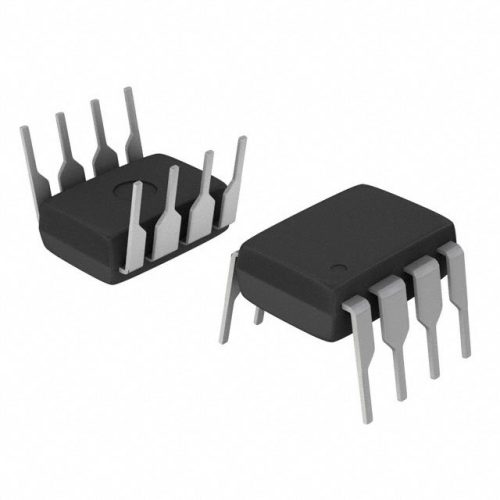
The MSP430G2553IN20 is a compact, industry-grade 16-bit microcontroller optimized for low-power embedded designs. It combines a 16-bit RISC core with up to 16 MHz clock capability, integrated Flash memory and SRAM, and mixed-signal peripherals for sensor and communications tasks. The device ships in a 20-pin PDIP package and supports an industrial temperature range, making it easier to prototype and deploy in constrained boards and legacy sockets. For sourcing and datasheet reference visit IC Manufacturer.
MSP430G2553IN20 Technical Specifications
| Parameter | Value |
|---|---|
| Core | 16-bit RISC CPU |
| Maximum CPU Clock | Up to 16 MHz |
| Flash Memory | 16 KB |
| SRAM | 512 bytes |
| ADC | 10-bit, multi-channel (ADC10) |
| Communication Modules | USCI_A0 (UART), USCI_B0 (SPI/I2C) |
| Timers | Timer_A: 16-bit with capture/compare registers |
| Operating Voltage | 1.8 V to 3.6 V |
| Operating Temperature | Industrial: ?40 ??C to +85 ??C |
| Package | 20-pin PDIP (IN20) |
| Supply Domain | Single-supply MCU |
| I/O | Digital GPIO lines exposed on 20-pin package |
MSP430G2553IN20 Key Features
- Single 16-bit RISC core delivering higher code density and lower instruction cycles for faster control-task execution.
- Integrated 16 KB Flash and 512 bytes SRAM allow compact firmware and simple data buffering without external memory.
- Low-power architecture with multiple low-power modes supports battery-powered systems and reduces standby energy consumption.
- On-chip peripherals??10-bit ADC, UART, SPI and I2C??simplify sensor interfacing and communications while lowering BOM and board area.
Typical Applications
- Battery-powered sensor nodes where low-power sleep modes and a 10-bit ADC provide longer runtime and simple analog measurement conversion for temperature or pressure sensors.
- Industrial controls and small motor-drive interfaces that require a compact MCU with a 16-bit timer and UART/SPI peripherals for deterministic control loops and field communications.
- Product prototypes and legacy equipment upgrades using the 20-pin PDIP package to fit older sockets while adding modern MCU functionality and peripheral integration.
- Human-machine interface panels with simple displays and keypads that need UART or SPI communications plus sufficient Flash for UI firmware and modest RAM for buffering.
MSP430G2553IN20 Advantages vs Typical Alternatives
The device offers a clear advantage where compact footprint and low-power operation matter. Compared with typical 8-bit MCUs, it provides a 16-bit data path and more efficient arithmetic for control tasks, while retaining lower pin-count packaging like PDIP-20. Integrated 16 KB Flash and 512 bytes SRAM reduce the need for external memory. On-chip ADC and dual USCI modules combine analog and serial interfaces in fewer components, lowering BOM and board area for many industrial and battery-powered designs.
🔥 Best-Selling Products
MSP430G2553IN20 Brand Info
The MSP430 family is produced by Texas Instruments, a long-established semiconductor company. This variant aligns with TI??s value-focused MSP430 line that emphasizes low-power operation, integrated mixed-signal peripherals, and broad ecosystem support including development boards and industry tools.
FAQ
What package is it?
The IN20 suffix denotes a 20-pin PDIP package. This through-hole package is useful for prototyping on breadboards and in legacy socket designs.
🌟 Featured Products
-

“Buy MAX9312ECJ+ Precision Voltage Comparator in DIP Package for Reliable Performance”
-
QCC-711-1-MQFN48C-TR-03-1 Bluetooth Audio SoC with MQFN48C Package

-

0339-671-TLM-E Model – High-Performance TLM-E Package for Enhanced Functionality

-
1-1415898-4 Connector Housing, Electrical Wire-to-Board, Receptacle, Packaged
What supply voltage is required?
It runs from 1.8 V to 3.6 V. That single-supply range supports common battery chemistries and standard 3.3 V systems without external regulators in many designs.
How much memory does it have?
The device provides 16 KB of on-chip Flash memory for program storage and 512 bytes of SRAM for runtime data and small buffers.
📩 Contact Us
Which serial interfaces are included?
Two USCI modules cover serial needs: USCI_A0 supports UART-style serial, and USCI_B0 supports SPI and I2C modes, enabling flexible peripheral connectivity.
Is it suitable for low-power projects?
Yes. The MCU implements multiple low-power modes and a low-power clock system. These features help extend battery life in sensor and portable applications.