

MSP430F2101IPW Overview
The MSP430F2101IPW is an ultralow-power, 16?bit microcontroller optimized for battery-powered and embedded sensing applications. It combines a compact instruction set RISC core with integrated peripherals that balance low active current and deep low?power modes for longer run time. The device targets simple control, timing, and measurement tasks where minimal code size and minimal power draw matter. For ordering and additional resources visit IC Manufacturer.
MSP430F2101IPW Technical Specifications
| CPU architecture | 16?bit RISC |
| Maximum CPU clock | 16 MHz |
| Operating voltage | 1.8 V to 3.6 V |
| Flash memory | 1 KB |
| RAM | 128 bytes |
| I/O pins | 10 general-purpose I/O |
| Timer | 16?bit Timer_A (one unit) |
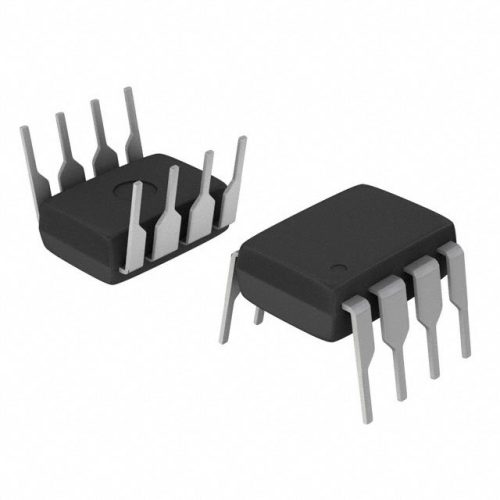
| Package | 14-pin PDIP / 14-pin TSSOP (IPW suffix) |
| Power modes | Active and multiple low-power modes (LPM) |
| Typical active current | ~160 ??A/MHz (order-of-magnitude low-power class) |
| Temperature range | -40 ??C to +85 ??C (industrial) |
MSP430F2101IPW Key Features
- Single 16?bit CPU core with compact instruction set: efficient code density reduces flash usage and accelerates control tasks.
- Low-voltage operation (1.8?C3.6 V): flexible battery options and simpler power-rail design for portable systems.
- Integrated 16?bit Timer_A: precise timing, PWM generation, and event capture for motor control or power management.
- Small flash and RAM footprint: cost-effective footprint for simple embedded functions and single-purpose controllers.
- Multiple low-power modes: reliable battery life extension through deep sleep and wake-on-event capability.
- Compact 14-pin package options: space-saving integration for tight PCB layouts and through-hole prototypes.
Typical Applications
- Battery-operated sensor nodes requiring sub-milliamp sleep currents, short wake periods for measurement, and long standby life in remote monitoring systems.
- Simple motor or actuator control where a small 16?bit timer and low code footprint enable precise pulse-width modulation and timing without a larger MCU.
- Handheld instruments that need low-voltage operation, deterministic timing, and minimal BOM cost for compact, rugged measurement devices.
- Appliance control and user-interface modules that use a few I/O lines, require low power standby, and demand low component count for high-volume production.
MSP430F2101IPW Advantages vs Typical Alternatives
The device offers a better balance of power and simplicity compared with larger 8? or 32?bit controllers. It delivers more precise 16?bit timing and improved code density than many 8?bit MCUs while consuming substantially less active and standby power than typical 32?bit parts. Its low operating voltage and small package make it more suitable where cost, board area, and battery life are higher priorities than high computational throughput or large memory.
🔥 Best-Selling Products
MSP430F2101IPW Brand Info
MSP430F2101IPW is part of the MSP430 family from Texas Instruments. The family emphasizes ultralow power consumption and efficient 16?bit processing, backed by broad development tools and a mature ecosystem for embedded, low-power designs.
FAQ
What is the core architecture?
The controller uses a 16?bit RISC CPU with a compact instruction set. This architecture yields smaller code size and deterministic execution ideal for timing and control tasks.
🌟 Featured Products
-

“Buy MAX9312ECJ+ Precision Voltage Comparator in DIP Package for Reliable Performance”
-
QCC-711-1-MQFN48C-TR-03-1 Bluetooth Audio SoC with MQFN48C Package

-

0339-671-TLM-E Model – High-Performance TLM-E Package for Enhanced Functionality

-
1-1415898-4 Connector Housing, Electrical Wire-to-Board, Receptacle, Packaged
What supply voltage does it require?
It operates from 1.8 V to 3.6 V, enabling common single-cell battery chemistries and low-voltage digital rails while reducing power dissipation in portable applications.
How much nonvolatile memory is available?
The device includes on-chip flash memory sized for small embedded programs. This on-chip flash simplifies firmware updates and reduces the need for external memory in single-purpose systems.
📩 Contact Us
Which packages are available?
It ships in compact 14-pin package options suitable for both through-hole prototypes and surface-mount production. These small footprints lower BOM cost and save board area in dense designs.
Is it suitable for battery-powered designs?
Yes. The product family targets ultralow-power applications with multiple low-power modes and low active current per megahertz, making it appropriate for long-life battery systems and intermittent sensing workloads.