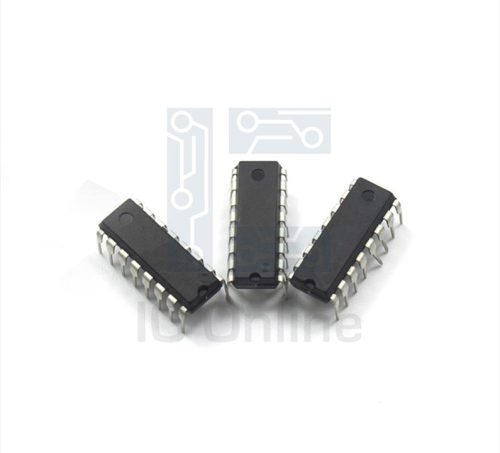

MMRF1317HSR5 Overview
The MMRF1317HSR5 is a high-performance RF front-end module designed for advanced wireless communication systems. This component integrates a low noise amplifier (LNA) and a power amplifier (PA) optimized for the 1.7 GHz frequency band, delivering enhanced signal quality and efficient power management. Its compact design and robust performance make it suitable for base station transceivers, repeaters, and other RF applications requiring linearity and gain stability. Manufactured by a leading IC Manufacturer, this module supports seamless integration in complex RF architectures, ensuring reliable operation under varying environmental conditions.
MMRF1317HSR5 Technical Specifications
| Parameter | Specification |
|---|---|
| Frequency Range | 1690?C1710 MHz |
| Gain (LNA) | 18 dB typical |
| Output Power (PA) | 28 dBm typical |
| Noise Figure | 1.5 dB typical |
| Supply Voltage | 5 V ?? 5% |
| Input/Output Impedance | 50 ?? |
| Current Consumption | 120 mA typical |
| Operating Temperature | -40??C to +85??C |
| Package Type | 5 x 5 mm QFN |
MMRF1317HSR5 Key Features
- Integrated LNA and PA functionality: Combines amplification stages into a single compact module, simplifying RF front-end design and reducing PCB space.
- High linearity performance: Ensures minimal signal distortion for clearer communication, critical in high-density wireless networks.
- Low noise figure: Enhances receiver sensitivity, enabling better signal detection in challenging RF environments.
- Stable gain across temperature range: Maintains consistent RF amplification in demanding industrial and outdoor applications.
MMRF1317HSR5 Advantages vs Typical Alternatives
This module offers superior integration by combining low noise and power amplification in a single compact package, reducing component count and improving system reliability. Its low noise figure and high gain outperform many discrete alternatives, ensuring enhanced sensitivity and signal quality. Additionally, the stable operating range and efficient power consumption provide a robust solution for demanding RF front-end applications.
🔥 Best-Selling Products

Typical Applications
- Base station transceivers requiring compact, high-performance RF front-end modules for improved signal amplification and quality in cellular networks.
- Signal repeaters that benefit from integrated amplification stages for enhanced coverage and reduced design complexity.
- Wireless infrastructure equipment where linearity and low noise are critical for maintaining communication integrity.
- Industrial RF communication devices operating in the 1.7 GHz band, needing reliable amplification under varying environmental conditions.
MMRF1317HSR5 Brand Info
The MMRF1317HSR5 is developed by a globally recognized semiconductor manufacturer specializing in RF components optimized for wireless communications. This product exemplifies the brand??s commitment to delivering innovative, reliable, and high-performance RF front-end solutions. Engineered with precision, the module supports modern wireless standards and facilitates faster, clearer data transmission in various commercial and industrial applications.
FAQ
What frequency range does the MMRF1317HSR5 support?
The device is designed to operate effectively within the 1690 to 1710 MHz frequency band, making it well-suited for wireless communication systems targeting this spectrum. This frequency range aligns with many cellular and industrial RF applications.
🌟 Featured Products
-

“Buy MAX9312ECJ+ Precision Voltage Comparator in DIP Package for Reliable Performance”
-
QCC-711-1-MQFN48C-TR-03-1 Bluetooth Audio SoC with MQFN48C Package

-

0339-671-TLM-E Model – High-Performance TLM-E Package for Enhanced Functionality

-
1-1415898-4 Connector Housing, Electrical Wire-to-Board, Receptacle, Packaged
How does the integrated design benefit system designers?
By combining the low noise amplifier and power amplifier into a single module, it simplifies the RF front-end architecture. This reduces the number of discrete components, minimizes PCB footprint, and streamlines assembly, which can lower manufacturing costs and improve reliability.
What is the typical noise figure, and why is it important?
The typical noise figure of 1.5 dB indicates the module introduces minimal noise during signal amplification. A lower noise figure improves receiver sensitivity, allowing detection of weaker signals and enhancing overall communication quality in noisy environments.
📩 Contact Us
Can this module operate in harsh temperature environments?
Yes, it is rated for operation between -40??C and +85??C. This wide temperature range ensures stable performance in outdoor and industrial settings, where temperature fluctuations are common.
What packaging does the module use, and how does it impact integration?
The 5 x 5 mm QFN package provides a compact footprint suitable for space-constrained designs. It supports efficient thermal management and reliable soldering, facilitating integration into high-density RF circuit boards.