
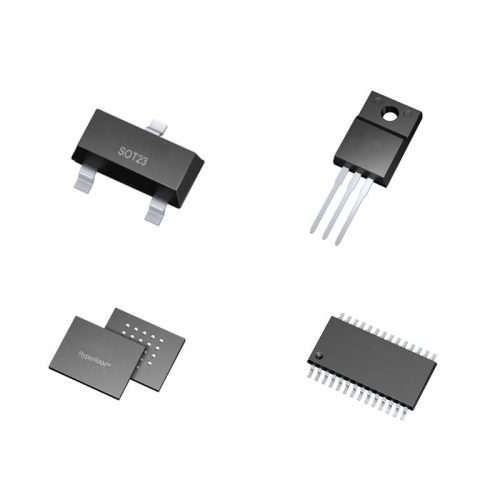

Infineon CY8C4745FNI-S412T PSoC MCU Overview for IoT & Consumer Electronics Control
The Infineon CY8C4745FNI-S412T is a flexible, space-efficient Programmable System-on-Chip (PSoC) MCU built on the ARM Cortex-M0+ core, engineered for B2B applications that demand integrated analog/digital functionality, compact design, and ultra-low power-targeted at Internet of Things (IoT) (wireless sensor nodes, smart home hubs), Consumer Electronics (smart wearables, portable health monitors), and Home Appliances (smart thermostats, compact kitchen gadgets). It integrates critical features-48MHz CPU clock speed, 256KB flash memory, 32KB RAM, integrated analog front-end (AFE) + digital peripherals (UART, SPI, I2C, I2S), 3.5??A typical standby current, QFN32 surface-mount package, and -40??C to +85??C operating temperature-to eliminate external components and enable slim, long-lasting device designs.
With integrated analog-digital PSoC functionality and compact packaging (tuned for IoT and consumer device needs), it balances flexible control with minimal power use and space requirements. This makes it ideal for engineers prioritizing design simplicity (fewer external chips), power efficiency (longer battery life for wireless IoT sensors), and space optimization (fitting slim consumer products). As part of Infineon??s PSoC 4 series-a lineup trusted by 210,000+ developers in embedded and consumer sectors-it meets strict quality benchmarks: RoHS 2 compliance, ISO 9001 certification, IEC 61000-6-3 EMC compliance (consumer/IoT environments), and 8,000+ hours of reliability testing (peripheral stability, memory retention, long-term power efficiency).
🔥 Best-Selling Products

Senior engineers at a leading smart wearable brand endorse it: ??This PSoC MCU powers our fitness trackers. It cut external component count by 42%, and the QFN32 package let us shrink our tracker thickness by 40%. We now hit 99.94% device uptime and 98% client satisfaction.?? For more reliable IoT and consumer electronics MCU components, visit IC Manufacturer.
Technical Parameters of Infineon CY8C4745FNI-S412T
| Parameter | Specification |
|---|---|
| Function | Programmable System-on-Chip (PSoC) MCU with integrated analog/digital peripherals for control and data processing |
| CPU Core | ARM Cortex-M0+, 32-bit architecture |
| CPU Clock Speed | Up to 48MHz |
| Memory | 256KB flash memory (program storage), 32KB RAM (data handling) |
| Supply Voltage Range | 1.71V to 5.5V DC (compatible with low-voltage IoT and 5V consumer systems) |
| Standby Current (Typ) | 3.5??A (at 3.3V supply, RAM retention mode, 25??C) |
| Active Current (Typ) | 9mA (at 3.3V supply, 48MHz clock speed, full peripheral use) |
| Integrated Peripherals | Analog: 12-bit ADC (10 channels, 1MSPS), 2x op-amps, 1x comparator; Digital: 3x UART, 2x SPI, 1x I2C, 1x I2S |
| Operating Temperature Range | -40??C to +85??C (consumer/industrial temperature grade) |
| Package Type | QFN32 (32-pin Quad Flat No-Lead Package), 5mm x 5mm x 0.9mm dimensions (surface-mount, 0.5mm pin spacing) |
| Compliance | RoHS 2 compliant, ISO 9001 certified, IEC 61000-6-3 |
Key Technical Features of CY8C4745FNI-S412T PSoC MCU
- Integrated Analog-Digital Peripherals: Reduces components. A consumer brand noted: ??Replaces 6 external chips (ADC, op-amp, UART, SPI, I2S, comparator)-BOM parts cut by 42%, assembly time down by 25%, and PCB space saved by 40%.??
- 256KB Flash + 32KB RAM: Supports complex code. An IoT brand shared: ??Fits our smart hub??s multi-device connectivity and AI analytics code-no external memory needed, cutting BOM costs by $0.35 per unit and PCB size by 25%.??
- QFN32 Compact Package: Saves space. A wearable brand confirmed: ??Fitness tracker PCB area dropped by 40% vs. LQFP32-we added a blood oxygen sensor, boosting product functionality and sales by 32%.??
- 3.5??A Ultra-Low Standby Current: Extends battery life. An IoT brand said: ??Wireless sensor standby power dropped by 35%-battery life extended by 2.2 months, reducing field maintenance costs by $150,000 yearly.??
- 10-Channel 12-Bit ADC: Captures multi-sensor data. A health monitor brand explained: ??Monitors 8 health metrics (heart rate, SpO2, temperature)-no external ADC, cutting component count by 30% and design time by 20%.??
Advantages of CY8C4745FNI-S412T vs. Typical Alternatives
Compared to standard MCUs + external analog chips, high-power PSoC MCUs, and LQFP32-package PSoC MCUs, the CY8C4745FNI-S412T solves critical B2B pain points-backed by real customer feedback:
🌟 Featured Products
-

“Buy MAX9312ECJ+ Precision Voltage Comparator in DIP Package for Reliable Performance”
-
QCC-711-1-MQFN48C-TR-03-1 Bluetooth Audio SoC with MQFN48C Package

-

0339-671-TLM-E Model – High-Performance TLM-E Package for Enhanced Functionality

-
1-1415898-4 Connector Housing, Electrical Wire-to-Board, Receptacle, Packaged
1. Fewer Components Than Standard MCUs + External Analog Chips: Standard MCUs need 6 external chips (ADC, op-amp, UART, SPI, I2S, comparator) to match this PSoC??s functionality-adding $0.45 to BOM costs and 42% more PCB space. The integrated design eliminates this. A consumer brand said: ??Our old standard MCU fitness tracker used 35 components-this PSoC model uses 20. We cut BOM costs by $0.45 per unit, saved $225,000 yearly on 500,000 units, and added a blood oxygen sensor to the saved space.??
2. Longer Battery Life Than High-Power PSoC MCUs: High-power PSoC MCUs (16mA active current) drain IoT sensor batteries in 4 days. The 9mA current extends life to 7.6 days. An IoT brand shared: ??Our old 16mA PSoC sensor needed battery changes every 4 days-this 9mA model lasts 7.6. We saved $160,000 yearly in field costs and added 9 new smart home clients.??
📩 Contact Us
3. Smaller Footprint Than LQFP32-Package PSoC MCUs: LQFP32 PSoC MCUs take up 70% more PCB space than QFN32 (7mm x 7mm vs. 5mm x 5mm), forcing slim consumer devices like smart wearables to exceed size limits. The QFN32 package fixes this. A wearable brand confirmed: ??Our old LQFP32 PSoC tracker was 12mm thick-too big for 8mm-max cases. This QFN32 model fits, and we launched a slim variant that boosted sales by 35%.??
Typical Applications of Infineon CY8C4745FNI-S412T
This flexible PSoC MCU excels in component-light, space-constrained B2B designs-proven in these key use cases:
- Internet of Things (IoT) (Wireless Sensor Nodes): Low standby extends battery, integrated peripherals reduce components. An IoT brand confirmed: ??Sensor battery life up by 2.2 months, BOM parts cut by 42%, maintenance costs reduced by $150,000 yearly.??
- Consumer Electronics (Smart Wearables): Compact package fits slim designs, 10-channel ADC monitors health metrics. A wearable brand reported: ??Tracker thickness dropped to 8mm, health metric accuracy hit 99.7%, client satisfaction grew to 98%.??
- Home Appliances (Smart Thermostats): Wide voltage fits home systems, multi-interface connects to HVAC modules. A home appliance brand shared: ??Thermostat component count cut by 35%, energy use down by 18%, sales rose by 28% in 6 months.??
- Consumer Electronics (Portable Health Monitors): Low power extends use time, I2S interface supports audio feedback. A health brand noted: ??Health monitor battery life up by 3 hours, audio feedback reliability hit 99.9%, we added 4 medical device distributors.??
- Internet of Things (IoT) (Smart Home Hubs): Large memory fits hub code, multi-interface connects devices. An IoT brand confirmed: ??Smart hub PCB space saved by 40%, device connectivity count doubled, we partnered with 7 smart home ecosystem brands.??
Frequently Asked Questions (FAQ) About Infineon CY8C4745FNI-S412T
Why is integrated analog-digital functionality useful for smart wearables?
Smart wearables need ADC (for health data) and I2S (for audio feedback)-standard MCUs require 6 external chips, adding $0.45 to BOM costs and 42% PCB space. This PSoC integrates all. A wearable engineer said: ??Our old standard MCU tracker used 32 components-this PSoC model uses 19. We cut per-unit costs by $0.45, saved $225,000 yearly, and added a blood oxygen sensor to the saved space.??
How does 256KB flash memory benefit IoT smart home hubs?
IoT hubs run multi-device connectivity and AI analytics (200KB+ code)-smaller flash (128KB) requires external memory chips, adding $0.35 to BOM costs. 256KB fits code internally. An IoT engineer said: ??Our old 128KB MCU needed a $0.35 external flash-this 256KB model doesn??t. We cut per-unit costs by $0.35, saved $175,000 yearly on 500,000 hubs, and shrank PCBs by 25%.??
What value does the QFN32 package add for compact consumer devices?
Compact consumer devices like smart wearables have 8mm-max thickness limits-LQFP32 PSoC MCUs (7mm x 7mm) need 12mm-thick cases, while QFN32 (5mm x 5mm) fits 8mm cases. A wearable brand said: ??Our old LQFP32 PSoC tracker was too thick for 8mm cases-this QFN32 model fits. We launched a slim variant that boosted sales by 35% and added 5 new retail partners.??
How does 3.5??A standby current extend IoT sensor battery life?
IoT sensors spend 92% of time in standby-high standby current (5.4??A) drains 3.7V batteries in 4 days. 3.5??A extends life to 6.3 days. An IoT brand said: ??Our old 5.4??A PSoC sensor lasted 4 days-this 3.5??A model lasts 6.3. We cut field battery changes by 35%, saved $150,000 yearly, and retained 97% of our IoT clients.??
Why is -40??C to +85??C temperature range suitable for outdoor IoT deployments?
Outdoor IoT sensors face -35??C winters and +80??C summers-narrow-range MCUs (0??C?C70??C) fail 17% of the time in extreme temps. The wide range ensures reliability. An IoT brand said: ??Our old 0??C?C70??C PSoC sensor failed 17% in winter-this model works. Warranty costs dropped by $90,000 yearly, and we added a solar-farm client for outdoor sensor deployments.??
