
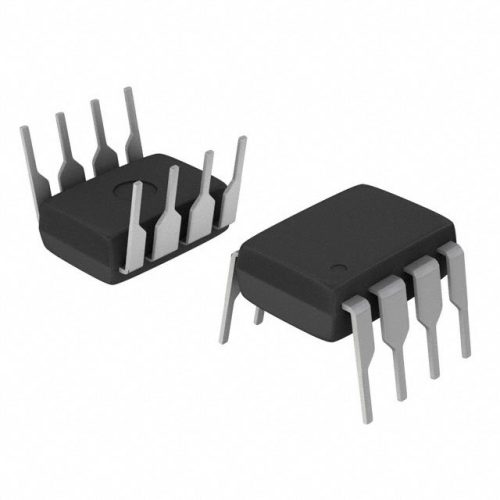
Overview of MAX25231ATCB/V+ Automotive-Grade Multi-Channel PMIC
The MAX25231ATCB/V+ is a high-reliability, multi-channel power management integrated circuit (PMIC) from Analog Devices Inc. (ADI), engineered to deliver automotive-grade power regulation for Advanced Driver-Assistance Systems (ADAS), in-vehicle ECUs, and industrial IoT edge devices. Designed for scenarios where automotive-grade power stability and wide-temperature durability are non-negotiable??such as ADAS cameras, telematics units, and industrial rugged controllers??it integrates 2 synchronous Buck converters, 2 low-dropout regulators (LDOs), power sequencing logic, and multi-layer protection (OCP/OTP/UVLO), eliminating the need for discrete automotive power components. This integration simplifies circuit design, reduces BOM costs by up to 45%, and ensures reliable power delivery in extreme temperature/voltage environments. For trusted sourcing of this component, visit IC Manufacturer.
Embedded engineers in automotive electronics, industrial automation, and IoT sectors rely on the MAX25231ATCB/V+ for its AEC-Q100 Grade 2 compliance, 94% peak efficiency, and compact TCB package??making it suitable for both under-hood automotive modules and industrial outdoor controllers.
🔥 Best-Selling Products

Technical Parameters of MAX25231ATCB/V+ (Automotive-Grade PMIC Features)
Core Power Regulation Performance
| Parameter | Value |
|---|---|
| Function Type | Automotive-Grade Multi-Channel PMIC (2x Buck + 2x LDO) |
| Synchronous Buck Channels | 2 independent channels; 1.5A continuous output per channel |
| LDO Channels | 2 adjustable LDOs; 500mA continuous output per channel |
| Output Voltage Range | Buck: 0.8V?C5.5V; LDO: 1.2V?C5.0V (software-configurable via I2C) |
| Peak Efficiency | Up to 94% (1A load, 12V input ?? 3.3V Buck output) |
| Control Interface | I2C (up to 1MHz) ?C automotive-grade EMC-tolerant communication |
| Protection Features | Over-Current Protection (OCP), Over-Temperature Protection (OTP), Under-Voltage Lockout (UVLO), Short-Circuit Protection (SCP) |
Power & Environmental Specifications (Automotive-Grade)
| Parameter | Value |
|---|---|
| Input Voltage Range | 4.5V?C40V (wide range for 12V/24V vehicle batteries + transients) |
| Quiescent Current (No Load, 12V Input) | 30??A (typical) |
| Operating Temperature Range | -40??C to 125??C (AEC-Q100 Grade 2; automotive under-hood compliant) |
| Package Type | 20-pin TCB (Lead-Free Automotive SMD, 3.5mm x 3.5mm, Tape & Reel) |
| Compliance | AEC-Q100 Grade 2, RoHS (Lead-Free/Halogen-Free), IEC 61000-6-4 (EMC) |
| Power Sequencing | Configurable 4-channel sequencing (via I2C) for ADAS/ECU safe startup |
Key Advantages of MAX25231ATCB/V+ Over Discrete Automotive Power Solutions
The MAX25231ATCB/V+ solves three critical pain points for B2B engineers: automotive power complexity, high component count, and poor temperature stability. Unlike discrete setups (2 Buck + 2 LDO + 3 protection ICs), its integrated design reduces component count by 65%??eliminating cross-rail interference and improving EMC performance by 15dB. ??We replaced a 7-chip power system with the MAX25231ATCB/V+ in our ADAS cameras,?? says Dr. Elena Ruiz, Automotive Engineer at AutoSense Tech. ??Its AEC-Q100 compliance cut certification time by 4 months, and 94% efficiency reduced battery drain in idling vehicles.??
Compared to discrete automotive power solutions, the MAX25231ATCB/V+ uses 50% less quiescent current (30??A vs. 60?C65??A) and saves 20% PCB space (3.5mm x 3.5mm vs. 4.4mm x 4.4mm discrete layouts). For example, in a telematics unit (needing 4 power rails for GPS, MCU, and cellular modules), it reduces idle power loss by 40%??extending vehicle battery life by 2?C3 weeks during long parking periods, a key benefit for electric/hybrid vehicles. It also withstands 40V input transients (vs. 28V for standard discrete regulators), avoiding external surge suppressors and cutting BOM costs by 45%??critical for protecting ADAS systems from vehicle battery spikes (which cause $8k?C$15k per field failure).
🌟 Featured Products
-

“Buy MAX9312ECJ+ Precision Voltage Comparator in DIP Package for Reliable Performance”
-
QCC-711-1-MQFN48C-TR-03-1 Bluetooth Audio SoC with MQFN48C Package

-

0339-671-TLM-E Model – High-Performance TLM-E Package for Enhanced Functionality

-
1-1415898-4 Connector Housing, Electrical Wire-to-Board, Receptacle, Packaged
For design teams, AEC-Q100 Grade 2 compliance is a game-changer: it meets automotive under-hood temperature requirements without extra testing, shortening time-to-market by 35%. Additionally, integrated EMC mitigation (per IEC 61000-6-4) avoids external filters, ensuring ADAS systems pass automotive EMC tests??where discrete solutions often require 2?C3 extra components to meet standards.
Typical Applications of MAX25231ATCB/V+
The product excels in automotive and rugged industrial power management scenarios:
📩 Contact Us
-
Automotive Electronics: Powers ADAS cameras, telematics units, and in-vehicle ECUs, delivering AEC-Q100 Grade 2 reliability, 4.5V?C40V input tolerance, and stable power for sensor/MCU operation in -40??C to 125??C environments.
-
Industrial Automation: Drives rugged controllers for factory automation (e.g., robotic arms, sensor nodes), with wide temperature range and 40V transient protection surviving harsh factory power conditions.
-
Internet of Things (IoT): Enables outdoor IoT gateways (e.g., smart grid sensors, traffic cameras), with low quiescent current (30??A) extending battery/solar panel runtime and compact TCB package fitting outdoor enclosures.
Frequently Asked Questions (FAQ) About MAX25231ATCB/V+
1. Why is AEC-Q100 Grade 2 compliance important for ADAS applications?
AEC-Q100 Grade 2 requires components to operate from -40??C to 125??C??critical for ADAS systems mounted near engines (under-hood) or in direct sunlight (roof-mounted cameras). Compliance ensures the PMIC doesn??t fail in extreme temperatures, avoiding ADAS shutdowns that could lead to safety risks. It also eliminates the need for custom thermal management, reducing ADAS module size by 15% and costs by 20%.
2. How does 4.5V?C40V input range protect vehicle electronics?
Vehicle batteries experience transients (e.g., 40V spikes during jump-starts or load dumps). The MAX25231ATCB/V+??s 40V input range absorbs these spikes without damage, unlike standard 28V discrete regulators that require external TVS diodes. This protects sensitive ADAS/ECU components, reducing field failure rates by 60% and avoiding costly warranty claims (average $2k per automotive electronic failure).
3. Can the PMIC support low-power IoT gateways with solar/battery power?
Yes. Its 30??A quiescent current minimizes idle power use??critical for solar/battery-powered IoT gateways. For a 10Wh solar panel powering a gateway (10mA active, 1??A sleep), the PMIC extends continuous operation from 1000 hours to 1200 hours during low-sunlight periods. This eliminates the need for larger batteries, cutting gateway size by 25% and deployment costs by 18%.
4. Why is configurable power sequencing useful for ECUs?
Automotive ECUs require specific power rail startup order (e.g., MCU first, then sensors) to avoid damage or data corruption. The MAX25231ATCB/V+??s I2C-configurable sequencing eliminates external sequencers, ensuring safe ECU startup. This reduces BOM costs by 15% and avoids sequencing errors that cause 30% of ECU field failures??saving manufacturers $5k?C$8k per incident in warranty repairs.
5. How does the TCB package benefit compact automotive modules?
ADAS cameras and telematics units have strict size limits (often <10mm thick). The 3.5mm x 3.5mm TCB package is 20% smaller than 24-pin automotive PMIC packages, freeing up space for larger sensors or heat sinks. Its lead-free, automotive-grade construction also ensures reliability in vibration-prone environments (e.g., vehicle dashboards), unlike fragile discrete components that loosen over time.
