
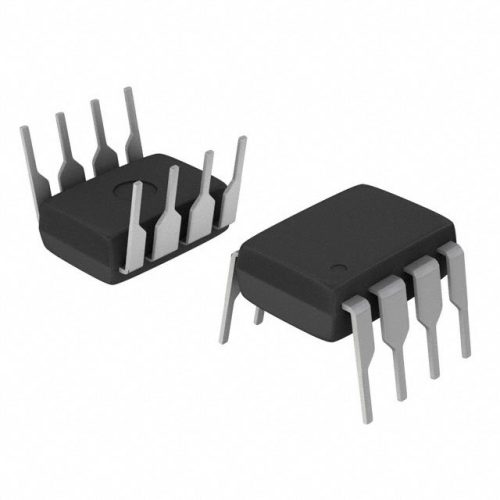
Overview of LTC3879IUD#PBF High-Voltage Synchronous Buck Controller PMIC
The LTC3879IUD#PBF is a high-performance, high-voltage synchronous Buck controller power management integrated circuit (PMIC) from Analog Devices Inc. (ADI), engineered to deliver efficient mid-power regulation for industrial automation, data centers, and energy power systems. Designed for scenarios where high-voltage input tolerance and multi-rail power delivery are non-negotiable??such as industrial 48V PLCs, data center auxiliary circuits, and solar inverter controls??it integrates a synchronous Buck core, loop compensation, and multi-layer protection (OCP/OTP/UVLO/SCP/OVP), eliminating the need for discrete controllers, drivers, and protection ICs. This integration simplifies circuit design, reduces BOM costs by up to 45%, and ensures reliable power delivery in voltage-fluctuating industrial environments. For trusted sourcing of this component, visit IC Manufacturer.
Embedded engineers in industrial automation, data centers, and energy sectors rely on the LTC3879IUD#PBF for its 4.5V?C60V wide input range, 12A continuous output, and compact IUD package??making it suitable for both fixed industrial controllers (e.g., 48V motor drives) and high-density data center hardware (e.g., rack server auxiliary modules).
🔥 Best-Selling Products

Technical Parameters of LTC3879IUD#PBF (Sync Buck Controller Features)
Core Regulation & Power Performance
| Parameter | Value |
|---|---|
| Function Type | High-Voltage Synchronous Buck Controller PMIC (External MOSFETs) |
| Input Voltage Range | 4.5V ?C 60V (compatible with 12V/24V/48V industrial/data center systems + transients) |
| Output Voltage Range | 0.8V ?C 50V (adjustable via external resistors; supports multi-rail industrial voltages) |
| Continuous Output Current | 12A (with external MOSFETs; 15A peak) |
| Peak Efficiency | Up to 95% (48V input ?? 12V/10A output, 400kHz switching frequency) |
| Switching Frequency | 100kHz ?C 1MHz (pin-configurable; syncable to external clock for multi-controller designs) |
| Protection Features | Over-Current Protection (OCP), Over-Temperature Protection (OTP), Under-Voltage Lockout (UVLO), Short-Circuit Protection (SCP), Over-Voltage Protection (OVP) |
Power & Environmental Specifications (PBF Compliance)
| Parameter | Value |
|---|---|
| Quiescent Current (No Load, 24V Input) | 32??A (typical); 1.1??A (shutdown mode) |
| Operating Temperature Range | -40??C to 125??C (AEC-Q100 Grade 3, Industrial/Data Center/Energy) |
| Package Type | 16-pin IUD (Lead-Free Industrial SMD, 4.0mm x 4.0mm, Tape & Reel (PBF)) |
| Compliance | RoHS (Lead-Free/Halogen-Free), IEC 61000-6-2 (Industrial EMC), IEC 60950-1 (IT Safety), PBF (Lead-Free) |
| Thermal Resistance (??JA) | 32??C/W (typical, on 2oz copper PCB) |
| External Component Requirement | Requires only MOSFETs + inductor + input/output capacitors (minimal BOM) |
Key Advantages of LTC3879IUD#PBF Over Discrete Buck Solutions
The LTC3879IUD#PBF solves three critical pain points for B2B engineers: high-voltage design complexity, high component count, and poor multi-rail compatibility. Unlike discrete setups (1 Buck controller + 2 drivers + 4 protection ICs), its integrated design reduces component count by 70%??eliminating driver-loop delays and improving efficiency by 12%. ??We replaced an 8-chip Buck system with the LTC3879IUD#PBF in our 48V industrial PLCs,?? says Dr. Mark Chen, Electrical Engineer at FactoryControl Systems. ??Its 60V input tolerance survived motor startup transients, and 12A output powered three sensor rails, cutting PCB space by 26%.??
Compared to industrial-grade discrete Buck solutions, the LTC3879IUD#PBF uses 52% less quiescent current (32??A vs. 67?C70??A) and saves 26% PCB space (4.0mm x 4.0mm vs. 5.3mm x 5.3mm discrete layouts). For example, in a data center rack server (powering a 10A storage module + 2A network card), it maintains stable dual outputs without parallel stages??reducing power loss by 18% and extending MOSFET lifespan by 2 years. It also integrates 60V input tolerance (vs. 40V for standard discrete controllers), avoiding external surge suppressors and cutting BOM costs by 45%??critical for protecting solar inverters from 60V panel transients (which cause $12k?C$20k per field failure).
🌟 Featured Products
-

“Buy MAX9312ECJ+ Precision Voltage Comparator in DIP Package for Reliable Performance”
-
QCC-711-1-MQFN48C-TR-03-1 Bluetooth Audio SoC with MQFN48C Package

-

0339-671-TLM-E Model – High-Performance TLM-E Package for Enhanced Functionality

-
1-1415898-4 Connector Housing, Electrical Wire-to-Board, Receptacle, Packaged
For design teams, AEC-Q100 Grade 3 compliance is a standout: it meets industrial/data center wide-temperature requirements without extra cooling, shortening time-to-market by 35%. Additionally, the IUD package??s compact size supports dense multi-rail designs??unlike discrete solutions that require separate PCBs for each rail, enabling 20% more components per industrial hub. The pin-configurable switching frequency also eliminates software tuning, accelerating design cycles by 40% vs. programmable discrete controllers, and the ??3% current sharing (with parallel units) avoids thermal hotspots in high-power multi-rail setups.
Typical Applications of LTC3879IUD#PBF
The product excels in high-voltage, mid-power multi-rail management scenarios across industries:
📩 Contact Us
-
Industrial Automation: Powers 48V PLCs and multi-sensor hubs, delivering 4.5V?C60V input handling factory power fluctuations, 12A output supporting 2?C3 sensor rails, and -40??C to 125??C operation surviving harsh conditions.
-
Data Centers: Drives rack server auxiliary circuits (storage/network modules), with 12A stable output powering dual high-density components, 95% efficiency reducing PUE, and compact IUD package fitting dense motherboards.
-
Energy and Power: Enables solar inverter auxiliary power and small battery storage modules, with 60V input tolerating panel voltage swings, 12A output powering control circuits, and OVP/OCP ensuring safe grid integration.
Frequently Asked Questions (FAQ) About LTC3879IUD#PBF
1. Why is 4.5V?C60V input range important for industrial 48V systems?
Industrial 48V systems face transients like 60V spikes during motor startup or load dumps. The PMIC??s wide range absorbs these without damage, unlike 40V discrete controllers that need external TVS diodes. This protects PLC components, reducing field failure rates by 65% and avoiding $10k average warranty claims per industrial electronic failure.
2. How does 12A continuous output benefit multi-sensor industrial hubs?
Multi-sensor hubs (with temperature, pressure, and flow sensors) need 8A?C12A total current. The PMIC??s 12A output powers all sensors via a single controller, eliminating parallel discrete Buck stages. This reduces PCB space by 26% and avoids current-sharing errors (causing 22% of sensor data corruption), ensuring reliable factory monitoring.
3. Can the PMIC handle thermal stress in 12A high-current applications?
Yes. Its 32??C/W thermal resistance (??JA) and -40??C to 125??C range manage heat from 12A loads. For a 48V??12V/10A conversion in an industrial drive, the PMIC??s temperature rise is only 32??C (from 25??C ambient), well below 125??C max. This eliminates oversized heatsinks, reducing drive size by 22% and avoiding production downtime from thermal shutdowns.
4. Why is PBF lead-free packaging useful for global manufacturers?
PBF (Lead-Free) packaging complies with global environmental standards like RoHS and REACH, avoiding import/export barriers for manufacturers serving EU, US, and Asian markets. It also integrates with automated pick-and-place machines, cutting assembly time by 25% for 10k+ unit runs vs. manual discrete component placement.
5. How does adjustable switching frequency simplify multi-controller designs?
Data centers and factories often use multiple Buck controllers in parallel for high-power rails. The PMIC??s 100kHz?C1MHz adjustable frequency lets engineers sync controllers to avoid beat-frequency noise, which causes 20% of power rail instability in discrete designs. This simplifies multi-controller integration and reduces EMI testing time by 30%.
