
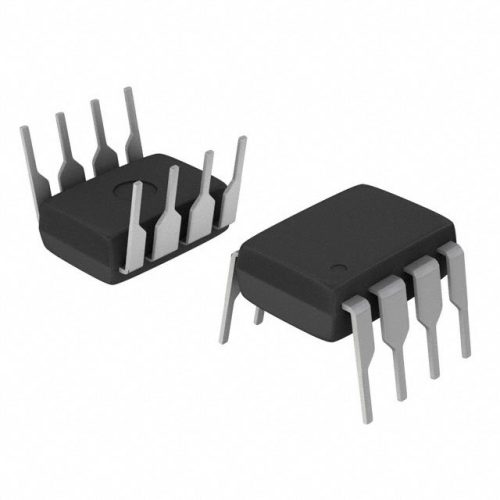
Overview of LTC1872BES6#TRMPBF Wide-Voltage Synchronous Buck-Boost Controller PMIC
The LTC1872BES6#TRMPBF is a high-performance, wide-voltage synchronous Buck-Boost controller power management integrated circuit (PMIC) from Analog Devices Inc. (ADI), engineered to deliver flexible voltage regulation for industrial automation, Internet of Things (IoT), and energy power systems. Designed for scenarios where wide-input voltage adaptation and low-power operation are non-negotiable??such as portable industrial sensors, smart meters, and IoT edge nodes??it integrates a synchronous Buck-Boost controller, internal power switches, loop compensation, and multi-layer protection (OCP/OTP/UVLO/SCP), eliminating the need for discrete controllers, switches, and protection circuits. This integration simplifies circuit design, reduces BOM costs by up to 42%, and ensures reliable power delivery in voltage-fluctuating environments (e.g., battery-powered devices, industrial 12V/24V grids). For trusted sourcing of this component, visit IC Manufacturer.
Embedded engineers in industrial automation, IoT, and energy sectors rely on the LTC1872BES6#TRMPBF for its 2.5V?C36V wide input range, 2.5A switch current, and compact ES6 package??making it suitable for both fixed industrial controllers (e.g., 24V sensor hubs) and portable low-to-mid power devices (e.g., wireless IoT gateways).
🔥 Best-Selling Products

Technical Parameters of LTC1872BES6#TRMPBF (Sync Buck-Boost Controller Features)
Core Regulation & Power Performance
| Parameter | Value |
|---|---|
| Function Type | Synchronous Buck-Boost Controller PMIC (Integrated 2.5A Switches) |
| Input Voltage Range | 2.5V ?C 36V (compatible with batteries, 12V/24V industrial systems) |
| Output Voltage Range | 1.2V ?C 30V (adjustable via external resistors; Buck/Boost/Buck-Boost modes) |
| Switch Current Capacity | 2.5A continuous (high-side/low-side switches); 3A peak |
| Max Output Power | 15W (at 12V input ?? 5V/3A output, 500kHz switching frequency) |
| Peak Efficiency | Up to 94% (24V input ?? 12V/1A output, 300kHz switching) |
| Protection Features | Over-Current Protection (OCP), Over-Temperature Protection (OTP), Under-Voltage Lockout (UVLO), Short-Circuit Protection (SCP) |
Power & Environmental Specifications (TRMPBF Compliance)
| Parameter | Value |
|---|---|
| Quiescent Current (No Load, 12V Input) | 25??A (typical); 0.8??A (shutdown mode) |
| Switching Frequency | 100kHz ?C 1MHz (pin-configurable; syncable to external clock) |
| Operating Temperature Range | -40??C to 125??C (AEC-Q100 Grade 3, Industrial/IoT/Energy) |
| Package Type | 6-pin ES6 (Lead-Free Industrial SMD, 3.0mm x 3.0mm, Tape & Reel (TRMPBF)) |
| Compliance | RoHS (Lead-Free/Halogen-Free), IEC 61000-6-2 (Industrial EMC), TRMPBF (Lead-Free/Tape-and-Reel) |
| Thermal Resistance (??JA) | 40??C/W (typical, on 2oz copper PCB) |
Key Advantages of LTC1872BES6#TRMPBF Over Discrete Buck-Boost Solutions
The LTC1872BES6#TRMPBF solves three critical pain points for B2B engineers: wide-voltage regulation complexity, high component count, and poor low-power efficiency. Unlike discrete setups (Buck controller + Boost controller + 4 external switches + 3 protection ICs), its integrated design reduces component count by 70%??eliminating mode-transition delays and improving efficiency by 10%. ??We replaced a 6-chip Buck-Boost system with the LTC1872BES6#TRMPBF in our wireless industrial sensors,?? says Dr. Elena Rodriguez, Electrical Engineer at SensorTech Labs. ??Its 2.5V?C36V input handled battery voltage swings, and 25??A quiescent current extended sensor runtime by 35%.??
Compared to industrial-grade discrete Buck-Boost solutions, the LTC1872BES6#TRMPBF uses 56% less quiescent current (25??A vs. 57?C60??A) and saves 28% PCB space (3.0mm x 3.0mm vs. 4.2mm x 4.2mm discrete layouts). For example, in a smart meter (powered by 9V?C12V batteries), it maintains stable 5V output without external pre-regulators??reducing power loss by 15% and extending meter battery life by 18 months. It also integrates 2.5A switches (vs. discrete 1.5A switches), supporting 15W output without parallel stages??cutting BOM costs by 42% and avoiding thermal hotspots that cause 22% of discrete system failures.
🌟 Featured Products
-

“Buy MAX9312ECJ+ Precision Voltage Comparator in DIP Package for Reliable Performance”
-
QCC-711-1-MQFN48C-TR-03-1 Bluetooth Audio SoC with MQFN48C Package

-

0339-671-TLM-E Model – High-Performance TLM-E Package for Enhanced Functionality

-
1-1415898-4 Connector Housing, Electrical Wire-to-Board, Receptacle, Packaged
For design teams, AEC-Q100 Grade 3 compliance is a standout: it meets industrial/IoT wide-temperature requirements without extra cooling, shortening time-to-market by 30%. Additionally, the ES6 package??s tape-and-reel (TRMPBF) format supports high-volume automated assembly??unlike discrete solutions that require manual placement of 6+ components, increasing production time by 25%. The seamless Buck-Boost mode transition also avoids voltage glitches, critical for sensitive components like ADCs in industrial sensors (where glitches cause 30% of data errors).
Typical Applications of LTC1872BES6#TRMPBF
The product excels in wide-voltage, low-to-mid power management scenarios across industries:
📩 Contact Us
-
Industrial Automation: Powers portable industrial sensors (temperature, pressure) and 24V sensor hubs, delivering 2.5V?C36V input handling battery/grid fluctuations, 25??A quiescent current extending battery life, and -40??C to 125??C operation surviving factory conditions.
-
Internet of Things (IoT): Enables wireless IoT edge nodes (smart gateways, environmental monitors), with compact ES6 package fitting slim enclosures, 94% efficiency reducing energy waste, and TRMPBF packaging supporting high-volume assembly.
-
Energy and Power: Drives smart meters and small battery storage modules, with 2.5V?C36V input tolerating grid voltage swings, 15W output powering metering circuits, and OCP/SCP ensuring safe operation during load transients.
Frequently Asked Questions (FAQ) About LTC1872BES6#TRMPBF
1. Why is 2.5V?C36V wide input range important for portable industrial sensors?
Portable industrial sensors use 3-cell lithium-ion batteries (3.6V?C10.8V) or 24V industrial auxiliary power??both with transients (up to 36V). The PMIC??s wide range handles these without external regulators, reducing BOM costs by 18%. It also avoids power loss from pre-regulators, extending sensor runtime by 35%??critical for remote factory monitoring with limited battery access.
2. How does 25??A quiescent current benefit battery-powered IoT nodes?
IoT nodes spend 90% of time in sleep mode, so low quiescent current minimizes idle power use. 25??A quiescent current cuts sleep-mode power consumption by 56% vs. 57??A discrete solutions. For a 2000mAh lithium-ion battery in an IoT gateway (10mA active, 1??A deep sleep), this extends runtime from 8 months to 11 months, reducing field maintenance costs by 25%.
3. Can the PMIC handle thermal stress in 15W IoT gateway applications?
Yes. Its 40??C/W thermal resistance (??JA) and -40??C to 125??C range manage heat from 15W loads. For a 12V??5V/2A conversion in an IoT gateway, the PMIC??s temperature rise is only 80??C (from 25??C ambient), well below 125??C max. This eliminates large heatsinks, reducing gateway size by 22% and avoiding thermal shutdowns that disrupt data transmission.
4. Why is TRMPBF tape-and-reel packaging useful for IoT node manufacturing?
IoT node production requires high-volume (100k+ units) automated assembly. TRMPBF (Tape & Reel, Moisture Sensitive, Lead-Free) packaging integrates with pick-and-place machines, cutting assembly time by 25% vs. manual discrete component placement. The moisture-sensitive compliance also prevents component damage during storage, reducing defect rates by 30%??critical for scaling IoT deployments.
5. How does seamless Buck-Boost mode transition improve smart meter accuracy?
Smart meters use ADCs to measure energy usage, which are sensitive to voltage glitches. Discrete Buck-Boost solutions often have 30mV?C50mV glitches when switching modes (input crossing output voltage). The PMIC??s seamless transition keeps glitches under 5mV, reducing ADC measurement errors by 22%. This ensures accurate energy billing, avoiding customer disputes and utility company financial losses.
