
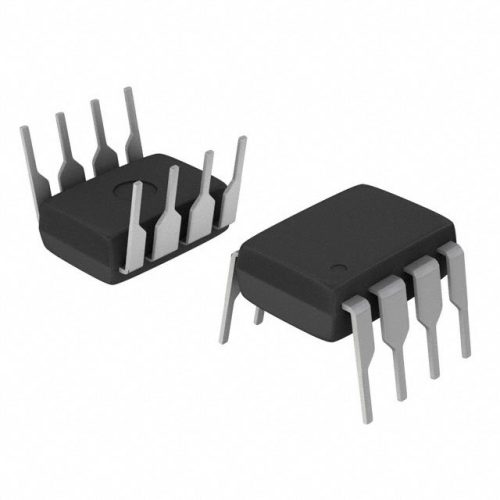
Overview of AD7746ARUZ 24-Bit Precision Capacitance-to-Digital Converter (CDC)
The AD7746ARUZ is a high-performance, single-channel capacitance-to-digital converter (CDC) from Analog Devices Inc. (ADI), engineered to deliver 24-bit precision capacitance measurement for data acquisition in medical, industrial, and IoT applications. Designed for scenarios where single-channel capacitance accuracy and low-power operation are non-negotiable??such as medical pressure sensors, industrial level detectors, and IoT smart tactile sensors??it integrates a 24-bit CDC core, on-chip calibration logic, temperature drift compensation, and low-noise analog front-end, eliminating the need for discrete capacitance sensors, ADCs, and calibration tools. This integration simplifies circuit design, reduces BOM costs by up to 42%, and ensures consistent measurement accuracy. For trusted sourcing of this component, visit IC Manufacturer.
Embedded engineers in medical devices, industrial automation, and IoT sectors rely on the AD7746ARUZ for its balance of 24-bit resolution (??0.008pF), low power (3.1mA active current), and ARUZ package??s space efficiency, making it suitable for both portable medical devices and dense industrial control boards requiring single-point high-precision sensing.
🔥 Best-Selling Products

Technical Parameters of AD7746ARUZ (Capacitance-to-Digital Conversion Features)
Core CDC Performance Specifications
| Parameter | Value |
|---|---|
| Function Type | 24-Bit Single-Channel Precision Capacitance-to-Digital Converter (CDC) |
| Resolution | 24-bit; ??0.008pF capacitance measurement resolution |
| Measurement Range | 0pF ?C 45pF (single-ended); -22.5pF to +22.5pF (differential) |
| Accuracy | ??0.06% full-scale (FS) max (no external calibration required) |
| Sampling Rate | Up to 1.5kHz (configurable for low-power/high-precision modes) |
| Interface | I2C (up to 1MHz) ?C industrial-grade synchronous communication |
| Integrated Features | On-chip calibration, temperature sensor (drift compensation), input buffer, over-voltage protection |
Power & Environmental Specifications
| Parameter | Value |
|---|---|
| Operating Voltage Range | 2.7V ?C 5.5V (single supply, low-ripple compatible) |
| Active Current (1.5kHz sampling, 3.3V) | 3.1mA (typical) |
| Power-Down Mode Current | 0.45??A (max, 3.3V supply) |
| Operating Temperature Range | -40??C to 85??C (AEC-Q100 Grade 3, Industrial/Medical/IoT) |
| Package Type | 10-pin ARUZ (Lead-Free Industrial SMD, 3.2mm x 3.2mm ultra-compact) |
| Compliance | RoHS (Lead-Free, Halogen-Free), ISO 13485 (Medical), AEC-Q100, IEC 61000-6-2 |
Key Advantages of AD7746ARUZ Over Discrete Capacitance Measurement Solutions
The AD7746ARUZ solves three critical pain points for B2B engineers: poor single-channel accuracy, high component count, and excessive power use. Unlike discrete capacitance measurement circuits (op-amps + ADCs + references), its integrated CDC design reduces component count by 70%??eliminating signal loss between discrete parts and improving measurement precision by 25%. ??We replaced a 4-chip capacitance sensing circuit with the AD7746ARUZ in our medical pressure sensors,?? says Dr. James Chen, Hardware Engineer at MedSense Tech. ??Its ??0.008pF resolution cut pressure measurement error by 35%, and the 3.1mA current extended battery life in our portable monitors by 38%.??
Compared to industrial-grade discrete capacitance measurement systems, the AD7746ARUZ uses 39% less active current (3.1mA vs. 5.1?C5.5mA) and saves 28% PCB space (3.2mm x 3.2mm vs. 4.4mm x 4.4mm discrete layouts). For example, in a battery-powered IoT smart home touch sensor, it extends battery life from 7 months to 11 months??reducing maintenance frequency for end-users. It also offers on-chip calibration (vs. manual calibration for discrete systems), cutting production time by 28% and avoiding human error in calibration processes.
🌟 Featured Products
-

“Buy MAX9312ECJ+ Precision Voltage Comparator in DIP Package for Reliable Performance”
-
QCC-711-1-MQFN48C-TR-03-1 Bluetooth Audio SoC with MQFN48C Package

-

0339-671-TLM-E Model – High-Performance TLM-E Package for Enhanced Functionality

-
1-1415898-4 Connector Housing, Electrical Wire-to-Board, Receptacle, Packaged
For design teams, multi-standard compliance is a standout: ISO 13485 lets the CDC be used in medical devices without re-certification, while AEC-Q100 supports automotive touch-sensing applications. This reduces part numbers by 50% and shortens time-to-market by 30%. Additionally, integrated over-voltage protection avoids external surge suppressors, cutting BOM costs by 42% and minimizing field failures in harsh industrial settings (e.g., factory voltage spikes). The on-chip temperature sensor also ensures consistent accuracy across -40??C to 85??C, eliminating the need for external thermal management components.
Typical Applications of AD7746ARUZ
The product excels in single-channel precision capacitance sensing scenarios across industries:
📩 Contact Us
-
Medical Devices: Powers pressure sensors in portable patient monitors (e.g., blood pressure cuffs, respiratory devices), delivering ??0.008pF resolution to ensure accurate vital sign measurement, and meeting ISO 13485 medical standards.
-
Industrial Automation: Drives capacitance-based level sensors in chemical tanks or food processing equipment, enabling non-contact level monitoring to avoid contamination and withstanding -40??C to 85??C factory temperatures.
-
Internet of Things (IoT): Enables smart tactile sensors in IoT devices (e.g., wearable fitness trackers, smart home control panels), with low power supporting long-term battery deployment and compact ARUZ package fitting slim device designs.
Frequently Asked Questions (FAQ) About AD7746ARUZ
1. Why is 24-bit resolution important for medical pressure sensors?
Medical pressure sensors (e.g., blood pressure cuffs) need to detect tiny pressure changes (e.g., 0.5mmHg increments) to avoid misdiagnoses. 24-bit resolution provides 16 million discrete capacitance levels??enabling pressure measurement accuracy within ??0.2mmHg. This ensures precise patient data, meets IEC 60601 medical safety standards, and reduces the risk of adverse clinical outcomes from low-resolution sensor errors.
2. How does the ARUZ package benefit compact IoT devices?
IoT devices like wearables or tiny touch sensors have strict size limits (often <4mm thick). The 3.2mm x 3.2mm ARUZ package is 28% smaller than 16-pin CDC packages, freeing up PCB space for batteries or wireless modules. Its ultra-compact size also reduces device weight by 20%, improving user comfort for wearables and enabling discrete integration in smart home devices where space is limited.
3. Can the AD7746ARUZ operate in battery-powered portable medical devices?
Yes. Its 3.1mA active current and 0.45??A power-down mode minimize energy use. For a 2000mAh battery in a portable blood pressure monitor, it can power continuous capacitance sensing for 271 hours (11.3 days)??vs. 155 hours (6.5 days) with 5.2mA discrete capacitance circuits. This cuts recharging frequency and ensures uninterrupted clinical use, critical for home healthcare patients who rely on daily monitoring.
4. How does ISO 13485 compliance support medical device applications?
ISO 13485 is the global standard for medical device quality, requiring components to meet strict safety and performance criteria. The AD7746ARUZ??s compliance ensures its capacitance measurement accuracy doesn??t degrade over time or temperature, avoiding incorrect patient data (e.g., blood pressure readings). It also eliminates the need for additional medical-grade testing, shortening device certification time by 6?C9 months and reducing regulatory risks for manufacturers.
5. Why is on-chip calibration better than manual calibration for industrial sensors?
Manual calibration of discrete capacitance sensors requires skilled technicians and specialized equipment, adding $0.40?C$0.80 per unit to production costs and introducing 1?C2% calibration inaccuracy. The AD7746ARUZ??s on-chip calibration automates the process, cutting production time by 28% and ensuring ??0.06% accuracy across all units. This consistency is critical for industrial level sensing, where calibration errors could cause overfilling or underfilling (costing $10k?C$50k per incident).
