

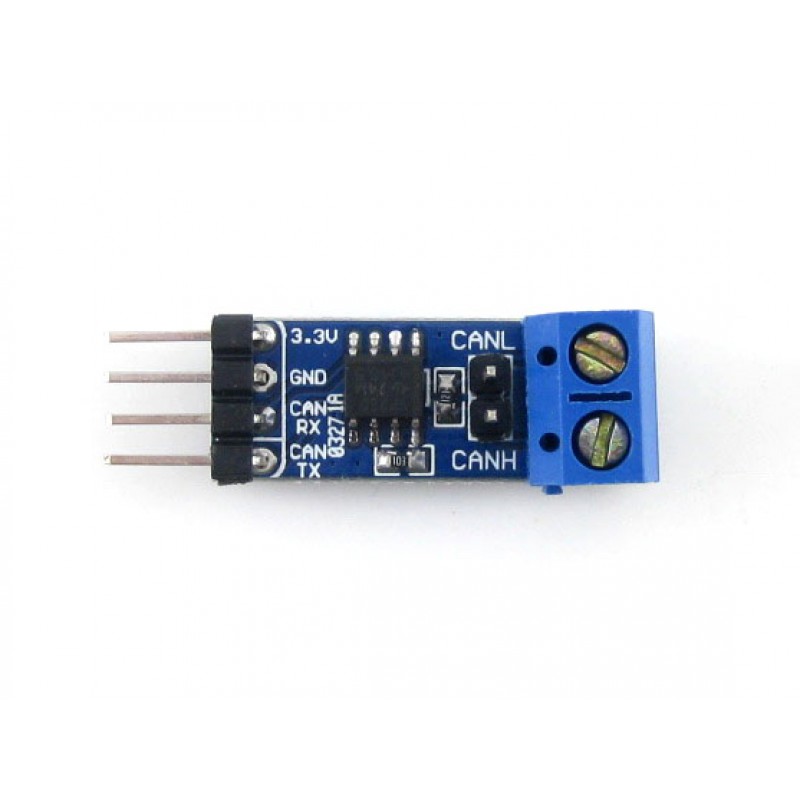

What Is the Difference Between SN65HVD230 and TJA1050?
Controller Area Network (CAN) is the silent backbone of modern machines. Cars. Robots. Factory lines. Behind every reliable CAN bus sits a small but critical chip: the CAN transceiver. Two names appear again and again—SN65HVD230 and TJA1050. They look similar. They are not.
This guide explains the real, practical differences between these two devices. No fluff. No vague claims. Clear facts, design trade-offs, and engineering truth—written at a 7th-grade reading level, but with expert depth.
As Bosch, the inventor of CAN, famously stated: “Reliability is not an option in automotive networks—it is a requirement.”
1. Overview of CAN Transceivers in Embedded Systems
A CAN controller creates data. A CAN transceiver moves that data onto wires.
The controller speaks logic.
The transceiver speaks voltage.
Without a transceiver, the CAN bus does not exist.
What a CAN Transceiver Does
A CAN transceiver:
- Converts TX/RX logic signals into CANH and CANL
- Handles differential signaling
- Protects the MCU from electrical abuse
- Keeps the bus stable in noisy environments
Why the Choice Matters
Pick the wrong transceiver and you risk:
- Burned GPIO pins
- Random bus errors
- Failed EMC tests
- Field returns
This choice defines system reliability.
Typical Applications
- Automotive ECUs
- Industrial PLCs
- Battery systems
- Robotics and automation
- Hobbyist boards like Arduino and ESP32
2. CAN Standards and Protocol Compatibility
Both devices support High-Speed CAN under ISO 11898-2. But details matter.
CAN 2.0A vs CAN 2.0B
Both SN65HVD230 and TJA1050 fully support:
- Standard frames (11-bit ID)
- Extended frames (29-bit ID)
No limitation here.
Classic CAN vs CAN FD
This is critical:
| Feature | SN65HVD230 | TJA1050 |
|---|---|---|
| Classic CAN | ✅ | ✅ |
| CAN FD | ❌ | ❌ |
Neither supports CAN FD. They are classic CAN-only devices.
Controller Compatibility
Both work with common CAN controllers:
- MCP2515
- STM32 bxCAN
- ESP32 CAN controller
- NXP SJA1000
Protocol-wise, they are equals.
3. Introduction to SN65HVD230
The SN65HVD230 was designed for modern embedded systems.
It comes from Texas Instruments and focuses on low voltage, low power designs.
Design Purpose
- Native 3.3V operation
- Low power consumption
- Simple interface for MCUs
Electrical Characteristics
- Supply voltage: 3.0V–3.6V
- Logic levels match 3.3V MCUs
- No level shifting required
Key Features
- High-speed CAN (up to 1 Mbps)
- Slope control for EMI reduction
- Thermal shutdown
- Dominant timeout protection
Typical Use Cases
- ESP32 CAN projects
- ARM Cortex-M systems
- Battery-powered devices
- Modern IoT gateways
This chip fits today’s electronics.
4. Introduction to TJA1050
The TJA1050 is a legend.
It comes from NXP Semiconductors and has powered vehicles for decades.
Design Role
- Automotive-grade CAN transceiver
- Built for 5V logic systems
- Extreme robustness
Electrical Characteristics
- Supply voltage: 4.75V–5.25V
- RX/TX logic expects 5V levels
- 3.3V MCUs need protection or translation
Core Features
- Strong EMC performance
- Excellent bus fault tolerance
- Proven automotive reliability
- Wide temperature support
Why It Became a Reference
Because it almost never fails.
In cars, boring equals good.
5. Key Differences Between SN65HVD230 and TJA1050
This is where the decision is made.
Voltage and Logic Levels
| Parameter | SN65HVD230 | TJA1050 |
|---|---|---|
| Supply Voltage | 3.3V | 5V |
| MCU Logic | 3.3V native | 5V required |
| Level Shifting | Not needed | Often required |
This alone decides many designs.
Bus Speed and Interoperability
Both:
- Support up to 1 Mbps
- Work on the same CAN bus
- Can communicate together safely
EMC and Noise Immunity
Here, TJA1050 wins.
- Stronger drive strength
- Better automotive EMC margin
- Designed for harsh wiring harnesses
SN65HVD230 is good—but not legendary.
6. Power Consumption and Low-Power Behavior
Power matters. Especially in battery systems.
Mode Comparison
| Mode | SN65HVD230 | TJA1050 |
|---|---|---|
| Active Current | Lower | Higher |
| Standby | Very low | Moderate |
| Sleep Support | Yes | Limited |
Real-World Impact
- SN65HVD230 excels in portable and standby-heavy systems
- TJA1050 assumes the engine is running
Wake-Up Behavior
Both can wake on bus activity, but SN65HVD230 does it with less current draw.
7. Protection, Fault Tolerance, and Reliability
This section separates hobby from automotive.
ESD and Fault Protection
- TJA1050: Extremely high ESD tolerance
- SN65HVD230: Good, but lighter protection
Fail-Safe Behavior
Both offer:
- Dominant timeout
- Thermal shutdown
- Bus short-circuit protection
Environmental Reliability
TJA1050 is designed for:
- Load dump events
- Long cable runs
- Automotive abuse
SN65HVD230 prefers controlled environments.
8. Temperature Range and Environmental Ratings
Temperature kills electronics.
| Parameter | SN65HVD230 | TJA1050 |
|---|---|---|
| Typical Range | –40°C to +85°C | –40°C to +125°C |
| Automotive Grade | ❌ | ✅ |
If heat is high, the answer is clear.
9. Package, Pinout, and PCB Design Impact
These devices are not drop-in replacements.
Package Differences
- SN65HVD230: SOIC-8, VSON
- TJA1050: SOIC-8
Same pin count. Different functions.
Why They Are Not Interchangeable
- Different supply pins
- Different standby control logic
- Different RX behavior at idle
Swapping requires PCB redesign.
10. Design and Engineering Considerations
MCU Interface
- 3.3V MCU → SN65HVD230 (easy)
- 3.3V MCU → TJA1050 (needs care)
Mixed-Voltage Challenges
Level shifting adds:
- Cost
- Delay
- Risk
Redesign Cost
Switching late in a project hurts. Choose early.
11. Supply Chain and Lifecycle
Both chips are widely available.
- TJA1050: Very mature, long automotive lifecycle
- SN65HVD230: Actively used in new designs
For legacy automotive systems, TJA1050 stays relevant.
12. Detailed Technical Comparison Table
| Feature | SN65HVD230 | TJA1050 |
|---|---|---|
| Supply Voltage | 3.3V | 5V |
| MCU Logic | 3.3V | 5V |
| CAN Speed | 1 Mbps | 1 Mbps |
| CAN FD | No | No |
| Temp Max | +85°C | +125°C |
| Power Use | Low | Higher |
| Automotive Grade | No | Yes |
13. Typical Design Scenarios
Arduino and ESP32 Projects
SN65HVD230 wins. Simple. Safe. Efficient.
Automotive ECUs
TJA1050 dominates. Proven. Trusted.
Industrial Control
Either works—choose based on voltage rail and EMC needs.
14. Alternatives and Migration Options
Modern designs may consider:
- TI SN65HVD23x series
- NXP TJA104x family
Yet TJA1050 remains common because qualification costs money.
15. How to Choose Between Them
Best Choice for New Designs
SN65HVD230, if:
- You use 3.3V MCUs
- Power matters
- Environment is controlled
When TJA1050 Is Safer
Choose TJA1050, if:
- Automotive-grade is required
- Temperature is extreme
- EMC compliance is strict
Engineer’s Checklist
- MCU voltage
- Temperature range
- EMC targets
- Power budget
- Lifecycle requirements
16. Frequently Asked Questions
Can SN65HVD230 replace TJA1050 directly?
No. Different voltage. Different pin behavior.
Is TJA1050 obsolete?
No. It is mature, not dead.
Which is better for ESP32?
SN65HVD230. No contest.
Most common mistake?
Ignoring logic-level compatibility.
Final Thought
The SN65HVD230 is modern and efficient.
The TJA1050 is rugged and timeless.
Choose based on reality, not habit.
