


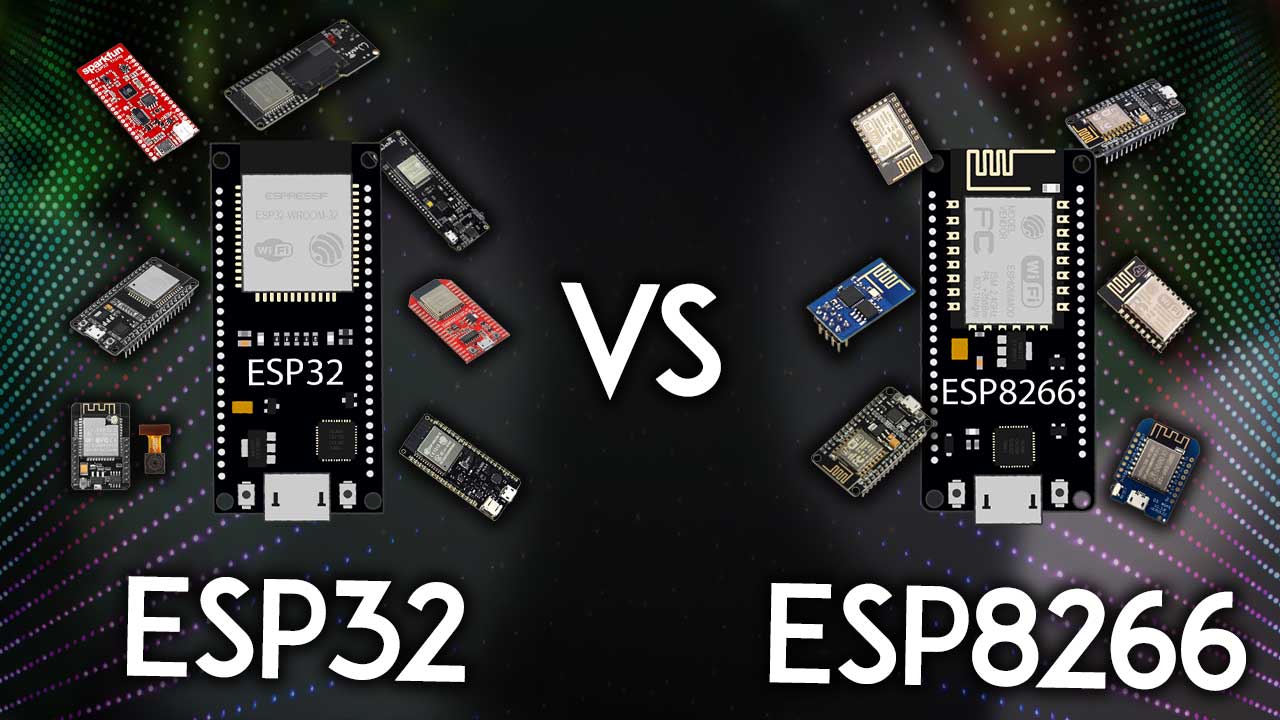
What Is the Difference Between ESP32 and ESP8266?
The ESP8266 and ESP32 are two of the most widely used Wi-Fi microcontrollers in the world. Both are designed by Espressif Systems, and both power millions of IoT devices.
Yet they are not equals.
One is lean, cheap, and simple.
The other is powerful, secure, and future-ready.
This guide explains the real differences between ESP32 and ESP8266, from hardware and wireless performance to power, security, and long-term product strategy. Short sentences. Clear contrasts. Engineer-friendly depth.
Introduction and High-Level Overview
What Are ESP8266 and ESP32?
The ESP8266 is a low-cost Wi-Fi SoC with a single-core CPU and limited peripherals. It was built to answer one question: How do we add Wi-Fi to anything for almost no cost?
The ESP32 is its successor. It adds dual cores, Bluetooth, more memory, more GPIO, hardware security, and advanced power modes. It is not just an upgrade. It is a platform.
Why ESP32 Was Introduced as a Successor
ESP8266 changed IoT. But it had limits.
- Tight RAM
- Single-core bottlenecks
- No Bluetooth
- Weak security features
ESP32 fixes these gaps. It was designed for connected products, not just Wi-Fi hacks.
“The best way to predict the future is to invent it.” — Alan Kay
Espressif did exactly that with ESP32.
Evolution of Espressif Wi-Fi SoCs in IoT
ESP8266 dominated early DIY IoT.
ESP32 now dominates commercial IoT, smart home, audio, AIoT, and Matter-ready devices.
Quick Comparison Table
| Feature | ESP8266 | ESP32 |
|---|---|---|
| CPU | Single-core 32-bit | Dual-core 32-bit |
| Max Clock | 80–160 MHz | Up to 240 MHz |
| Wi-Fi | 2.4 GHz 802.11 b/g/n | Same, higher throughput |
| Bluetooth | ❌ | Classic + BLE |
| Security | Basic | Secure boot, flash encryption |
| Use Case | Simple Wi-Fi nodes | Advanced IoT systems |
Core Hardware Architecture and Performance
CPU Architecture and Processing Power
ESP8266 uses a single Tensilica L106 core.
ESP32 uses dual Tensilica LX6 (or LX7/RISC-V on newer variants).
The difference is dramatic.
ESP8266 struggles when Wi-Fi tasks block user code.
ESP32 separates workloads. One core handles networking. The other runs your application.
Result: lower latency, smoother real-time behavior, fewer crashes.
Memory and Storage
Memory defines capability.
- ESP8266: ~80 KB usable RAM
- ESP32: ~520 KB SRAM + optional PSRAM
ESP32 variants support external PSRAM, enabling cameras, audio buffers, and ML models. ESP8266 cannot.
GPIO, Peripherals, and Interfaces
ESP8266 is minimal.
ESP32 is generous.
ESP32 offers:
- More GPIO with flexible multiplexing
- UART, SPI, I2C, I2S, CAN
- USB (S2/S3)
- ADC, DAC, PWM with better resolution
If your design needs more than blinking LEDs, ESP32 wins.
Wireless Connectivity and Networking Capabilities
Wi-Fi Standards and Throughput
Both support 2.4 GHz 802.11 b/g/n.
ESP32 delivers higher real-world throughput and stability due to better buffers and DMA.
Bluetooth and BLE Support (ESP32 Advantage)
ESP8266 has no Bluetooth.
ESP32 supports Bluetooth Classic and BLE.
This enables:
- Phone provisioning
- BLE sensors
- Beacons
- Matter commissioning
For modern products, this is critical.
Networking Protocols Beyond Wi-Fi
ESP32 excels at protocols:
- ESP-NOW (low-latency peer-to-peer)
- Wi-Fi Mesh
- MQTT, HTTP, WebSockets at scale
ESP32 is also future-ready for Matter, Thread, and Zigbee through companion radios and newer chip families.
Power Consumption and Energy Efficiency
Power Profiles of ESP8266
ESP8266 draws more current during Wi-Fi activity and has limited sleep control.
It works well when always powered.
Low-Power Modes and ULP in ESP32
ESP32 introduces:
- Deep sleep
- Light sleep
- Ultra-Low-Power (ULP) coprocessor
The ULP can read sensors while the main CPU sleeps. ESP8266 cannot do this.
Active vs Sleep Benchmarks
| Mode | ESP8266 | ESP32 |
|---|---|---|
| Active Wi-Fi | Higher | Lower per task |
| Deep Sleep | ~20 µA | <10 µA |
| Battery Life | Shorter | Longer |
Choosing for Battery Devices
For coin cells or energy harvesting, ESP32 is clearly superior.
Security Features and Hardware Encryption
Hardware Security Comparison
ESP8266 security is mostly software-based.
ESP32 includes hardware roots of trust.
Secure Boot and Flash Encryption
ESP32 supports:
- Secure boot
- AES-encrypted flash
- Key storage in eFuse
This protects firmware from cloning and tampering.
TLS/SSL and Crypto Acceleration

ESP32 includes hardware crypto accelerators.
TLS handshakes are faster. Power usage is lower. Reliability is higher.
For commercial IoT, this is not optional.
Software Ecosystem and Development Experience
Development Frameworks
Both support:
- Arduino
- PlatformIO
ESP32 also shines with ESP-IDF, offering:
- FreeRTOS
- Fine-grained power control
- Advanced networking stacks
Programming Language Support
- C/C++: Full support on both
- MicroPython: Limited on ESP8266, robust on ESP32
RTOS and Multitasking
ESP8266 can fake multitasking.
ESP32 actually multitasks.
Dual cores + FreeRTOS = scalable applications.
Debugging and Tools
ESP32 adds:
- JTAG debugging
- USB CDC
- Better logging
This saves time. Time is money.
Chip Variants and Modern Replacements
ESP8266 Module Variants
ESP-01, ESP-07, ESP-12, ESP-12F.
All are mature. All are limited.
ESP32 Family Overview
ESP32 is a family, not a chip:
- ESP32 (classic)
- ESP32-S2 (USB, security)
- ESP32-S3 (AI, vector ops)
- ESP32-C3 (RISC-V, low cost)
- ESP32-C6 (Wi-Fi 6 + Thread)
ESP32-C3 vs ESP8266
ESP32-C3 is often a drop-in replacement:
- Similar cost
- Much better security
- BLE included
ESP32-S3 for AIoT
ESP32-S3 enables:
- Voice recognition
- Edge AI
- USB devices
ESP8266 simply cannot compete here.
Cost, Use Cases, and Final Verdict
When ESP8266 Still Makes Sense
ESP8266 is still valid when:
- Cost is king
- Wi-Fi only
- No security requirements
- No battery constraints
Simple relays. Simple sensors. Simple firmware.
When ESP32 Is the Better Choice
Choose ESP32 if you need:
- Bluetooth
- Long battery life
- Security
- OTA at scale
- Audio, camera, or AI
Most new products fall here.
Decision Checklist
Ask yourself:
- Do I need BLE?
- Do I need secure OTA?
- Do I need multitasking?
- Do I want future compatibility?
If yes → ESP32.
Final Verdict
ESP8266 was revolutionary.
ESP32 is evolutionary and revolutionary.
ESP8266 is for learning and legacy.
ESP32 is for products and the future.
Choose wisely.
