


Package Marking Codes: Reading IC Labels
Integrated circuits are small.
But the information printed on them is huge.
A few letters, numbers, and symbols can reveal where a chip was made, when it was built, how it must be handled, and whether it can be trusted. In today’s volatile electronics supply chain, reading IC package marking codes is no longer optional. It is a survival skill.
As the old engineering proverb says:
“Trust, but verify.” — widely cited in quality and manufacturing disciplines
This guide explains how to read IC labels, why they matter, and how professionals use them to reduce risk, prevent counterfeits, and protect production lines—all at a 7th-grade reading level, without oversimplifying the truth.
What Are Package Marking Codes?
Package marking codes are identifiers printed directly on an IC package. They communicate critical information in a compact form because space is limited.
Short. Dense. Purpose-built.
What IC Markings Tell You
At a minimum, IC markings can reveal:
- Who made the chip
- What the part number is (full or abbreviated)
- When it was manufactured
- Which lot or batch it came from
- How it should be handled and stored
Why They Matter in Modern Supply Chains
Global sourcing has changed everything. Parts now move through:
- Multiple distributors
- Long storage cycles
- Secondary and spot markets
Without accurate markings, traceability collapses.
“If you cannot trace it, you cannot trust it.” — common principle in ISO-based quality systems
Who Must Read IC Labels
This information is not just for engineers.
- Buyers verify authenticity
- QA teams confirm compliance
- Manufacturing avoids assembly errors
- Management reduces recall and audit risk
Core Information Found on IC Package Markings
Every IC package is a puzzle. These are the most common pieces.
Manufacturer Identification
Usually a logo or short code.
It confirms the original manufacturer—not the distributor.
Part Number (Full or Abbreviated)
Due to space limits, many chips use:
- Truncated part numbers
- Family codes
- Internal product identifiers
Always cross-check with the datasheet.
Date Codes
Date codes show when the chip was produced, not shipped.
Common formats include:
| Format | Meaning | Example |
|---|---|---|
| YYWW | Year + week | 2345 = Week 45, 2023 |
| YWW | Year + week | 345 = Week 45, 2023 |
| Vendor-specific | Internal logic | Requires decoding |
Date codes matter for aging, warranty, and FIFO control.
IC Package Type and Orientation Markings
A correct part installed the wrong way is still a failure.
Common IC Package Types
You will often see:
- QFN
- BGA
- SOIC
- TSSOP
- DIP
Each package has unique marking constraints.
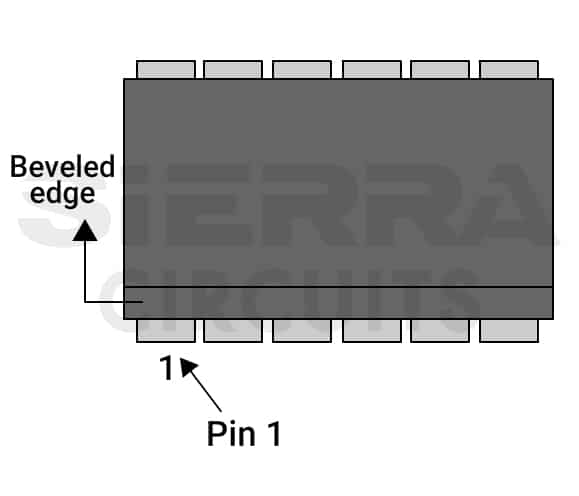
Pin 1 Indicators
Orientation markings include:
- Dots
- Notches
- Chamfered corners
Misreading Pin 1 can destroy boards instantly.
Top-Side vs Bottom-Side Markings
BGA packages are especially tricky.
Some data appears:
- On the top mold
- On the substrate bottom
- Or not at all
Never assume. Always verify.
Lot, Batch, and Traceability Codes
This is where markings become mission critical.
What Lot Codes Represent
Lot or batch codes link chips to:
- A specific wafer
- A production run
- A test flow
Why Lot Codes Matter
They support:
- Failure analysis
- Yield tracking
- Field returns
- Targeted recalls
In automotive, medical, and aerospace electronics, traceability is mandatory, not optional.
Country of Origin Codes
Some ICs include country identifiers. Others do not.
Important distinctions:
- Wafer fabrication location
- Assembly location
- Test location
These may all differ.
| Stage | Possible Country |
|---|---|
| Wafer Fab | Taiwan |
| Assembly | Malaysia |
| Test | Philippines |
Country data affects compliance, tariffs, and geopolitical risk.
Moisture Sensitivity and Handling Codes
Plastic ICs absorb moisture.
That moisture can explode during reflow.
Moisture Sensitivity Level (MSL)
MSL indicates how long a part can stay out of dry storage.
| MSL | Floor Life |
|---|---|
| MSL 1 | Unlimited |
| MSL 3 | 168 hours |
| MSL 5 | 48 hours |
IC Markings vs External Labels
MSL is often printed on:
- Reels
- Trays
- Moisture barrier bags
Rarely on the IC itself.
Ignoring this data causes latent failures.
Environmental and Material Compliance Markings
Regulations are strict. And getting stricter.
RoHS and Pb-Free
Common indicators include:
- “Pb-Free”
- “e3”
- Green dot symbols
These confirm lead-free termination.
Other Environmental Codes
Some vendors add:
- REACH indicators
- Halogen-free markings
- Internal green compliance codes
These are essential for regulated markets.
Marking Technologies and Counterfeit Risk
How a marking is applied matters as much as what it says.
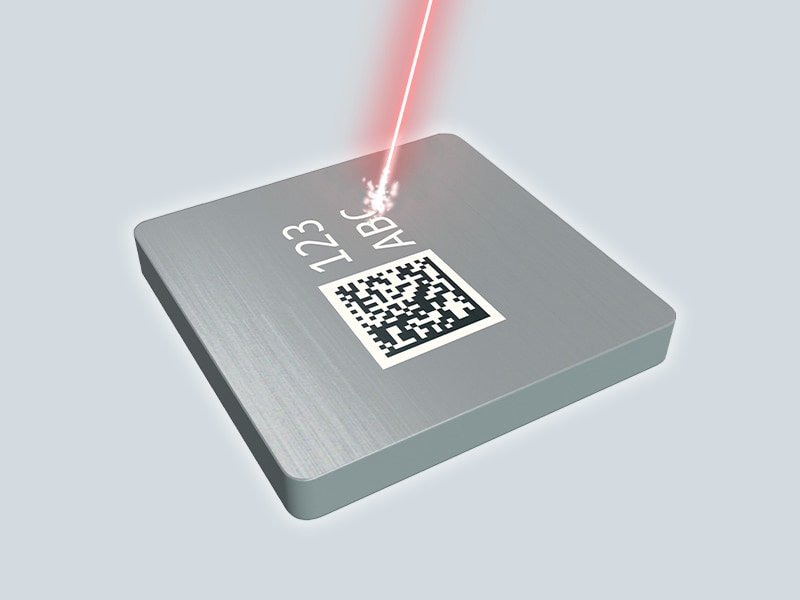
Laser-Etched vs Ink-Printed
Laser markings:
- Are permanent
- Resist solvents
- Age better
Ink markings:
- Can fade
- Can smear
- Are easier to alter
Counterfeit Detection
Red flags include:
- Uneven fonts
- Inconsistent depth
- Sanded surfaces
- Over-marking
“Counterfeit parts do not fail immediately. They fail when it hurts most.” — widely cited in aerospace QA training
Best Practices for Reading and Verifying IC Markings
No single marking tells the whole story.
Cross-Verification
Always compare:
- IC markings
- Datasheets
- PCNs
- External packaging labels
Lot Consistency
Parts from the same reel should:
- Share date codes
- Match font styles
- Look identical
Know the Limits
IC packages do not show everything:
- Full compliance status
- Electrical screening level
- Internal process changes
When in doubt, manufacturer confirmation is required.
Why Package Marking Codes Matter for Risk Management
Package markings are not trivia.
They are risk controls.
They protect against:
- Counterfeit parts
- Wrong revisions
- Compliance violations
- Costly recalls
Strong marking verification supports:
- ISO audits
- JEDEC alignment
- Customer trust
In the end, accurate IC identification is about confidence.
Confidence in sourcing.
Confidence in assembly.
Confidence in the final product.
Final Thought
IC package marking codes may look small.
But they carry the weight of quality, safety, and reputation.
Read them carefully.
Verify them always.
Because in electronics, the smallest details decide the biggest outcomes.
