

CY2907SC-131 Overview
The CY2907SC-131 is a precision operational amplifier designed for industrial and instrumentation applications requiring high accuracy and stability. Featuring a low input offset voltage and low input bias current, this device ensures reliable signal conditioning in sensitive measurement systems. Its wide supply voltage range supports versatile power configurations, while the robust package facilitates easy integration into compact PCB layouts. Engineers and sourcing specialists will find this component ideal for enhancing performance in analog signal processing circuits. For further technical details and support, visit IC Manufacturer.
CY2907SC-131 Technical Specifications
| Parameter | Specification | Units |
|---|---|---|
| Number of Amplifiers | 4 | Units |
| Supply Voltage Range | ??3 V to ??18 V | Volts |
| Input Offset Voltage (max) | 4 mV | Millivolts |
| Input Bias Current (max) | 50 nA | Nanoamperes |
| Gain Bandwidth Product | 1 MHz | Megahertz |
| Slew Rate | 1.3 V/??s | Volts per microsecond |
| Input Voltage Noise Density | 20 nV/??Hz | Nanovolts per root Hertz |
| Package Type | SOIC-14 | ?? |
CY2907SC-131 Key Features
- Quad operational amplifier configuration enables compact multi-channel signal processing, reducing board space and component count.
- Wide supply voltage range from ??3 V to ??18 V allows flexible power design, suitable for diverse industrial environments.
- Low input offset voltage and bias current ensure high accuracy in low-level signal amplification, critical for precision instrumentation.
- Moderate gain bandwidth product and slew rate provide balanced frequency response for stable analog signal conditioning.
- Noise performance optimized through low input voltage noise density, improving signal-to-noise ratio in sensitive measurement systems.
- Industry-standard SOIC-14 package facilitates easy automated assembly and reliable thermal management.
CY2907SC-131 Advantages vs Typical Alternatives
This device offers significant advantages over typical operational amplifiers, including lower input offset voltage and bias current, which enhance measurement accuracy. Its wide supply voltage range delivers greater design flexibility, while the quad amplifier integration reduces component count and PCB footprint. The combination of moderate gain bandwidth and low noise performance makes it well-suited for industrial sensors and instrumentation, where reliability and precision are essential.
🔥 Best-Selling Products
-
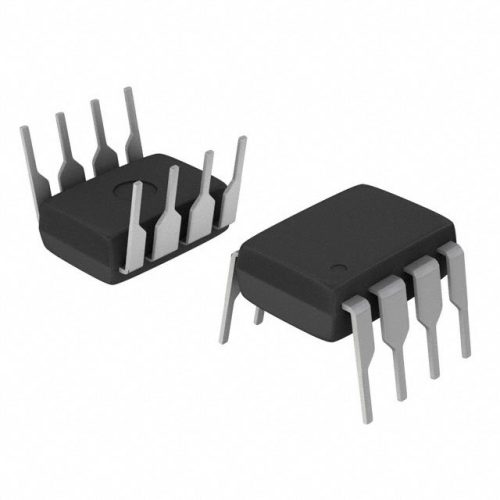
Texas Instruments BQ24075 Linear Battery Charger IC – 5mm x 4mm QFN Package
-
Texas Instruments INA219 Current Sensor Module – SOIC Package, Precision Monitoring
-
Texas Instruments LM4041 Precision Voltage Reference – SOT-23 Package
-
Texas Instruments OPA2134 Audio Op Amp – Dual, High-Performance, SOIC-8 Package
Typical Applications
- Precision sensor signal conditioning circuits, where low offset and bias currents improve measurement fidelity in temperature, pressure, and strain gauge sensors.
- Data acquisition systems requiring stable and accurate analog front-end amplification.
- Industrial control systems that benefit from robust, low-noise operational amplifiers with flexible power supply options.
- Portable instrumentation devices demanding low power consumption and compact multi-channel amplifier solutions.
CY2907SC-131 Brand Info
The CY2907SC-131 is a precision quad operational amplifier from a reputable manufacturer specializing in high-performance analog ICs. This product line is recognized for strict quality control and consistent electrical characteristics, meeting the demanding standards of industrial and instrumentation markets. Reliable and widely supported, the device is a trusted choice among engineers for applications requiring accurate and stable analog signal amplification.
FAQ
What supply voltages can the CY2907SC-131 operate within?
The device supports a supply voltage range from ??3 volts up to ??18 volts, providing flexibility for different power configurations in industrial and instrumentation applications.
🌟 Featured Products
-

“Buy MAX9312ECJ+ Precision Voltage Comparator in DIP Package for Reliable Performance”
-
QCC-711-1-MQFN48C-TR-03-1 Bluetooth Audio SoC with MQFN48C Package
-

0339-671-TLM-E Model – High-Performance TLM-E Package for Enhanced Functionality
-
1-1415898-4 Connector Housing, Electrical Wire-to-Board, Receptacle, Packaged
How does the input offset voltage affect performance?
The maximum input offset voltage of 4 mV ensures that signal amplification remains accurate, minimizing errors caused by