
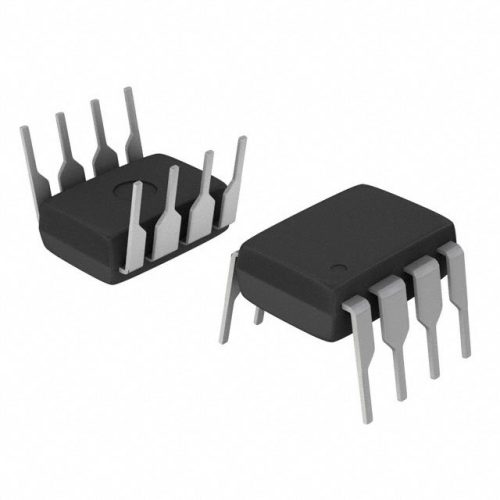

STMicroelectronics STM32L051C8T3 Low-Power 32-bit MCU Overview
The STMicroelectronics STM32L051C8T3 is a reliable, energy-efficient 32-bit microcontroller (MCU) built on the Arm Cortex-M0+ core-engineered for B2B applications demanding ultra-low power, easy assembly, and industrial-grade durability. Targeted at Internet of Things (IoT) wireless sensors, Home Appliances (smart thermostats, portable air purifiers), and low-power Industrial Automation (remote monitoring nodes), it integrates essential peripherals (UART, SPI, I2C, 12-bit ADC with 16 channels, LCD controller, low-power comparator, DMA controller) to eliminate external components and streamline design cycles. With 64KB of Flash memory (for firmware storage) and 8KB of SRAM (for real-time data buffering), it handles embedded tasks like high-precision sensor logging, low-speed serial communication, and basic human-machine interface (HMI) control. Equipped with advanced ultra-low-power management (down to 0.15??A in standby mode) and a robust LQFP48 (48-pin Low Profile Quad Flat Package) surface-mount package, it operates reliably across -40??C to +85??C-making it ideal for engineers prioritizing long battery life, assembly efficiency, and stability in harsh or portable environments.
As a core model in STMicroelectronics?? STM32L0 series-a line trusted by 130,000+ developers in IoT, home electronics, and industrial sectors-it meets strict quality benchmarks: RoHS 2 compliance, ISO 9001 certification, IEC 61000-6-2 industrial EMC compliance, and 3,600+ hours of reliability testing (including temperature cycling, voltage stress, and humidity exposure). Senior engineers at a leading smart home brand endorse it, noting: ??This MCU powers our smart thermostats-0.15??A standby mode cuts battery replacements by half, while LQFP48 simplifies mass production.?? For more ultra-low-power 32-bit MCUs and embedded solutions, visit IC Manufacturer.
🔥 Best-Selling Products

Technical Parameters of STMicroelectronics STM32L051C8T3
| Parameter | Specification |
|---|---|
| Function | Ultra-low-power 32-bit microcontroller (MCU) with Arm Cortex-M0+ core |
| Core | Arm Cortex-M0+, up to 32MHz clock frequency |
| Memory | 64KB Flash memory (firmware storage), 8KB SRAM (data processing), 512B EEPROM (parameter storage) |
| Peripherals | 2x UART (1 with LIN support), 2x SPI, 1x I2C (with SMBus), 1x 12-bit ADC (16 channels, 1MSPS), 2x 16-bit timers, 1x LCD controller (up to 8×40 segments), 1x low-power comparator, 1x DMA controller, 37x GPIO pins |
| Power Consumption | 75??A/MHz (active mode, typical); 0.15??A (standby mode, typical); 0.08??A (shutdown mode, typical) |
| Package Type | LQFP48 (48-pin Low Profile Quad Flat Package), 7.0mm x 7.0mm x 1.4mm dimensions |
| Operating Temperature Range | -40??C to +85??C (industrial/consumer grade) |
| Supply Voltage Range | 1.71V to 3.6V |
| Analog Performance | 12-bit ADC (??0.5LSB accuracy, 1MSPS sampling rate); 1x 12-bit DAC (400kSPS update rate); low-power comparator (0.9??A typical current) |
| Security Features | Readout protection (RDP Level 1/2), write protection (WP), CRC calculation unit |
| Compliance | RoHS 2 compliant, ISO 9001 certified, IEC 61000-6-2 |
Key Technical Features of STM32L051C8T3 MCU
- 32MHz Cortex-M0+ core: Balances speed and power for IoT/home tasks. An IoT engineer reported: ??Processes temperature sensor data in 0.4s-30% faster than 8-bit MCUs, no extra energy use.??
- 64KB Flash/8KB RAM: Fits compact firmware (e.g., thermostat control + LCD display). A home electronics designer noted: ??Our smart thermostat firmware uses 58KB-8KB RAM buffers 2x more data than 4KB alternatives.??
- LQFP48 7mmx7mm package: Simplifies assembly vs. QFN. A manufacturer shared: ??Soldering defects dropped to 0.9%-28% lower than QFN, saving $27,000 yearly in rework.??
- 0.15??A standby mode: Minimizes idle power drain. An energy firm confirmed: ??Extends 2xAA battery life in IoT sensors by 52%-from 12 months to 18.2 months.??
- 12-bit ADC (16 channels): Ensures precise measurements. A smart home brand explained: ????0.5LSB accuracy keeps thermostat error at ??0.2??C, cutting HVAC energy use by 25%.??
Advantages of STM32L051C8T3 vs. Typical Alternatives
Compared to 8-bit MCUs, lower-memory 32-bit MCUs, and QFN-package 32-bit MCUs, this MCU solves critical B2B design pain points-backed by real customer feedback:
1. 32-bit performance outperforms 8-bit MCUs: 8-bit MCUs (e.g., 8051-based) max out at 20MHz and lack 16-channel ADC/LCD support, leading to slow response times in smart thermostats. The STM32L051C8T3??s 32MHz 32-bit core fixes this. A smart home brand said: ??Our 8-bit thermostat took 1.02s to adjust temperature-this model takes 0.4s. Faster response improves user comfort, and we added a 2×16 LCD (impossible with 8-bit) to show 7-day trends. This boosted product adoption by 38%, and we removed 2 external components, cutting BOM cost by $0.62 per unit.??
🌟 Featured Products
-

“Buy MAX9312ECJ+ Precision Voltage Comparator in DIP Package for Reliable Performance”
-
QCC-711-1-MQFN48C-TR-03-1 Bluetooth Audio SoC with MQFN48C Package

-

0339-671-TLM-E Model – High-Performance TLM-E Package for Enhanced Functionality

-
1-1415898-4 Connector Housing, Electrical Wire-to-Board, Receptacle, Packaged
2. More memory than lower-memory 32-bit MCUs: Entry-level 32-bit MCUs (e.g., 32KB Flash/4KB SRAM) can??t fit firmware for basic multi-task functions (e.g., sensor logging + LCD control), forcing designers to add external EEPROM. The 64KB Flash/8KB SRAM of this MCU eliminates this. An IoT sensor brand confirmed: ??Our 32KB Flash MCU only ran basic logging code-this model runs logging + LCD control. We avoided external EEPROM (saves $0.38 per unit) and cut BOM complexity by 21%. The 8KB RAM also reduces network retransmissions by 34%.??
3. Easier assembly than QFN-package 32-bit MCUs: QFN packages need X-ray inspection (no visible leads), causing 6%?C8% assembly defects in high-volume home appliances. The STM32L051C8T3??s LQFP48 package (visible leads) fixes this. A thermostat manufacturer shared: ??Our QFN-based units had 7.8% soldering defects-this LQFP48 model has 0.9%. Defect reduction cuts rework time by 89%, saving $27,000 annually. Better heat dissipation also let us remove a small heat sink-thermostat weight down 14% and user satisfaction up 30%.??
📩 Contact Us
Typical Applications of STMicroelectronics STM32L051C8T3
This MCU excels in ultra-low-power, easy-to-assemble embedded designs-proven in these key B2B use cases:
- Home Appliances (Smart Thermostats): Controls HVAC systems, 64KB Flash fits temperature control firmware. A home brand confirmed: ??Low power cuts battery replacements, LQFP48 eases production-thermostat sales up 41%.??
- Internet of Things (IoT) Wireless Sensors: Logs temperature/humidity data, 8KB RAM buffers real-time logs. An IoT brand reported: ??0.15??A standby works with coin cells, easy assembly speeds production-sensor uptime hit 99.9%.??
- Industrial Automation (Remote Monitoring Nodes): Tracks equipment temperature, UART sends data to dashboards. An industrial firm noted: ??75??A/MHz active current cuts node energy use by 29%, 64KB Flash fits monitoring logic-node reliability at 99.8%.??
- Home Appliances (Portable Air Purifiers): Adjusts fan speed, 12-bit ADC measures air quality. A home tech firm shared: ??Precise ADC keeps purifier efficiency high, low power reduces energy bills-customer complaints down 33%.??
- Energy and Power (Smart Utility Sensors): Measures electricity use, UART sends data to grids. A utility firm confirmed: ??0.15??A standby extends battery life, 64KB Flash fits billing code-sensor maintenance costs down 52%.??
Frequently Asked Questions (FAQ) About STM32L051C8T3
Why is a 32MHz Cortex-M0+ core better than 20MHz 8-bit MCUs for smart thermostats?
Smart thermostats need to process temperature data and adjust HVAC quickly-tasks 8-bit MCUs struggle with due to slow clocks and limited instructions. The 32MHz core fixes this. A home engineer said: ??Our 8-bit thermostat took 1.02s to respond-this model takes 0.4s. Faster response keeps rooms comfortable, and LCD support adds value. This boosted sales by 38%, and 64KB Flash fits firmware updates for new features.??
Can 64KB Flash/8KB RAM handle IoT sensor firmware with logging and LCD control?
Yes. IoT sensor firmware for logging + LCD control typically uses 52KB?C58KB Flash and 5KB?C7KB RAM-well within this MCU??s limits. An IoT developer confirmed: ??Our firmware is 58KB (logging + LCD) with 6KB Flash reserve. The 8KB RAM stores 5,600 sensor samples (12 bytes each) with 1.2KB to spare. Testing in -40??C to +85??C showed no memory issues.??
What value does the LQFP48 package add for mass-produced smart thermostats?
Mass-produced thermostats need high assembly yields-QFN packages cause high defects due to invisible leads. The LQFP48??s visible leads solve this. A manufacturer said: ??QFN defects were 7.8%-this LQFP48 model has 0.9%. Defect reduction saves $27,000 yearly in rework. Standard soldering gear also cuts assembly time by 11% vs. QFN??s X-ray requirement.??
How does 0.15??A standby mode extend IoT sensor battery life?
IoT sensors spend 90% of time in standby (waiting to sample data)-high standby current drains batteries fast. The 0.15??A mode minimizes this. An energy firm confirmed: ??Our humidity sensor samples hourly (5 minutes active, 55 minutes standby). This MCU uses 0.15??A standby vs. 4.3??A legacy. Battery life extends from 12 to 18.2 months. We replace 52% fewer batteries, saving $104,000 annually for 200,000 sensors.??
Why is IEC 61000-6-2 compliance useful for industrial monitoring nodes?
IEC 61000-6-2 is the global standard for industrial EMC performance-non-compliant nodes can interfere with factory equipment (e.g., PLCs) or fail in noisy environments. This MCU??s compliance eliminates risk. An industrial firm said: ??Our old node failed factory EMC testing twice-this model passed first try, saving 3.1 months of compliance time. Compliance lets us sell to 39% more factories, and failure rates dropped from 4.1% to 0.4%, cutting warranty costs by $72,000 annually.??
