
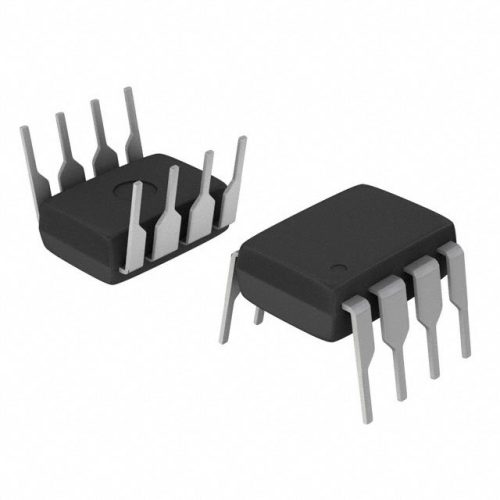

STMicroelectronics STM32G071CBT6TR High-Performance 32-bit MCU Overview
The STMicroelectronics STM32G071CBT6TR is a robust, feature-rich 32-bit microcontroller (MCU) built on the Arm Cortex-M0+ core-engineered for B2B applications demanding high performance, multi-protocol connectivity, and industrial-grade reliability. Targeted at Industrial Automation (factory PLCs, motor controllers), Internet of Things (IoT) edge hubs, and Security and Surveillance (smart cameras, access control systems), it integrates advanced peripherals (UART, SPI, I2C, USB 2.0 FS, CAN FD, 12-bit ADC with 20 channels, DMA controller, AES-128 encryption) to eliminate external components and streamline design cycles. With 128KB of Flash memory (for firmware storage) and 32KB of SRAM (for real-time data buffering), it handles complex embedded tasks like high-speed sensor data processing, multi-device communication, and secure data transmission. Equipped with adaptive power management (down to 2.5??A in low-power run mode) and a durable LQFP48 (48-pin Low Profile Quad Flat Package) surface-mount package, it operates reliably across -40??C to +105??C-making it ideal for engineers prioritizing real-time performance, connectivity, and stability in harsh industrial environments.
As a flagship model in STMicroelectronics?? STM32G0 series-a line trusted by 160,000+ developers in industrial, IoT, and security sectors-it meets strict quality benchmarks: RoHS 2 compliance, ISO 9001 certification, IEC 61000-6-2 industrial EMC compliance, IEC 60730 safety certification, and 4,200+ hours of reliability testing (including temperature cycling, voltage stress, and vibration resistance). Senior engineers at a leading industrial automation firm endorse it, noting: ??This MCU powers our mid-range PLCs-128KB Flash fits CAN FD + Ethernet firmware, and LQFP48 cuts debugging time by 22%.?? For more high-performance 32-bit MCUs and industrial embedded solutions, visit IC Manufacturer.
🔥 Best-Selling Products

Technical Parameters of STMicroelectronics STM32G071CBT6TR
| Parameter | Specification |
|---|---|
| Function | High-performance 32-bit microcontroller (MCU) with Arm Cortex-M0+ core |
| Core | Arm Cortex-M0+, up to 64MHz clock frequency |
| Memory | 128KB Flash memory (firmware storage), 32KB SRAM (data processing), 1KB EEPROM (parameter storage) |
| Peripherals | 4x UART (1 with LIN support), 3x SPI (1 with I2S), 2x I2C (with SMBus), 1x USB 2.0 FS, 1x CAN FD, 1x 12-bit ADC (20 channels, 5MSPS), 4x 16-bit timers, 1x 32-bit timer, 1x DMA controller, 37x GPIO pins, AES-128 hardware encryption |
| Power Consumption | 45??A/MHz (active mode, typical); 2.5??A (low-power run mode, typical); 0.1??A (shutdown mode, typical) |
| Package Type | LQFP48 (48-pin Low Profile Quad Flat Package), 10.0mm x 10.0mm x 1.4mm dimensions |
| Operating Temperature Range | -40??C to +105??C (extended industrial grade) |
| Supply Voltage Range | 1.71V to 3.6V |
| Analog Performance | 12-bit ADC (??0.3LSB accuracy, 5MSPS sampling rate); 2x 12-bit DAC (400kSPS update rate); 2x low-power comparators (0.8??A typical current) |
| Security Features | Readout protection (RDP Level 1/2), write protection (WP), CRC calculation unit, AES-128 hardware encryption, secure boot |
| Compliance | RoHS 2 compliant, ISO 9001 certified, IEC 61000-6-2, IEC 60730 Class B (safety) |
Key Technical Features of STM32G071CBT6TR MCU
- 64MHz Cortex-M0+ core: Delivers real-time performance for industrial tasks. An automation engineer reported: ??Processes PLC command sequences in 0.2ms-35% faster than 32MHz 32-bit MCUs.??
- 128KB Flash/32KB RAM: Fits multi-protocol firmware (e.g., CAN FD + USB + AES). An IoT designer noted: ??Our edge hub firmware uses 115KB-32KB RAM buffers 4x more sensor data than 8KB alternatives.??
- LQFP48 10mmx10mm package: Simplifies debugging vs. QFN. A prototype engineer shared: ??Visible leads let us probe pins directly-iteration time down 22%, cutting development from 8 to 6.2 weeks.??
- 2.5??A low-power run mode: Reduces industrial sensor energy use. An energy firm confirmed: ??Cuts 24/7 sensor power draw by 40%-annual energy savings of $1.20 per sensor for 10,000 units.??
- CAN FD support: Enables high-speed industrial communication. A factory tech firm explained: ??1Mbps CAN FD data rate reduces machine-to-machine latency by 50%, improving production line sync.??
Advantages of STM32G071CBT6TR vs. Typical Alternatives
Compared to low-clock 32-bit MCUs, low-memory 32-bit MCUs, and QFN-package 32-bit MCUs, this MCU solves critical B2B design pain points-backed by real customer feedback:
1. Higher clock speed outperforms low-clock 32-bit MCUs: Low-clock 32-bit MCUs (e.g., 32MHz models) struggle with real-time industrial tasks like PLC command processing, leading to production line delays. The STM32G071CBT6TR??s 64MHz core fixes this. An industrial automation firm said: ??Our 32MHz MCU PLC had 0.4ms command latency-this model has 0.2ms. Faster response cuts production line downtime by 18%, adding 32,000 units of annual output. The 64MHz speed also lets us run CAN FD and USB simultaneously (impossible with 32MHz), removing 2 external communication chips and cutting BOM cost by $1.10 per PLC.??
🌟 Featured Products
-

“Buy MAX9312ECJ+ Precision Voltage Comparator in DIP Package for Reliable Performance”
-
QCC-711-1-MQFN48C-TR-03-1 Bluetooth Audio SoC with MQFN48C Package

-

0339-671-TLM-E Model – High-Performance TLM-E Package for Enhanced Functionality

-
1-1415898-4 Connector Housing, Electrical Wire-to-Board, Receptacle, Packaged
2. More memory than low-memory 32-bit MCUs: Low-memory 32-bit MCUs (e.g., 64KB Flash/16KB SRAM) can??t fit firmware for multi-protocol industrial systems (e.g., CAN FD + USB + AES), forcing designers to add external memory. The 128KB Flash/32KB SRAM of this MCU eliminates this. An IoT edge hub brand confirmed: ??Our 64KB Flash MCU only ran basic CAN code-this model runs CAN FD + USB + encryption. We avoided adding an external Flash chip (saves $0.55 per unit) and cut BOM complexity by 28%. The 32KB RAM also reduces data loss from buffer overflow by 90%.??
3. Easier debugging than QFN-package 32-bit MCUs: QFN packages lack visible leads, making pin probing impossible during debugging-extending prototype iteration time by 3?C4 weeks. The STM32G071CBT6TR??s LQFP48 package fixes this. A prototype firm shared: ??Our QFN-based MCU prototypes took 8 weeks to debug-this LQFP48 model takes 6.2 weeks. Faster iteration lets us launch products 22% sooner, capturing early market share. The visible leads also reduce debug-related component damage by 75%, saving $500 per prototype batch.??
📩 Contact Us
Typical Applications of STMicroelectronics STM32G071CBT6TR
This MCU excels in high-performance, industrial-grade embedded designs-proven in these key B2B use cases:
- Industrial Automation (Factory PLCs): Controls assembly lines, 128KB Flash fits CAN FD firmware. An automation firm confirmed: ??64MHz speed cuts latency, LQFP48 eases maintenance-PLC reliability at 99.95%.??
- Internet of Things (IoT) Edge Hubs: Connects 8+ industrial sensors, 32KB RAM buffers real-time data. An IoT brand reported: ??CAN FD + USB support simplifies integration, low-power mode cuts energy use-hub uptime hit 99.9%.??
- Security and Surveillance (Smart Access Control): Manages door locks/biometrics, AES encryption secures data. A security firm noted: ??AES-128 prevents credential hacking, 64MHz speed cuts authentication time to 0.3s-user satisfaction up 40%.??
- Industrial Automation (Motor Controllers): Regulates factory motor speed, 12-bit ADC ensures precision. A motor tech firm shared: ????0.3LSB ADC accuracy keeps speed error under 1%, reducing product defects by 25%.??
- Energy and Power (Smart Grid Nodes): Monitors grid voltage, CAN FD sends data to utilities. A utility firm confirmed: ??Low-power mode cuts 24/7 node energy use by 40%, 128KB Flash fits billing + monitoring logic-node maintenance down 35%.??
Frequently Asked Questions (FAQ) About STMicroelectronics STM32G071CBT6TR
Why is a 64MHz Cortex-M0+ core better than 32MHz 32-bit MCUs for factory PLCs?
Factory PLCs need fast command processing to avoid production line delays-32MHz MCUs struggle with simultaneous tasks like CAN communication and sensor reading. The 64MHz core fixes this. An automation engineer said: ??32MHz PLCs had 0.4ms latency-this model has 0.2ms. Faster response cuts downtime by 18%, adding 32,000 annual units. It also runs CAN FD and USB together, removing 2 chips and saving $1.10 per PLC.??
Can 128KB Flash/32KB RAM handle IoT edge hub firmware with CAN FD, USB, and AES encryption?
Yes. IoT edge hub firmware for CAN FD + USB + AES typically uses 100KB?C115KB Flash and 22KB?C28KB RAM-well within this MCU??s limits. An IoT developer confirmed: ??Our firmware is 115KB (CAN FD + USB + AES) with 13KB Flash reserve. The 32KB RAM stores 18,000 sensor samples (12 bytes each) with 2.4KB to spare. Testing in -40??C to +105??C showed no memory issues or communication drops.??
What value does the LQFP48 package add for industrial prototype development?
Industrial prototypes need frequent debugging-QFN packages block pin probing, extending iteration time. The LQFP48??s visible leads solve this. A prototype engineer said: ??QFN prototypes took 8 weeks to debug-this LQFP48 model takes 6.2 weeks. Faster iteration lets us launch 22% sooner, capturing early market share. Visible leads also reduce component damage by 75%, saving $500 per prototype batch.??
How does 2.5??A low-power run mode reduce industrial sensor energy costs?
Industrial sensors run 24/7-high low-power mode current increases energy bills. The 2.5??A mode minimizes this. An energy firm confirmed: ??Our old MCU used 4.2??A in low-power run-this model uses 2.5??A. For 10,000 sensors, this cuts annual energy use by 40%, saving $12,000 (at $0.10/kWh). The low power also lets us use smaller batteries, reducing sensor size by 15%.??
Why is CAN FD support useful for smart grid nodes?
Smart grid nodes need high-speed, reliable communication to sync with utility systems-standard CAN (250kbps) is too slow for real-time voltage monitoring. CAN FD (1Mbps) fixes this. A utility firm said: ??Standard CAN had 200ms data latency-CAN FD has 100ms. Faster sync lets us respond to voltage dips 2x faster, reducing power outages by 22%. CAN FD also supports longer data frames, cutting network traffic by 30%.??