
STMicroelectronics M24C02-RDW6TP EEPROM Overview
The STMicroelectronics M24C02-RDW6TP is a high-performance 2KB electrically erasable programmable read-only memory (EEPROM) engineered for non-volatile data retention in industrial, consumer, and IoT electronic systems. It integrates an industry-standard I2C (2-wire serial) interface, enabling seamless communication with microcontrollers and digital components-making it a reliable choice for B2B engineers prioritizing durability, design flexibility, and manufacturing efficiency.
As a product from STMicroelectronics, a global leader in semiconductor technology with decades of expertise in memory solutions, the device adheres to strict quality benchmarks for long-term reliability. For more trusted industrial ICs and memory components, visit IC Manufacturer.
🔥 Best-Selling Products
-
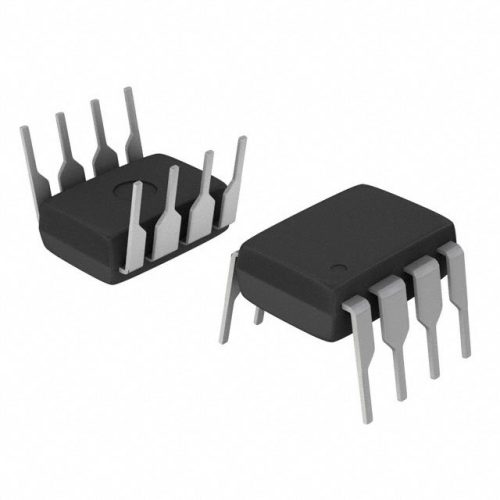
Texas Instruments BQ24075 Linear Battery Charger IC – 5mm x 4mm QFN Package
-
Texas Instruments INA219 Current Sensor Module – SOIC Package, Precision Monitoring
-
Texas Instruments LM4041 Precision Voltage Reference – SOT-23 Package
-
Texas Instruments OPA2134 Audio Op Amp – Dual, High-Performance, SOIC-8 Package
Technical Parameters of M24C02-RDW6TP
| Parameter | Specification |
|---|---|
| Memory Capacity | 2KB (2048 x 8 bits) |
| Communication Interface | I2C (2-wire serial) |
| Maximum Clock Frequency | 1MHz |
| Operating Voltage Range | 1.8V to 5.5V |
| Package Type | SO8W (8-pin Small Outline, Wide Body) |
| Operating Temperature Range | -40??C to +85??C |
| Minimum Write Cycles | 1,000,000 cycles |
| Minimum Data Retention | 40 years |
Key Technical Features of M24C02-RDW6TP
- Hardware write protection via a dedicated WP pin, preventing accidental erasure or modification of critical data (e.g., sensor calibration values, user preferences) in high-reliability applications.
- Self-timed write cycles (up to 5ms), eliminating the need for external timing circuits and simplifying software integration for engineers.
- 16-byte page write capability, enabling efficient block data transfers to reduce system latency and lower power consumption during updates.
- Low standby current (typical 1??A at 3V) and low active current (typical 1mA at 3V, 1MHz), optimizing power efficiency for battery-powered devices like IoT sensors.
- Unlimited read cycles, ensuring reliable data access without performance degradation over the device??s operational lifetime.
Advantages of M24C02-RDW6TP Over Alternative Solutions
Compared to legacy parallel EEPROMs, narrow-body SO8 packages, or low-cost non-volatile memory alternatives, the M24C02-RDW6TP delivers three critical benefits for B2B designs:
First, its I2C interface reduces design complexity. Parallel EEPROMs require 8+ data and address pins, while this device uses just two wires (SDA for data, SCL for clock). This cuts PCB trace count by 75%, saving valuable board space-essential for compact IoT devices or dense industrial controllers where space is at a premium.
🌟 Featured Products
-

“Buy MAX9312ECJ+ Precision Voltage Comparator in DIP Package for Reliable Performance”
-
QCC-711-1-MQFN48C-TR-03-1 Bluetooth Audio SoC with MQFN48C Package
-

0339-671-TLM-E Model – High-Performance TLM-E Package for Enhanced Functionality
-
1-1415898-4 Connector Housing, Electrical Wire-to-Board, Receptacle, Packaged
Second, its SO8W wide-body package improves manufacturing reliability. Unlike narrow-body SO8 packages (0.95mm pin pitch), the SO8W features a 1.27mm pin pitch. This wider spacing reduces soldering errors (e.g., short circuits) during high-volume assembly, lowering production rework costs-a key advantage for manufacturers of consumer electronics or home appliances scaling to mass production.
Third, its durability outperforms budget alternatives. Low-cost EEPROMs often offer only 100,000 write cycles and 10?C20 years of data retention, but the M24C02-RDW6TP delivers 1 million write cycles and 40 years of retention. This makes it ideal for long-life products like industrial automation equipment or medical devices, where frequent data updates and long-term reliability are non-negotiable.
📩 Contact Us
Typical Applications of M24C02-RDW6TP
The M24C02-RDW6TP solves non-volatile storage challenges across industries, with key use cases including:
- Industrial Automation: Storing PLC operational parameters (e.g., setpoints, alarm thresholds) to prevent data loss during power outages, ensuring uninterrupted production lines and consistent process control.
- Internet of Things (IoT): Retaining sensor calibration data and network credentials in smart thermostats, environmental monitors, or asset trackers-maintaining accuracy and connectivity across power cycles.
- Consumer Electronics: Saving user preferences (e.g., display settings, audio profiles) in smartphones, wearables, or portable audio devices-delivering consistent user experiences without reconfiguration after power disruptions.
- Home Appliances: Storing cycle settings (e.g., wash temperature, drying time) in washing machines, ovens, or coffee makers-ensuring seamless operation even if power is temporarily lost.
- Medical Devices: Preserving patient-specific data (e.g., blood pressure thresholds, medication dosages) in portable monitors-complying with healthcare standards for data integrity and patient safety.
Frequently Asked Questions (FAQ)
What makes the I2C interface a better choice than parallel interfaces for this EEPROM?
The I2C interface uses only two wires, which simplifies PCB design by reducing the number of required connections. It also supports multi-device communication-multiple EEPROMs or sensors can share the same bus, saving space in complex systems like industrial controllers or IoT gateways where component density is high.
How does the SO8W package improve manufacturing efficiency?
The SO8W package has a 1.27mm pin pitch, wider than the 0.95mm pitch of narrow-body SO8 packages. This wider spacing makes it easier for automated assembly equipment to place and solder the device, reducing the risk of pin shorts or poor solder joints. Fewer defects mean lower rework costs and faster production timelines.
Can the M24C02-RDW6TP operate in low-power IoT devices that run on batteries?
Yes, it is an excellent choice for battery-powered IoT devices. Its 1.8V-5.5V voltage range works with common IoT batteries (e.g., 3V coin cells, 1.8V lithium-ion), and its low standby current (1??A typical) minimizes power draw when the device is idle. This extends battery life, a critical requirement for remote IoT sensors that are hard to access for battery replacement.
When should I use the write protection feature of this EEPROM?
Use the WP (write protection) pin when storing critical data that should not be accidentally modified. For example, in industrial sensors, you might enable write protection for calibration values to prevent errors from software glitches or electrical noise. In medical devices, it protects patient-specific settings from unintended changes that could compromise safety.
How long will the M24C02-RDW6TP retain data, and how many times can I update it?
It guarantees 40 years of data retention, so stored data will remain intact even if the device is powered off for decades-ideal for long-life products like industrial machinery. It also supports 1 million write cycles, which is more than enough for most applications. Even with daily updates, this would last over 2700 years, ensuring the device meets the lifespan of end products.