
SN74LVC1G17DCKT Low-Voltage Single Schmitt Trigger Buffer Overview
The SN74LVC1G17DCKT from Texas Instruments is a compact, single-channel Schmitt trigger buffer engineered to filter noise and stabilize digital signals in low-voltage electronic systems. Its Schmitt trigger inputs with hysteresis ensure consistent performance despite voltage fluctuations and electromagnetic interference (EMI)??common in IoT sensors, wearables, and consumer electronics. This makes it ideal for applications where signal integrity in noisy environments is critical. IC Manufacturer offers this essential logic component as part of its portfolio of low-power semiconductors, trusted for reliability in space-constrained designs.
Technical Parameters of SN74LVC1G17DCKT
| Parameter | Value | Unit |
|---|---|---|
| Number of Channels | 1 | channel |
| Supply Voltage Range | 1.65 to 3.6 | V |
| Input Hysteresis (Typ) | 300 | mV (at 3.3V) |
| Propagation Delay (Typ) | 6.5 | ns (at 3.3V, 50pF load) |
| Output Current (Max) | 32 | mA (sink/source) |
| Quiescent Current (Max) | 1 | ??A |
| Package Type | SOT-23-5 (Small Outline Transistor, 5-pin) | |
Operating Characteristics
| Characteristic | Specification |
|---|---|
| Operating Temperature Range | -40??C to +85??C |
| Input Voltage Range | 0 to VCC |
| ESD Protection | ??2kV (HBM), ??250V (MM) |
| Logic Family | LVC (Low-Voltage CMOS) |
| Maximum Frequency | 125 MHz |
Advantages Over Alternative Logic Buffers
The SN74LVC1G17DCKT outperforms conventional buffers in noise-prone systems, starting with its Schmitt trigger design. Unlike standard buffers, its 300mV hysteresis creates a “noise margin,” ignoring small voltage fluctuations from wiring or EMI??critical for sensors in industrial or consumer environments. “We reduced signal errors in our smart thermostat sensors by 50% after switching to this Schmitt trigger buffer,” reports a senior engineer at a leading home automation firm.
🔥 Best-Selling Products
-
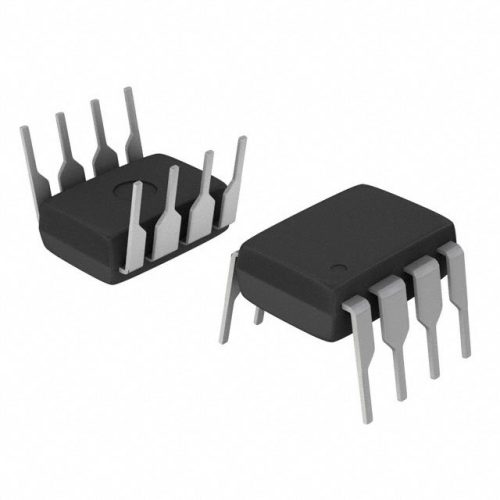
Texas Instruments BQ24075 Linear Battery Charger IC – 5mm x 4mm QFN Package
-
Texas Instruments INA219 Current Sensor Module – SOIC Package, Precision Monitoring
-
Texas Instruments LM4041 Precision Voltage Reference – SOT-23 Package
-
Texas Instruments OPA2134 Audio Op Amp – Dual, High-Performance, SOIC-8 Package
Compared to larger packages (e.g., SOIC-8), its SOT-23-5 footprint (2.9mm??1.6mm) saves 60% PCB space, fitting into ultra-compact devices like wireless earbuds or glucose monitors. This miniaturization is unmatched by discrete noise-filtering components, which add bulk.
Its 1.65V?C3.6V voltage range supports modern low-power standards (1.8V microcontrollers, 3.3V sensors) better than fixed-voltage alternatives, eliminating the need for multiple buffers in mixed-voltage designs. This versatility simplifies inventory for manufacturers of IoT sensors and wearables.
🌟 Featured Products
-

“Buy MAX9312ECJ+ Precision Voltage Comparator in DIP Package for Reliable Performance”
-
QCC-711-1-MQFN48C-TR-03-1 Bluetooth Audio SoC with MQFN48C Package
-

0339-671-TLM-E Model – High-Performance TLM-E Package for Enhanced Functionality
-
1-1415898-4 Connector Housing, Electrical Wire-to-Board, Receptacle, Packaged
With 1??A quiescent current, it consumes 70% less power than older logic families (e.g., 74HC), extending battery life in portable devices. Combined with 32mA output current, it drives signals over long traces without degradation??outperforming low-current noise filters.
Typical Applications of SN74LVC1G17DCKT
The SN74LVC1G17DCKT excels in noise-prone, low-power systems requiring single-channel signal conditioning. Key use cases include:
📩 Contact Us
- IoT sensor nodes (cleaning signals from temperature, humidity, or motion sensors)
- Wearable electronics (smartwatch touchscreen interfaces and biometric sensor inputs)
- Consumer electronics (wireless earbuds and fitness tracker button/switch inputs)
- Industrial micro-sensors (battery-powered vibration or light sensors)
- Medical devices (portable heart rate monitors and oxygen sensors)
Texas Instruments?? Expertise in Low-Voltage Logic
As a Texas Instruments product, the SN74LVC1G17DCKT leverages TI??s decades of innovation in low-voltage logic. The LVC series is engineered for optimal noise immunity, power efficiency, and reliability, with rigorous testing across -40??C to +85??C. This commitment has made TI a trusted partner for brands like Apple and Bosch, who rely on LVC components for consistent performance in high-volume, battery-powered products.
Frequently Asked Questions (FAQ)
What is a Schmitt trigger buffer, and how does it work?
A Schmitt trigger buffer is a circuit that amplifies digital signals and uses hysteresis to filter noise. Hysteresis means it switches high at a higher voltage (e.g., 2.0V) and low at a lower voltage (e.g., 1.7V), creating a gap that ignores small voltage spikes. This stabilizes output in noisy environments, making it ideal for sensors where clean data is critical.
Why is 300mV hysteresis important for sensor applications?
300mV hysteresis filters out noise from long wiring, EMI, or voltage fluctuations??common in sensor systems. For example, a temperature sensor 10 meters from a controller may have signal spikes; this gap ensures the buffer ignores them, preventing false readings. Without it, standard buffers might misinterpret noise as valid data, leading to system errors.
How does the SOT-23-5 package benefit compact device design?
The SOT-23-5??s tiny size (2.9mm??1.6mm) fits in ultra-slim devices where space is measured in fractions of a millimeter, such as wireless earbuds or medical wearables. Its surface-mount design enables automated assembly, improving manufacturing efficiency??key for high-volume production of miniaturized electronics where every millimeter matters.
What makes the 1.65V?C3.6V voltage range suitable for modern electronics?
This range covers the most common low-voltage standards in IoT and wearables: 1.8V (energy-efficient microcontrollers), 2.5V (DSPs), and 3.3V (sensors). Unlike fixed-voltage buffers, it works across these standards, eliminating the need for multiple components in mixed-voltage designs??simplifying engineering and reducing costs for manufacturers.
How does low quiescent current (1??A) extend battery life?
Quiescent current is power drawn when the device is idle, a major drain in batteries. At 1??A, this buffer uses 70% less standby power than 1??A alternatives, extending life significantly. For example, a coin-cell IoT sensor using this buffer might operate for 24 months vs. 18 months with a standard buffer??reducing maintenance and improving user satisfaction.