

What Is Quiescent Current and Why It Matters
Quiescent current sounds harmless. Quiet. Almost invisible.
Yet in modern electronics, it is often the silent battery killer.
When devices sit idle—screens dark, radios asleep, users gone—current still flows. That current is quiescent current, and it decides whether a product lasts months or years on a battery.
As the old engineering proverb goes: “What you don’t measure will drain your battery.”
This guide explains quiescent current clearly, deeply, and practically—without jargon overload. Short sentences. Strong contrasts. Real examples.
What Is Quiescent Current?
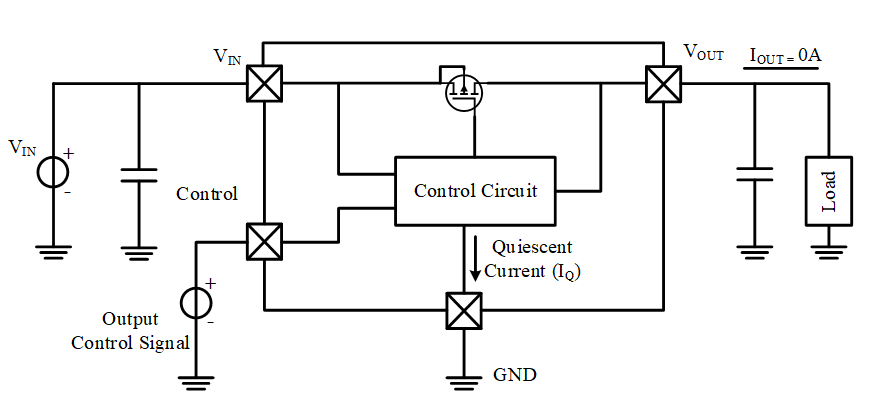
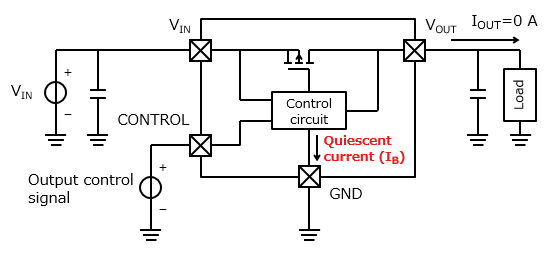
Quiescent current (Iq) is the current a circuit consumes when it is powered but not actively doing useful work.
No switching.
No signal processing.
No user interaction.
Just staying alive.
Definition of Quiescent Current (Iq)
Quiescent current is the baseline supply current required for an electronic component or system to remain operational in an idle state.
It powers:
- Internal bias circuits
- Reference voltages
- Memory retention
- Control logic
Even when “nothing is happening,” electrons still move.
How Quiescent Current Differs From Active Current
Active current spikes during work.
Quiescent current flows during rest.
Active current is loud.
Quiescent current is quiet—but constant.
Common Components Where Quiescent Current Applies
- Voltage regulators (LDOs, buck converters)
- Microcontrollers
- Op-amps
- Power management ICs (PMICs)
- Sensors and always-on blocks
Terminology Clarification and Common Confusions
Quiescent current is often confused with similar terms. They are not the same.
| Term | What It Means |
|---|---|
| Quiescent Current | Normal idle operating current |
| No-Load Current | Current drawn with no output load |
| Leakage Current | Unintended current due to device physics |
| Standby Current | System-level idle current |
| Sleep Current | Lowest achievable firmware-controlled state |
How Quiescent Current Works in Real Circuits
Idle vs. Active Operating States
Circuits rarely turn fully off.
They idle.
Regulators keep references alive.
MCUs retain memory.
Comparators wait for events.
That idle state defines quiescent current.
Power Consumption When “Nothing Is Happening”
Battery drain does not stop when work stops.
A device drawing 10 µA continuously will consume:
- 240 µAh per day
- ~88 mAh per year
Silence costs energy.
Relationship Between Quiescent Current and Standby Mode
Standby mode is a system concept.
Quiescent current is a component reality.
The system standby current is the sum of all quiescent currents plus leakage paths.
Always-On Circuits and Hidden Power Paths
Always-on blocks include:
- Reset supervisors
- RTCs
- Wake-up detectors
- Security logic
Each adds microamps. Together, they add regret.
Why Quiescent Current Is Critical for Battery-Powered Devices
Impact on Long-Term Battery Life
Battery life is not killed by peaks.
It is killed by time.
Low Iq extends shelf life, service life, and trust.
Importance for IoT, Wearables, and Medical Devices
IoT nodes may sleep 99.9% of the time.
Wearables must last days, not hours.
Medical devices must not fail silently.
In these systems, quiescent current dominates total energy use.
Business Implications
- Fewer battery replacements
- Better user reviews
- Lower warranty costs
Low Iq is not just engineering elegance.
It is market advantage.
Battery Drain in “Off” or Sleep Modes
Many products are never truly off.
Users notice when “off” still drains batteries.
That loss is quiescent current made visible.
Quiescent Current and Overall Power Efficiency
Why Idle Efficiency Matters More Than Peak Efficiency
Peak efficiency sells datasheets.
Idle efficiency sells products.
A regulator at 95% efficiency under load but 50 µA Iq may lose more energy than a 90% efficient one at 1 µA Iq.
Effects on Energy-Harvesting and Ultra-Low-Power Designs
Energy harvesting systems live on crumbs.
Solar.
Vibration.
Thermal gradients.
High quiescent current can consume more energy than harvested.
Meeting System Power Budgets
Every microamp counts.
| Source | Current (µA) |
|---|---|
| LDO Iq | 5 |
| MCU sleep | 2 |
| Sensor standby | 3 |
| Leakage paths | 1 |
| Total | 11 µA |
Budgets fail when Iq is ignored.
Compliance With Standby Power Regulations
Global regulations limit standby power:
- Consumer electronics
- Automotive parasitic drain
- Industrial efficiency standards
Low Iq ensures compliance without redesign.
Typical Quiescent Current Ranges by Component Type
| Component | Typical Iq |
|---|---|
| Ultra-low-power LDO | 0.1–5 µA |
| Buck converter | 5–50 µA |
| Op-amp | 0.5–20 µA |
| MCU sleep | 0.1–10 µA |
| PMIC | 10–100 µA |
When Lower Quiescent Current Is (and Isn’t) Better
Lower is usually better.
But not always.
Ultra-low Iq may mean:
- Slower response
- Lower bandwidth
- Higher noise
- Reduced accuracy
Engineering is balance, not obsession.
Mathematical and Practical Understanding of Quiescent Current
How to Calculate Power Loss From Quiescent Current
Power loss = Supply Voltage × Quiescent Current
Example:
- 3 V × 10 µA = 30 µW
Small number.
Long time.
Battery Life Estimation Using Quiescent Current
Battery life (hours) ≈ Capacity (mAh) ÷ Current (mA)
A 1000 mAh battery at 0.01 mA:
- ~100,000 hours
- ~11.4 years (ideal)
Reality is harsher.
Real-World Example: One Year Impact
A device with 20 µA quiescent current:
- Consumes ~175 mAh per year
- Drains half an AA battery doing nothing
Time always wins.
How to Measure Quiescent Current Accurately
Measurement Methods for Low and Ultra-Low Currents
- Series ammeter (careful)
- Sense resistor + oscilloscope
- Specialized nanoamp meters

Common Measurement Mistakes
- Burden voltage altering operation
- Meter resolution too coarse
- Ignoring sleep transitions
Bad measurements hide good designs.
Lab vs. Real-World Conditions
Bench measurements lie politely.
Field conditions tell the truth.
Temperature, voltage, and firmware events matter.
Design Trade-Offs and Engineering Decisions
Quiescent Current vs. Performance
Lower Iq often means:
- Slower startup
- Lower transient response
Designers must choose what matters most of the time, not just sometimes.
Firmware and System-Level Influence
Firmware decisions can double or halve quiescent current:
- Peripheral gating
- Clock control
- Sleep depth
- Wake-up sources
Hardware sets the floor.
Firmware decides the bill.
Key Takeaways
- Quiescent current is idle current, not leakage.
- It dominates energy use in low-duty-cycle systems.
- It directly affects battery life, heat, reliability, and compliance.
- Lower Iq is powerful—but not free.
- Measure it early. Budget it carefully. Optimize it system-wide.
Great products are not defined by how fast they work—but by how little they waste when they rest.
