

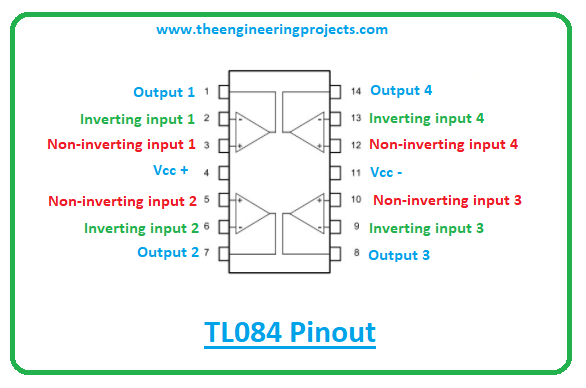
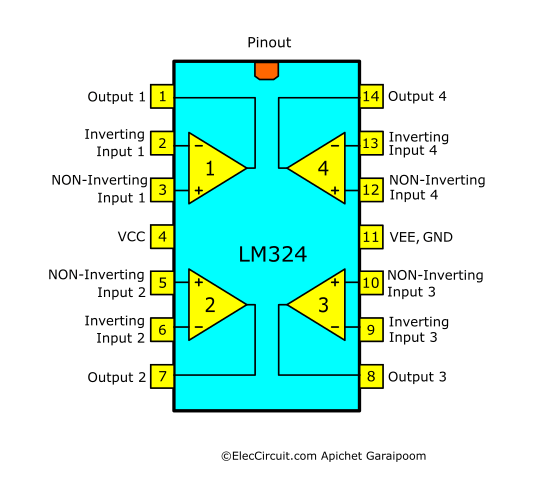
What Is the Difference Between TL084 and LM324?
Choosing the wrong operational amplifier can quietly ruin an otherwise good design.
Noise creeps in. Signals clip. Inputs misbehave near ground.
That is why TL084 and LM324 are compared so often. Both are quad op amps. Both are cheap. Both are everywhere. Yet they behave very differently in real circuits.
This guide cuts through datasheets and explains the practical, design-level differences that matter most. Clear language. Real consequences. No guesswork.
Overview of TL084 vs LM324
TL084 and LM324 look similar on paper. In practice, they serve opposite design goals.
- TL084 is JFET-input, fast, and signal-clean.
- LM324 is bipolar-input, slow, and power-flexible.
They are compared because engineers often face the same question:
audio performance or power simplicity?
Why These Two Quad Op Amps Are Often Compared
They share:
- Quad op amp format
- Similar pinouts
- Extremely wide availability
- Decades of field use
But they target very different operating environments.
Typical Use Cases That Lead to TL084 vs LM324 Decisions
- TL084: audio mixers, filters, instrumentation, AC signal paths
- LM324: sensors, comparators, battery circuits, educational boards
Key Design, Cost, and Business Considerations
- TL084 costs slightly more, but delivers higher fidelity
- LM324 saves power and BOM complexity
- Replacement mistakes are common—and costly
Core Architecture and Input Stage Differences
This is the root difference. Everything else flows from it.
JFET Input Architecture of TL084
TL084 uses JFET transistors at its inputs.
That means:
- Extremely high input impedance
- Very low bias current
- Minimal loading on signal sources
It behaves gently. It listens more than it pulls.
Bipolar Input Architecture of LM324
LM324 uses bipolar junction transistors (BJTs).
That means:
- Lower input impedance
- Higher bias current
- More loading on weak sources
It is tougher—but less delicate.
Impact on Input Impedance and Bias Current
| Parameter | TL084 | LM324 |
|---|---|---|
| Input Impedance | Very high (JFET) | Moderate |
| Input Bias Current | Picoamps | Tens of nanoamps |
| Source Loading | Minimal | Noticeable |
If your signal source is fragile, TL084 wins.
Supply Voltage and Power Rail Requirements
This is where many designs fail.
Dual-Supply Needs of TL084
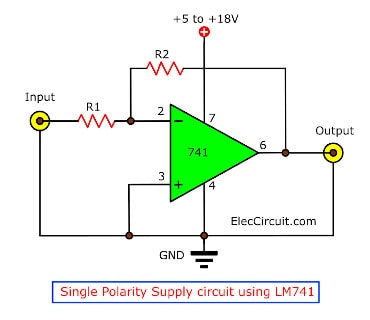
TL084 does not like single-supply operation.
- Typical requirement: ±12 V or ±15 V
- Poor performance near ground
- Input range does not include ground
Single-Supply Strength of LM324

LM324 was built for simplicity.
- Operates from 3 V to 32 V single supply
- Inputs include ground
- Outputs swing close to ground
This makes it ideal for microcontroller systems.
Choosing Based on Available Power Rails
- Dual rails available? TL084 is viable
- Only one rail? LM324 is safer
| Feature | TL084 | LM324 |
|---|---|---|
| Single Supply | Poor | Excellent |
| Ground Sensing | No | Yes |
| Low-Voltage Use | No | Yes |
Input Common-Mode Voltage Range (Critical Difference)
This is the most overlooked spec.
TL084 Common-Mode Limitations
TL084 inputs must stay well away from the rails.
- Cannot sense ground on single supply
- Clips early near negative rail
LM324 Ground-Sensing Capability
LM324 inputs can go down to ground.
- Ideal for sensors and ADC front ends
- No negative supply needed
Design Consequences
If your input approaches ground:
- TL084 → distortion or lockup
- LM324 → stable operation
This alone eliminates TL084 from many low-cost designs.
Performance Characteristics and Signal Behavior
Speed and fidelity separate these devices sharply.
Slew Rate and Bandwidth
| Parameter | TL084 | LM324 |
|---|---|---|
| Slew Rate | ~13 V/µs | ~0.5 V/µs |
| Gain Bandwidth | ~3 MHz | ~1 MHz |
TL084 is fast and clean.
LM324 is slow and forgiving.
Noise Performance and Signal Fidelity
- TL084: lower noise, cleaner waveforms
- LM324: higher crossover distortion
Output Swing and Headroom
- TL084 needs headroom from both rails
- LM324 swings close to ground, not to VCC
Power Consumption and Efficiency
Speed costs power.
Quiescent Current Comparison
| Spec | TL084 | LM324 |
|---|---|---|
| Typical Current | Higher | Lower |
LM324 is ideal for:
- Battery devices
- Always-on circuits
TL084 trades efficiency for performance.
Audio vs Non-Audio Suitability
This is where opinions become strong—and justified.
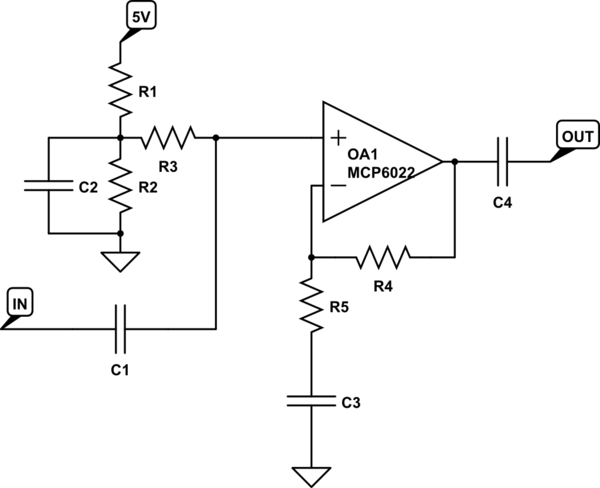
Why TL084 Is Preferred for Audio
- High slew rate
- Low distortion
- JFET input minimizes bias noise
It is a classic audio op amp.
Why LM324 Distorts Audio
- Crossover distortion
- Low slew rate
- Output stage limitations
LM324 can pass audio.
It cannot respect audio.
“Use the right tool. Audio punishes shortcuts.” — Analog Devices training note
Real-World Replacement Guidance
This mistake costs time and money.
Can TL084 Replace LM324?
No, not directly.
Problems:
- Input range mismatch
- Single-supply failure
- Output headroom loss
Can LM324 Replace TL084?
Also no.
Problems:
- Noise increase
- Slew-rate distortion
- Audio degradation
Safe Substitution Rules
- Match supply rails first
- Check input common-mode range
- Simulate before swapping
Summary Comparison Table and Final Guidance

Side-by-Side Summary
| Category | TL084 | LM324 |
|---|---|---|
| Input Type | JFET | Bipolar |
| Audio Quality | Excellent | Poor |
| Single Supply | No | Yes |
| Power Efficiency | Lower | Higher |
| Speed | Fast | Slow |
| Ground Sensing | No | Yes |
Decision Checklist
Choose TL084 if:
- You have dual supplies
- Signal quality matters
- Audio or AC performance is critical
Choose LM324 if:
- You need single-supply operation
- Power is limited
- Cost and simplicity dominate
Final Verdict
These op amps are not interchangeable.
TL084 is a signal specialist.
LM324 is a system workhorse.
Pick the one that matches your constraints, not your habits.
