

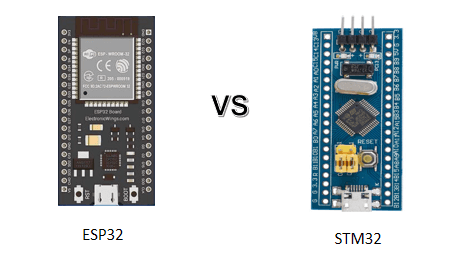
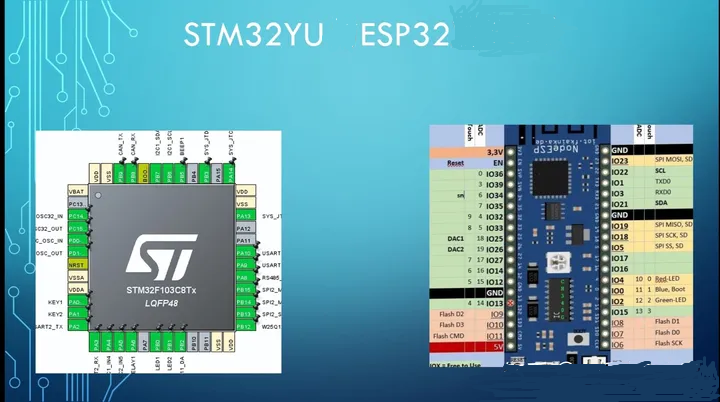
What Is Better, ESP32 or STM32? A Practical Comparison for Engineers and Decision-Makers
Choosing between ESP32 and STM32 sounds simple. It is not.
One chip screams wireless power. The other whispers industrial discipline.
Both are excellent. Both are flawed. And neither is “better” in isolation.
As the old engineering saying goes, “There is no best component—only the best fit.”
This guide cuts through marketing noise and forum myths. It focuses on real design trade-offs, search intent, and production reality—not spec-sheet bragging.
1. How to Think About “Better” in ESP32 vs. STM32
“Better” depends on what you are building, who will maintain it, and how long it must live.
ESP32 is a system-enabler. STM32 is a system foundation.
If your product needs fast IoT connectivity, ESP32 shines.
If your product needs deterministic control, STM32 dominates.
Key decision factors
| Factor | ESP32 | STM32 |
|---|---|---|
| Built-in wireless | Yes | No |
| Real-time determinism | Limited | Strong |
| Learning curve | Low | Moderate |
| Industrial longevity | Moderate | High |
Context decides everything.
2. Core Architecture and Performance
ESP32 uses dual-core Xtensa or RISC-V CPUs, typically clocked up to 240 MHz.
STM32 uses ARM Cortex-M cores ranging from M0 to M7.
On paper, ESP32 often looks faster.
In practice, STM32 is more predictable.
Why predictability beats raw speed
- ESP32 shares CPU time with Wi-Fi and Bluetooth stacks
- STM32 runs bare-metal or RTOS with tight interrupt control
- Motor control, safety loops, and timing-critical code prefer STM32
Performance is not about MHz.
It is about when code runs, not how fast it can run.
3. Memory Architecture and Firmware Complexity
ESP32 typically offers:
- ~520 KB SRAM
- External flash and optional PSRAM
STM32 scales from:
- Tens of KB to multiple MB of flash and RAM
- Internal memory with deterministic access timing
Why this matters

Large IoT firmware grows fast.
Logs, TLS, OTA updates, and JSON parsers eat memory.
ESP32 handles complexity well—until timing matters.
STM32 handles complexity well—when structure matters.
| Aspect | ESP32 | STM32 |
|---|---|---|
| External memory | Common | Limited |
| Memory timing | Variable | Predictable |
| RTOS scaling | Easy | Structured |
4. Connectivity and Wireless Design
This is ESP32’s home turf.
ESP32 includes Wi-Fi and Bluetooth, fully certified.
STM32 relies on external RF modules.
Integrated vs. modular wireless
ESP32 advantages:
- Faster time-to-market
- Lower BOM cost
- Easier certification
STM32 advantages:
- RF flexibility
- Better power optimization
- Easier industrial compliance
For consumer IoT, ESP32 wins.
For regulated products, STM32 scales better.
5. Peripheral Depth and Hardware Flexibility
ESP32 uses a GPIO matrix. Almost any function can map to almost any pin.
STM32 uses fixed-function peripherals with deep hardware support.
Trade-off in one sentence
ESP32 is flexible.
STM32 is disciplined.
STM32 excels in:
- ADC accuracy
- Timers and PWM
- CAN, USB, Ethernet
- Motor control peripherals
Flexibility speeds prototypes.
Discipline stabilizes products.
6. Real-Time Behavior and Determinism
This is where many designs fail silently.
ESP32’s Wi-Fi stack can preempt tasks.
Interrupt latency is not guaranteed.
STM32 offers:
- Predictable interrupt response
- Hardware timers with nanosecond control
- Deterministic RTOS behavior
When real-time matters
- Motor control
- Medical devices
- Industrial automation
- Safety systems
If timing is sacred, STM32 is safer.
7. Power Consumption and Energy Strategy

ESP32 is efficient without Wi-Fi.
With Wi-Fi on, power spikes are unavoidable.
STM32 low-power series (L-series and beyond) are designed for:
- Multi-year battery life
- Sleep currents in microamps
- Deterministic wake-up timing
| Use case | Better choice |
|---|---|
| Always-connected IoT | ESP32 |
| Battery sensor | STM32 |
| Energy-harvesting | STM32 |
Power is not about sleep modes alone.
It is about system behavior over time.
8. Ecosystem, Tooling, and Long-Term Risk
ESP32 thrives in open communities—Arduino, GitHub, forums—driven by Espressif Systems.
STM32 is backed by STMicroelectronics, with deep documentation and enterprise support.
The hidden cost: technical debt
ESP32:
- Fast onboarding
- Faster hacks
- Harder long-term maintenance
STM32:
- Slower learning
- Cleaner architecture
- Easier audits and certification
As Linus Torvalds once noted, “Bad programmers worry about the code. Good programmers worry about data structures and dependencies.”
STM32 rewards that mindset.
Final Verdict: ESP32 or STM32?
There is no universal winner.
Choose ESP32 if you need:
- Built-in Wi-Fi or Bluetooth
- Rapid prototyping
- Consumer IoT speed
- Lower upfront cost
Choose STM32 if you need:
- Deterministic real-time control
- Industrial or medical compliance
- Long product lifecycles
- Scalable product families
ESP32 accelerates ideas.
STM32 stabilizes products.
The smartest teams often use both—ESP32 for connectivity, STM32 for control.
In engineering, fit beats features. Always.
