
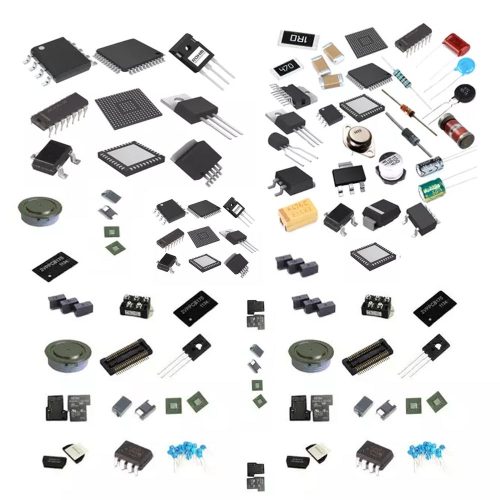

TM4C123GH6PMI7 Overview
The TM4C123GH6PMI7 is an ARM? Cortex?-M4F microcontroller offering balanced performance, memory, and connectivity for embedded control and sensing tasks. It combines a floating-point core at up to 80 MHz with substantial on-chip Flash and SRAM to support larger codebases and real-time processing. Integrated peripherals such as USB 2.0 OTG and 12-bit analog converters simplify system design by reducing external components. For procurement and datasheet access visit IC Manufacturer.
TM4C123GH6PMI7 Technical Specifications
| Core | ARM Cortex-M4 with single-precision FPU |
| Maximum clock | 80 MHz |
| Flash memory | 256 KB |
| SRAM | 32 KB |
| ADC | 12-bit analog-to-digital converters |
| USB | USB 2.0 On-The-Go (OTG) |
| Package | 64-pin LQFP (64 pins) |
| Supply voltage | 3.3 V nominal |
| Operating temperature | -40 ??C to +85 ??C |
TM4C123GH6PMI7 Key Features
- ARM Cortex-M4F core with hardware FPU for faster floating-point math and DSP-style algorithms.
- Up to 80 MHz clock speed to deliver higher instruction throughput compared with many 8- and 32-bit alternatives.
- 256 KB on-chip Flash and 32 KB SRAM to support larger firmware stacks and multiple communication stacks without external memory.
- Integrated USB 2.0 OTG to enable direct host or device connectivity and reduce board-level components and interface chips.
- 12-bit ADCs suitable for accurate sensor acquisition and higher resolution measurement than 8-bit ADC implementations.
- 64-pin LQFP package for broad GPIO availability and simpler PCB routing in compact designs.
- Industrial temperature rating of -40 ??C to +85 ??C for reliable operation in harsher environments.
Typical Applications
- Industrial control modules that require real-time processing, multiple I/O and robust analog sensing across extended temperature ranges.
- USB-enabled data acquisition devices where higher ADC resolution and on-chip USB OTG simplify board-level design and reduce system cost.
- Embedded motor control and power conversion controllers that benefit from the Cortex-M4F DSP capability and precise PWM/timer generation.
- Human-machine interface (HMI) and instrumentation panels where larger Flash and SRAM support complex UI code and communication stacks.
TM4C123GH6PMI7 Advantages vs Typical Alternatives
The device pairs a hardware FPU and 80 MHz Cortex-M4 core with 256 KB Flash and 32 KB SRAM, giving developers more compute and memory headroom than many entry-level 8-bit or older 32-bit parts. Integrated USB 2.0 OTG and 12-bit ADCs reduce the need for external controllers and converters. The 64-pin LQFP package offers more GPIO and peripheral access compared with smaller packages, while the industrial temperature rating supports deployment in tougher environments.
🔥 Best-Selling Products
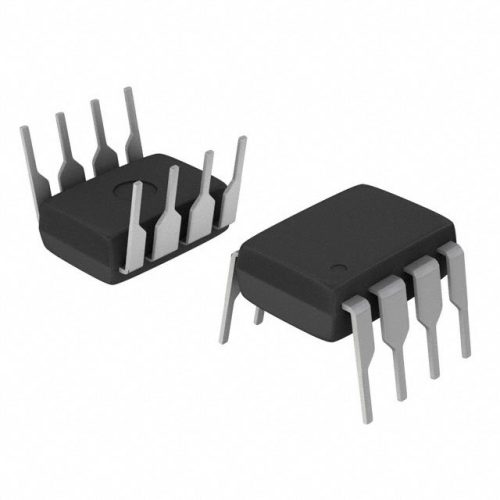
TM4C123GH6PMI7 Brand Info
The TM4C123GH6PMI7 is part of the Tiva C microcontroller family from Texas Instruments. Texas Instruments provides the device with comprehensive support including reference designs, development boards, and software libraries. The product targets embedded control and connectivity applications with broad ecosystem resources for prototyping and production.
FAQ
What is the core clock speed?
The microcontroller runs up to 80 MHz on its ARM Cortex-M4 core with a single-precision floating-point unit. This clock enables higher performance integer and floating-point operations compared with lower-frequency MCU families.
🌟 Featured Products
-

“Buy MAX9312ECJ+ Precision Voltage Comparator in DIP Package for Reliable Performance”
-
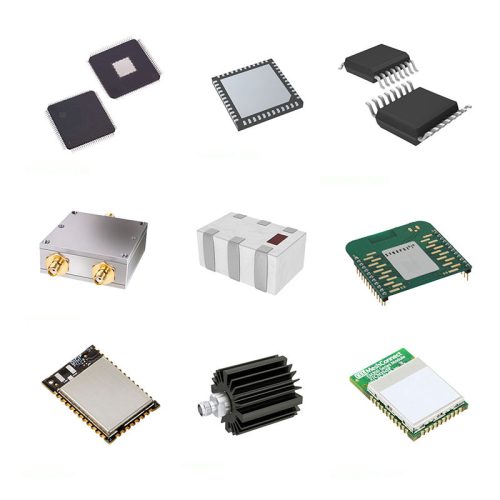
QCC-711-1-MQFN48C-TR-03-1 Bluetooth Audio SoC with MQFN48C Package

-

0339-671-TLM-E Model – High-Performance TLM-E Package for Enhanced Functionality

-
1-1415898-4 Connector Housing, Electrical Wire-to-Board, Receptacle, Packaged
How much nonvolatile memory is available?
This part includes 256 KB of on-chip Flash memory for program storage. The larger Flash capacity helps support more feature-rich firmware and multiple communication protocol implementations without external Flash.
What analog capability does it provide?
Integrated 12-bit analog-to-digital converters permit higher-resolution sensor measurements than typical 8-bit ADCs. The on-chip ADCs simplify analog front-end design and reduce the need for external converter ICs.
📩 Contact Us
Does it support USB connectivity?
Yes. The device supports USB 2.0 On-The-Go (OTG), allowing the MCU to function as either a host or a device. This feature is useful for USB peripherals, data logging, and firmware update scenarios without extra host controllers.
Which package and temperature range are offered?
The device is available in a 64-pin LQFP package and is rated for industrial operation from -40 ??C to +85 ??C, making it suitable for many commercial and industrial embedded systems.