
MICRF230YQS-TR Overview
The MICRF230YQS-TR is a highly integrated, low-power ASK/OOK superheterodyne receiver designed for reliable wireless communication in industrial and consumer electronics. It operates within the 300 MHz to 450 MHz frequency range, offering precise demodulation and robust signal reception. Tailored for remote control and data transmission applications, this device features built-in RSSI and data slicing capabilities, enabling accurate signal detection with minimal external components. Its compact SOT-23 package and low current consumption make it an ideal solution for battery-powered systems requiring efficient and stable wireless performance. Available through IC Manufacturer, this receiver supports streamlined integration into RF front-end designs.
MICRF230YQS-TR Technical Specifications
| Parameter | Specification |
|---|---|
| Operating Frequency Range | 300 MHz to 450 MHz |
| Current Consumption (Receive Mode) | Typically 3.5 mA at 3 V |
| Supply Voltage | 2.4 V to 3.6 V |
| Modulation Type | ASK/OOK |
| RSSI Output | Analog output for received signal strength indication |
| Data Output | Digital demodulated data |
| Package | SOT-23-6 |
| Operating Temperature Range | -40 ??C to +85 ??C |
| Intermediate Frequency (IF) | 10.7 MHz |
| External Components | Minimal, typically requires only antenna matching network |
MICRF230YQS-TR Key Features
- Wide operating frequency range: Supports 300 MHz to 450 MHz bands, enabling flexible deployment across multiple regional frequency allocations.
- Low power consumption: Draws approximately 3.5 mA, extending battery life in portable and remote devices.
- Integrated RSSI output: Provides analog signal strength feedback for enhanced receiver sensitivity tuning and link quality monitoring.
- ASK/OOK demodulation: Simplifies wireless data reception with direct digital output, reducing external circuitry.
- Compact and robust packaging: SOT-23-6 package ensures easy PCB integration and reliable mechanical performance in harsh environments.
- Minimal external components: Reduces design complexity and overall system cost.
- Industrial temperature range: Maintains stable operation from -40 ??C to +85 ??C, suitable for demanding applications.
MICRF230YQS-TR Advantages vs Typical Alternatives
This device excels by combining low power consumption with integrated features such as RSSI and direct digital output, offering superior sensitivity and reliable ASK/OOK demodulation compared to typical discrete receiver modules. Its minimal external component requirements and compact package further streamline design and reduce costs. Operating over a broad frequency range and industrial temperature span ensures flexible application and dependable performance even in challenging environments.
🔥 Best-Selling Products
-
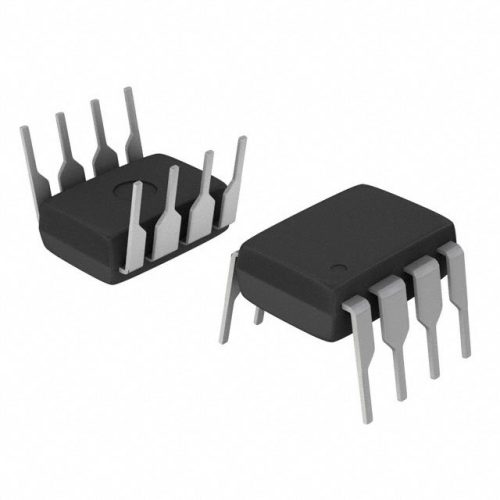
Texas Instruments BQ24075 Linear Battery Charger IC – 5mm x 4mm QFN Package
-
Texas Instruments INA219 Current Sensor Module – SOIC Package, Precision Monitoring
-
Texas Instruments LM4041 Precision Voltage Reference – SOT-23 Package
-
Texas Instruments OPA2134 Audio Op Amp – Dual, High-Performance, SOIC-8 Package
Typical Applications
- Wireless remote keyless entry systems: Efficiently receive and decode ASK/OOK signals for secure, low-latency control of access devices in automotive and building automation.
- Wireless alarm and security systems: Reliable signal detection supports robust monitoring and alert communication in residential and commercial security setups.
- Industrial remote controls: Enables dependable remote operation of machinery and equipment in factory or field environments.
- Low-power data transmission: Suitable for sensor networks and telemetry systems requiring energy-efficient RF reception.
MICRF230YQS-TR Brand Info
This receiver is part of a well-established semiconductor line known for delivering high-performance RF front-end solutions tailored for industrial and consumer wireless applications. Designed with a focus on integration, power efficiency, and ease of use, the product reflects the brand??s commitment to quality and innovation in wireless communication components. It supports engineers and system designers in developing compact, reliable, and cost-effective RF receiver modules.
FAQ
What frequency bands does this receiver support?
The device operates over a frequency range from 300 MHz to 450 MHz. This wide band coverage allows it to be used in various regional frequency allocations and supports diverse wireless communication standards employing ASK/OOK modulation.
🌟 Featured Products
-

“Buy MAX9312ECJ+ Precision Voltage Comparator in DIP Package for Reliable Performance”
-
QCC-711-1-MQFN48C-TR-03-1 Bluetooth Audio SoC with MQFN48C Package
-

0339-671-TLM-E Model – High-Performance TLM-E Package for Enhanced Functionality
-
1-1415898-4 Connector Housing, Electrical Wire-to-Board, Receptacle, Packaged
How does the integrated RSSI output benefit system design?
The analog RSSI output provides a real-time indication of received signal strength. This enables designers to implement dynamic gain control, optimize antenna matching, or monitor link quality, improving overall system reliability and sensitivity.
What external components are required for operation?
Minimal external components are needed, typically just an antenna matching network. The integration of the IF filter and demodulator reduces the need for additional circuitry, simplifying PCB layout and minimizing cost.
📩 Contact Us
Can the receiver operate in harsh industrial environments?
Yes, it supports an operating temperature range from -40 ??C to +85 ??C, making it suitable for industrial and outdoor applications where temperature extremes and environmental stress are common.
What are the power consumption characteristics during reception?
The receiver consumes approximately 3.5 mA at a 3 V supply in receive mode, which is considered low power for superheterodyne ASK/OOK receivers. This efficiency helps extend battery life in portable and remote wireless devices.

