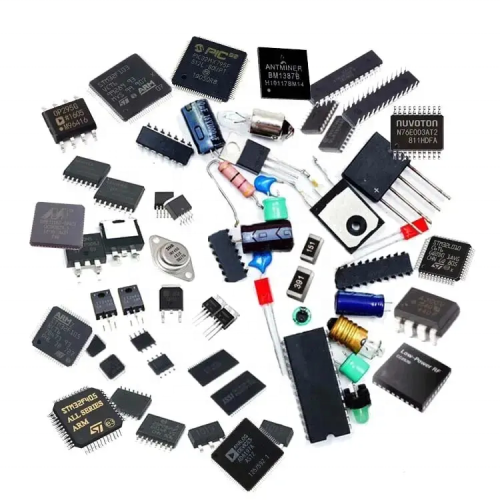
AEDR-9920-102 Overview
The AEDR-9920-102 is a high-performance phototransistor designed for precise detection of infrared light in industrial and electronic applications. Featuring a compact package and high sensitivity, it enables accurate optical sensing with fast response times. This device ensures reliable operation in challenging environments due to its robust construction and optimized spectral response. Ideal for integration in automation, safety systems, and ambient light detection, it offers engineers a dependable solution with consistent performance. For additional product details and sourcing, visit IC Manufacturer.
AEDR-9920-102 Technical Specifications
| Parameter | Specification |
|---|---|
| Detector Type | Phototransistor |
| Package | 3 mm epoxy package |
| Wavelength Peak Sensitivity | 940 nm |
| Collector-Emitter Voltage (VCE) | 30 V (max) |
| Collector Current (IC) | 5 mA (max) |
| Rise Time | 3 ??s (typical) |
| Fall Time | 5 ??s (typical) |
| Operating Temperature Range | -25 ??C to +85 ??C |
| Storage Temperature Range | -40 ??C to +100 ??C |
| Dark Current | 50 nA (typical) |
AEDR-9920-102 Key Features
- High infrared sensitivity: Enables precise detection of 940 nm wavelength signals, enhancing accuracy in optical sensing systems.
- Fast response times: Typical rise and fall times of 3 ??s and 5 ??s allow for quick signal processing in dynamic environments.
- Compact 3 mm epoxy package: Facilitates easy integration into densely packed electronic assemblies and ensures durability.
- Wide operating temperature range: Ensures stable performance across -25 ??C to +85 ??C, suitable for industrial and outdoor applications.
- Low dark current: Minimizes noise and improves signal-to-noise ratio, critical for sensitive detection tasks.
AEDR-9920-102 Advantages vs Typical Alternatives
This phototransistor provides superior infrared detection sensitivity and faster response compared to many standard devices. Its low dark current enhances signal clarity, while the robust 3 mm epoxy package offers improved reliability and ease of mounting. The wide operating temperature range ensures consistent performance in demanding industrial settings, making it a preferred choice over generic photodetectors lacking similar specifications.
🔥 Best-Selling Products
-
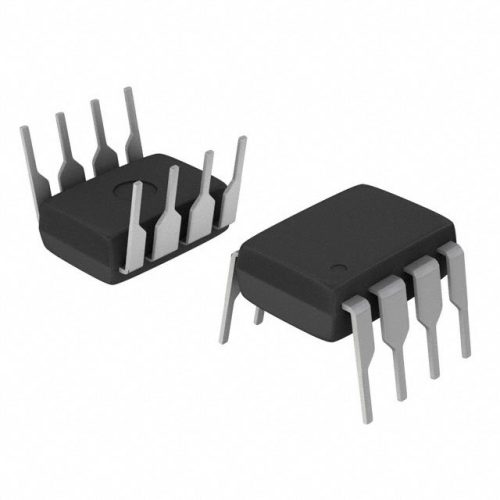
Texas Instruments BQ24075 Linear Battery Charger IC – 5mm x 4mm QFN Package
-
Texas Instruments INA219 Current Sensor Module – SOIC Package, Precision Monitoring
-
Texas Instruments LM4041 Precision Voltage Reference – SOT-23 Package
-
Texas Instruments OPA2134 Audio Op Amp – Dual, High-Performance, SOIC-8 Package
Typical Applications
- Optical switch and sensor systems requiring accurate infrared light detection with rapid response, such as automation controls and safety interlocks.
- Ambient light sensing for adaptive lighting and display brightness control in industrial equipment.
- Proximity detection and object sensing in manufacturing lines for quality control and positioning.
- Remote control receiver circuits where reliable infrared signal capture is essential.
AEDR-9920-102 Brand Info
The AEDR-9920-102 is a product from a leading manufacturer known for delivering high-quality semiconductor optoelectronic components. This particular device exemplifies the brand??s commitment to precision engineering, reliability, and consistent performance in industrial-grade photodetection solutions. Designed to meet rigorous standards, it supports a wide range of applications requiring dependable infrared sensing and fast response times.
FAQ
What is the typical wavelength sensitivity of this phototransistor?
This device has a peak sensitivity at 940 nm, making it ideal for infrared light detection applications. This wavelength aligns with common IR emitters used in remote controls and optical sensors.
🌟 Featured Products
-

“Buy MAX9312ECJ+ Precision Voltage Comparator in DIP Package for Reliable Performance”
-
QCC-711-1-MQFN48C-TR-03-1 Bluetooth Audio SoC with MQFN48C Package
-

0339-671-TLM-E Model – High-Performance TLM-E Package for Enhanced Functionality
-
1-1415898-4 Connector Housing, Electrical Wire-to-Board, Receptacle, Packaged
Can the device operate reliably in harsh temperature conditions?
Yes, it supports an operating temperature range from -25 ??C up to +85 ??C, enabling dependable use in industrial environments with variable temperature conditions.
What are the rise and fall times, and why are they important?
The rise time is typically 3 microseconds, and the fall time is about 5 microseconds. These fast switching times allow the phototransistor to respond quickly to changes in light intensity, essential for high-speed sensing applications.
📩 Contact Us
How does the package type affect integration?
The compact 3 mm epoxy package provides durability and simplifies mounting on printed circuit boards. Its small size suits dense electronic assemblies, reducing space requirements in complex systems.
What is the maximum collector current allowed for this device?
The device can handle a maximum collector current of 5 mA. Staying within this limit ensures optimal performance and prevents damage to the phototransistor during operation.