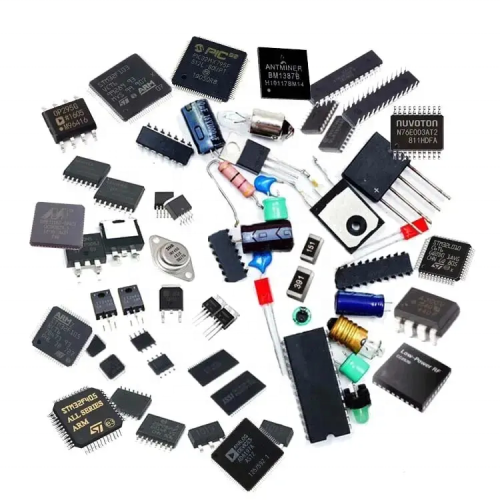
HEDS-5640#A06 Overview
The HEDS-5640#A06 is an optical incremental encoder designed for precise rotary position sensing in industrial and automation environments. With a compact package and robust optical sensing technology, it delivers accurate position feedback through incremental quadrature outputs. This device supports a resolution of 500 lines per revolution, enabling fine motion control in applications such as robotics, motor feedback, and industrial machinery. The HEDS-5640#A06 features a standard 6-pin interface, ensuring easy integration into a variety of control systems. Its reliable operation and consistent signal quality make it a preferred choice for engineers seeking dependable rotary encoding solutions. For more detailed information, visit IC Manufacturer.
HEDS-5640#A06 Technical Specifications
| Parameter | Specification |
|---|---|
| Encoder Type | Incremental Optical Encoder |
| Lines per Revolution (LPR) | 500 |
| Output Type | Quadrature (A and B channels) |
| Power Supply Voltage | 5 V ??10% |
| Supply Current | 25 mA typical |
| Output Format | Push-Pull CMOS |
| Operating Temperature Range | -40 ??C to +100 ??C |
| Maximum Shaft Speed | 10,000 RPM |
| Incremental Output Channels | 2 channels plus Index (Z) |
| Mechanical Shaft Diameter | 6 mm |
HEDS-5640#A06 Key Features
- High resolution of 500 lines per revolution: Enables precise position feedback for accurate motion control and improved system performance.
- Quadrature output with index channel: Provides reliable directional sensing and a reference point for position reset and calibration.
- Robust optical sensing technology: Ensures consistent signal quality, minimizing errors caused by electrical noise or mechanical vibration.
- Compact 6-pin interface: Simplifies installation and integration into existing control architectures without requiring complex wiring.
- Wide operating temperature range (-40 ??C to +100 ??C): Suitable for harsh industrial environments with temperature extremes.
- Low power consumption: Supports energy-efficient system designs, reducing overall power demands.
- Push-pull CMOS output: Compatible with a broad range of digital input devices, facilitating flexible system integration.
HEDS-5640#A06 Advantages vs Typical Alternatives
This optical encoder offers enhanced accuracy and reliability compared to magnetic or lower resolution encoders. Its high line count improves position sensing precision, while the robust optical system resists interference from electromagnetic noise. The combination of low power consumption and a compact footprint further distinguishes it from typical alternatives, making it an ideal choice for demanding industrial and automation applications.
🔥 Best-Selling Products

Typical Applications
- Industrial motor feedback: Provides precise shaft position and speed information for closed-loop motor control, enhancing performance in automation systems.
- Robotics: Enables accurate joint position sensing and movement control in robotic arms and mobile platforms.
- Precision manufacturing equipment: Supports position monitoring in CNC machines and automated assembly lines to maintain quality and repeatability.
- Conveyor systems: Facilitates speed and position tracking for efficient material handling and process synchronization.
HEDS-5640#A06 Brand Info
The HEDS-5640#A06 is part of a well-established line of optical incremental encoders produced by a leading manufacturer in industrial sensing solutions. This product series is recognized for its precision, durability, and ease of integration. Designed specifically to meet rigorous industrial requirements, it combines advanced optical technology with robust construction to deliver dependable performance. The manufacturer supports this encoder with comprehensive documentation and technical assistance, ensuring smooth adoption and application in diverse industrial environments.
FAQ
What type of output signals does this incremental encoder provide?
This encoder provides quadrature output signals on two channels, commonly known as channels A and B, plus an index (Z) channel. The quadrature outputs allow detection of both rotational position and direction, while the index channel provides a single reference pulse per revolution for precise position calibration.
🌟 Featured Products
-

“Buy MAX9312ECJ+ Precision Voltage Comparator in DIP Package for Reliable Performance”
-
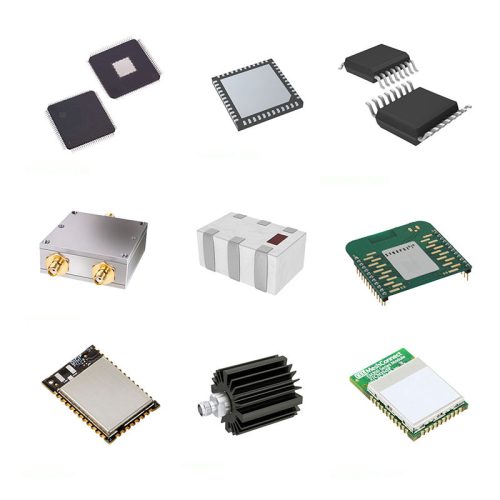
QCC-711-1-MQFN48C-TR-03-1 Bluetooth Audio SoC with MQFN48C Package

-

0339-671-TLM-E Model – High-Performance TLM-E Package for Enhanced Functionality

-
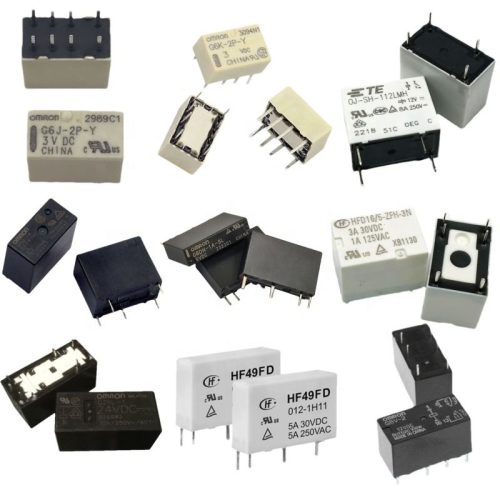
1-1415898-4 Connector Housing, Electrical Wire-to-Board, Receptacle, Packaged
What is the maximum operating speed of this encoder?
The device supports shaft speeds up to 10,000 revolutions per minute (RPM). This high-speed capability makes it suitable for applications requiring rapid rotational motion sensing without signal degradation.
How does the encoder handle environmental conditions?
It operates reliably within a temperature range of -40 ??C to +100 ??C, making it adaptable for harsh industrial environments. The optical sensing technology also offers good immunity to electromagnetic interference and mechanical vibrations commonly encountered in factory settings.
📩 Contact Us
What power supply voltage does the encoder require?
The encoder operates on a 5 V power supply with a tolerance of ??10%. This standard voltage level ensures compatibility with most industrial control systems and simplifies power management in embedded applications.
Can this encoder be easily integrated into existing control systems?
Yes, the device features a compact 6-pin interface with push-pull CMOS outputs, which are widely compatible with digital input modules and microcontrollers. This design facilitates straightforward wiring and integration with minimal adaptation.